 Pin
Pin There's something magical about the sizzle of a hot wok that makes even a quiet Tuesday night feel like cooking in a bustling street market. Years ago, I stood in a cramped apartment kitchen with my roommate, who'd just returned from Thailand with stories and a list of dishes she desperately missed. She guided my hands through chopping vegetables while I listened, and somewhere between the garlic hitting hot oil and the rice tumbling through the flames, I understood why this simple dish had become her comfort food. Now it's become mine too—not fancy, but deeply satisfying.
I made this for a potluck once when I was exhausted and almost didn't go, but I threw together a wok full of rice and vegetables anyway. By the time I arrived, people were already circling the container asking for the recipe, and someone even asked if I'd made it at a restaurant. That moment taught me that the simplest dishes, made with care and a hot enough pan, can be the ones people actually want to eat.
Ingredients
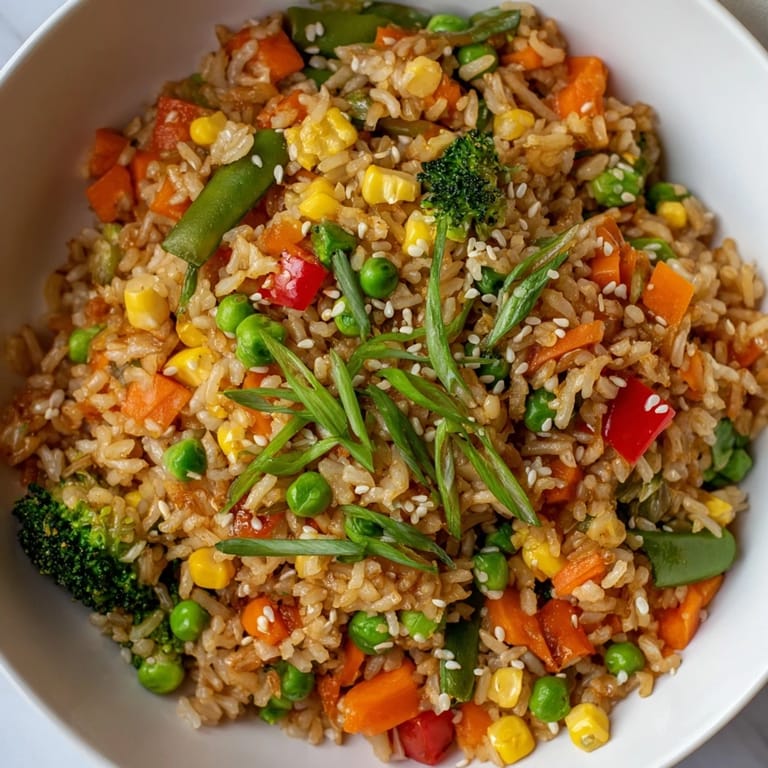
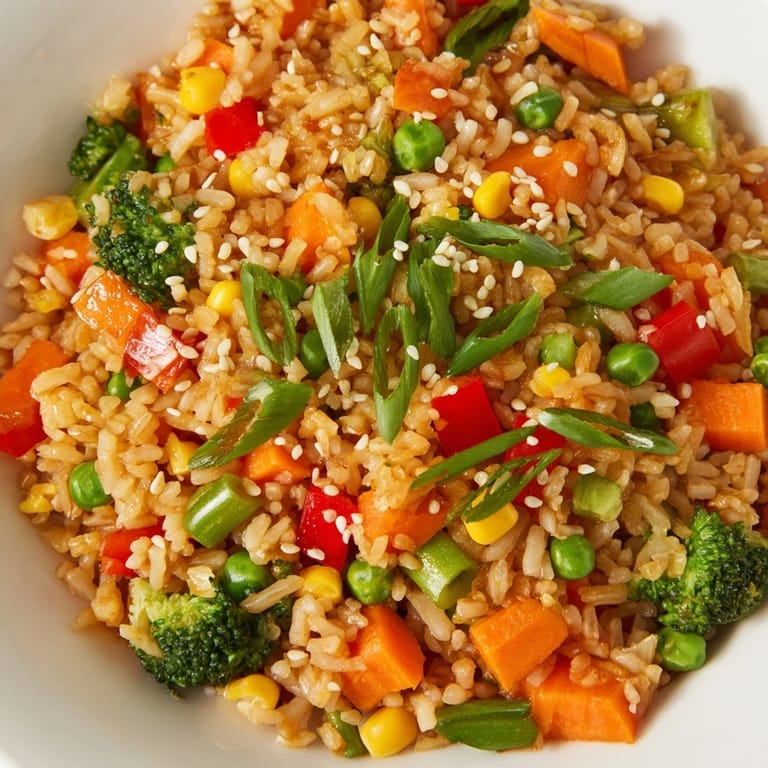
- Cooked jasmine or long-grain rice (3 cups, preferably day-old and cold): Cold rice is essential because warm rice will steam and clump instead of frying. Day-old rice grains separate beautifully and absorb the sauce without becoming mushy.
- Carrots, diced (1 cup): Their natural sweetness balances the soy sauce, and they take longer to cook than other vegetables, so they go in first.
- Bell pepper, diced (1 cup): Any color works, but I prefer a mix because it looks more vibrant and each color brings different flavor notes.
- Frozen peas, thawed (1 cup): Frozen peas are actually fresher than fresh ones in most cases, and they stay bright and tender when added near the end.
- Broccoli florets, small (1 cup): Keep them small so they cook quickly without turning dark and bitter. They should still have a slight crunch when you serve.
- Sweet corn kernels (1/2 cup): Fresh, frozen, or even canned works, but frozen tends to be the most reliable for sweetness and texture.
- Green beans, chopped (1/2 cup): They add a pleasant texture and cook at the same pace as the broccoli.
- Green onions, sliced (3, reserve some for garnish): Most go into the pan, but save some to scatter on top at the end for fresh onion flavor and color.
- Garlic, minced (2 cloves): Mince it fine so it disperses evenly and doesn't burn in the hot oil.
- Ginger, minced (1-inch piece): Fresh ginger is non-negotiable—it adds warmth and a subtle bite that makes people ask what the secret ingredient is.
- Soy sauce (3 tbsp, or tamari for gluten-free): Use good soy sauce if you can; it makes a noticeable difference. Add it at the very end so it coats everything without burning.
- Sesame oil (1 tbsp): This is where flavor lives. It has a low smoke point, so drizzle it after you turn off the heat to preserve its nutty aroma.
- Vegetable oil (1 tbsp for the pan): You need oil with a high smoke point to handle the heat without breaking down or smoking out your kitchen.
- Toasted sesame seeds (1 tsp, optional): They add a subtle crunch and sophisticated finish, but they're easy to skip if you don't have them.
- White or black pepper (1/2 tsp): White pepper blends into the rice more invisibly, but black pepper is perfectly fine if that's what you have.
- Salt, to taste: Taste as you go near the end; soy sauce is already salty, so you might need less than you think.
Tired of Takeout? 🥡
Get 10 meals you can make faster than delivery arrives. Seriously.
One email. No spam. Unsubscribe anytime.
Instructions
- Heat your wok until it's actually hot:
- Pour the vegetable oil into a large wok or skillet and let it warm over medium-high heat for about a minute. You'll know it's ready when a drop of water sizzles and evaporates immediately on contact. A cool wok is the enemy of good fried rice.
- Bloom the aromatics:
- Add the minced garlic and ginger all at once and stir constantly for about 30 seconds. You're listening for the sizzle and watching for the moment the kitchen smells incredible—that's your cue to move fast before they burn.
- Cook the hard vegetables first:
- Toss in the carrots, bell pepper, broccoli, green beans, and corn. Keep stirring and tossing for 3 to 4 minutes, letting them soften just slightly while they still have some snap. They should smell sweet and bright, not soft or dull.
- Add the quick-cooking vegetables:
- Stir in the thawed peas and most of the green onions, cooking for just 1 minute more. Everything should still look vibrant and feel alive in the pan, not tired.
- Introduce the rice with confidence:
- Increase the heat to high and add all your cold rice at once. Use your spatula to break up any clumps immediately, working quickly so the rice heats evenly. Spend 2 to 3 minutes stirring and tossing until the rice is hot throughout and the grains flow freely.
- Dress it with sauces:
- Drizzle the soy sauce and sesame oil over everything while tossing constantly. Sprinkle in the pepper and keep moving the rice around the pan so the sauces coat every grain evenly, about 30 more seconds.
- Taste and adjust:
- Take a bite right from the pan. Add more salt if needed or a splash more soy sauce if you want deeper flavor. This is your moment to make it exactly right for your taste.
- Finish and serve:
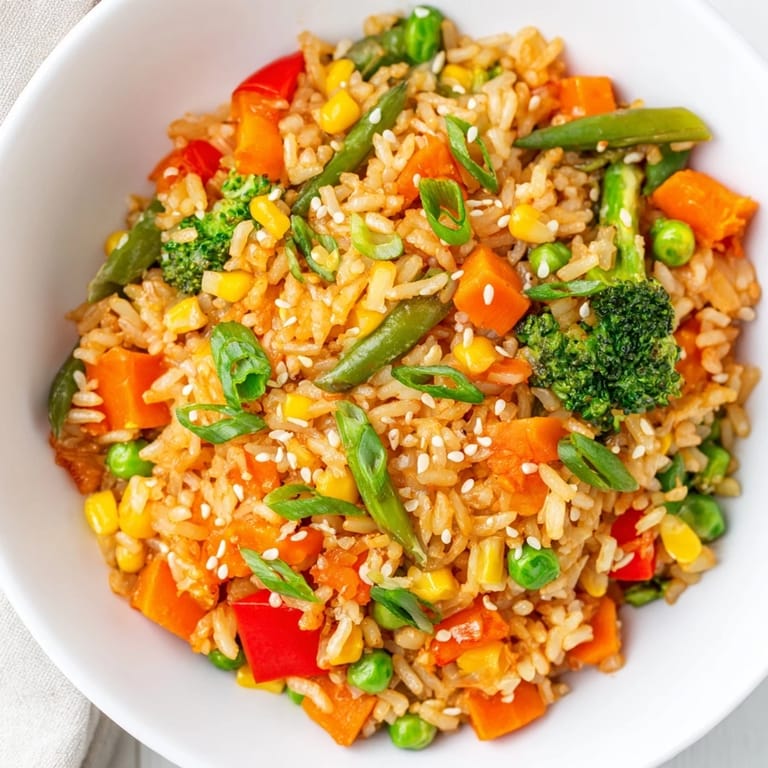
- Remove from heat immediately so nothing overcooks. Garnish with the reserved green onions and sesame seeds if you're using them, then serve while everything is still steaming hot.
 Pin
Pin I once cooked this for a friend who'd been having a rough month, and watching their face light up when they tasted it reminded me that food is really just an excuse to show someone you care. The meal itself was simple, but the attention and the moment we shared made it matter.
The Secret to Restaurant-Quality Fried Rice
The difference between homemade fried rice and restaurant fried rice isn't technique as much as it's confidence with heat. Most home cooks work at temperatures too low, afraid of burning things, but that's exactly why the rice steams instead of fries. When you get your wok properly hot, the vegetables caramelize instead of soften, the rice develops flavor instead of turning mushy, and everything happens faster than you'd think possible. The sound of the wok changes too—there's a constant, lively sizzle instead of a timid whisper. Once you feel that and hear that, you've found the sweet spot.
Playing with Vegetables and Flavors
This recipe is intentionally flexible because fried rice is really about technique and balance, not rigid ingredients. I've made it with mushrooms instead of broccoli on nights when that's what was in the crisper drawer, and once I added thin strips of zucchini because someone was coming over and I panicked about not having enough vegetables. The key is respecting the cooking times: things like mushrooms or zucchini cook faster than carrots or green beans, so add them accordingly. You could also stir in some chili sauce or fresh sliced chili if you want heat, or even a splash of rice vinegar if you're chasing a slightly tangier profile.
Why This Becomes Your Go-To Weeknight Dinner
Once you've made this a few times, you stop thinking about it as a recipe and start thinking about it as a format—a reliable canvas for whatever you want to eat. On nights when you're tired or uninspired, you can make it the same way every time and find comfort in that familiarity. On other nights, you can get creative and experiment. It's forgiving, fast, and genuinely delicious every single time if you follow the heat rule and use cold rice.
- If you have leftover cooked rice in the freezer, use it straight from the freezer; it thaws as it hits the hot pan.
- Add a beaten egg or two toward the end if you want protein, stirring it in until it's scrambled and distributed throughout.
- Serve with a simple cucumber salad and a squeeze of lime if you want something fresh and light alongside it.
 Pin
Pin This dish has fed me through lazy weeknights, impressed people at potlucks, and reminded me that some of the best meals come from the simplest ingredients when they're treated with intention. Make it once, and you'll make it again.
Recipe Q&A
- → What type of rice works best for this dish?
Day-old cooked jasmine or long-grain rice holds texture well and prevents clumping during stir-frying.
- → Can I substitute the vegetables in this dish?
Yes, vegetables like mushrooms, zucchini, or snap peas can be swapped in according to preference or season.
- → How can I make this dish gluten-free?
Use tamari or certified gluten-free soy sauce to maintain flavor without gluten.
- → What oils are recommended for stir-frying?
Vegetable oil or canola oil works well for high-heat cooking, complemented by sesame oil added for flavor.
- → How do I add protein to this rice dish?
Incorporate scrambled eggs or tofu cubes to enhance protein content while keeping it vegetarian friendly.