 Pin
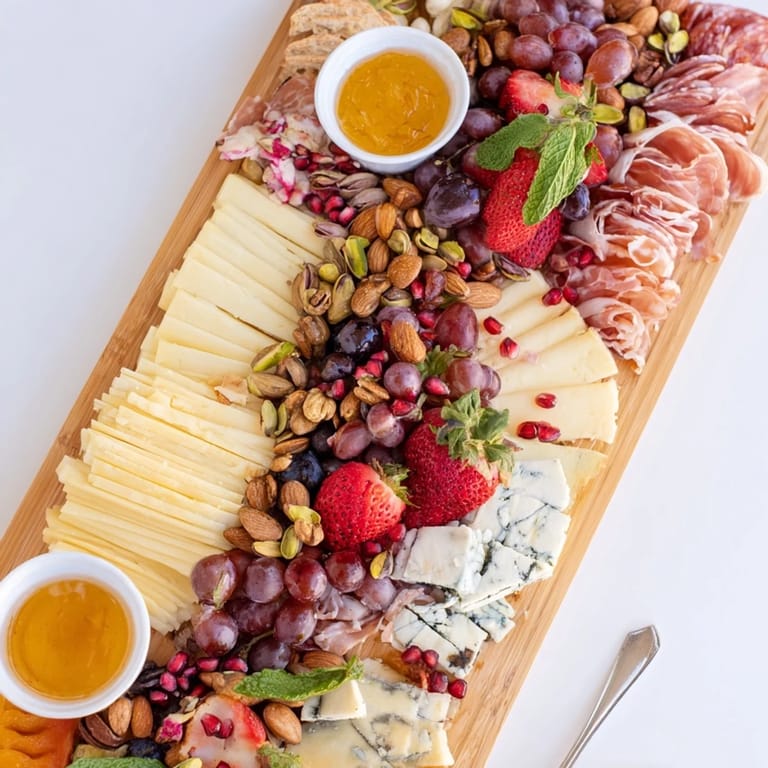
Pin I'll never forget the first time I created a grazing board that made my guests actually gasp. It was a dinner party where I wanted to move beyond the usual scattered cheese and crackers, and instead imagined something that felt like edible architecture. That's when the Pomegranate Jewel Cascade was born—a diagonal river of colors and textures crowned with gleaming pomegranate seeds that caught the light like actual jewels on the board. The moment people saw it, conversations paused. They didn't just eat; they experienced.
I served this board at my sister's engagement party, and I watched as people who normally just pick at appetizers lingered around it for the entire evening, discovering new flavor combinations with each trip back. That's when I realized a grazing board isn't just food—it's an invitation to slow down and connect.
Ingredients
- Brie cheese (150g): The creamy anchor that bridges flavors. Keep it chilled until just before serving so it's soft enough to spread but holds its shape on the board.
- Manchego cheese (150g): This Spanish cheese brings a nutty, slightly sweet character that plays beautifully against the tartness of pomegranate. Its firm texture holds up well when sliced into wedges.
- Blue cheese (100g): A bold presence that demands respect. Use it sparingly and let guests choose their adventure—it's not for everyone, but those who love it will be grateful it's there.
- Goat cheese log (100g): The creamy wildcard that adds tanginess and a sophisticated touch. Slice it into coins so it's visually distinct from the other cheeses.
- Prosciutto (150g): The salty whisper that makes everything taste better. Slice it thin and let it drape naturally on the board for an elegant, organic look.
- Salami (150g): Choose a quality variety with good marbling. It adds meaty richness and a slight peppery note that anchors the board.
- Pomegranate (1 large): The star of the show. Those ruby-red seeds aren't just beautiful—they burst with tart sweetness that cuts through rich cheeses. This is where the magic happens.
- Red grapes (1 cup): Keep them in small clusters for a natural, gathered look. Their sweetness balances the salty cured meats.
- Strawberries (1 cup, halved): Fresh fruit brings a pop of color and juiciness that wakes up your palate between bites of rich cheese.
- Dried apricots (1/2 cup): Chewy and naturally sweet, they provide texture contrast and pair exceptionally well with aged cheeses.
- Dried figs (1/2 cup, halved): These are the bridge between sweet and savory. Their deep flavor adds sophistication to the board.
- Roasted almonds (1/2 cup): Nutty and satisfying, they add crunch and pair beautifully with both cheese and fruit.
- Pistachios (1/2 cup, shelled): Their subtle, slightly sweet flavor and beautiful green color add visual interest and a gourmet touch.
- Candied pecans (1/2 cup): The indulgent element that brings sweetness and crunch. They're conversation starters on any board.
- Assorted crackers (20 pieces): Choose a variety—some plain, some seeded, some whole grain. They're the canvas for cheese and spreads, so pick ones you actually enjoy eating.
- Baguette (1/2, thinly sliced and toasted): Toast it just before serving to maintain crispness. It's more substantial than crackers and perfect for holding generous spreads of cheese.
- Honey (1/4 cup in a small dish): The liquid gold that elevates everything it touches. Drizzle it over blue cheese or use it to glaze a bite with brie.
- Fig jam (1/4 cup in a small dish): This adds sophisticated sweetness and pairs perfectly with hard cheeses. A little goes a long way.
- Fresh mint leaves: Don't skip this. The bright green and subtle aroma signal freshness and add an unexpected herbal note that brings the whole board to life.
Tired of Takeout? 🥡
Get 10 meals you can make faster than delivery arrives. Seriously.
One email. No spam. Unsubscribe anytime.
Instructions
- Set up your stage:
- Choose a large board or platter—at least 18 by 12 inches. If you want to avoid stains, line it with parchment or wax paper. Clear your workspace and gather everything within arm's reach. You want to be in a flow state, not hunting for tools. Take a breath. This is about to get beautiful.
- Prepare the cheeses with care:
- Slice your brie and manchego into thin, elegant wedges about the width of your pinkie finger. Cut the blue cheese into small, rustic chunks that look intentional, not haphazard. Slice the goat cheese log into coins about a quarter-inch thick. Here's the secret nobody tells you: remove the cheeses from the fridge 30 to 40 minutes before arranging. This isn't just a suggestion—cold cheese tastes muted and chalky. At room temperature, the flavors bloom and the textures become creamy and inviting. Your guests will taste the difference, I promise.
- Release pomegranate jewels:
- Cut your pomegranate in half and work over a bowl. Take a wooden spoon and gently tap the back of the pomegranate skin, letting those glorious seeds fall into the bowl below. This is meditative work—let yourself enjoy it. Pick out any white pith clinging to the seeds; bitterness has no place here. Those ruby-red arils are liquid rubies. Treat them like treasure.
- Prepare your fruits with intention:
- Wash and dry your strawberries, then halve them with a clean cut. Remove any bruised bits; you want only the beautiful ones. Separate grapes into small clusters of 3 to 4, which feels more generous than scattered singles. Halve your dried figs so they're bite-sized. Pat everything dry with paper towels. Moisture is the enemy of a crisp board.
- Create the diagonal cascade:
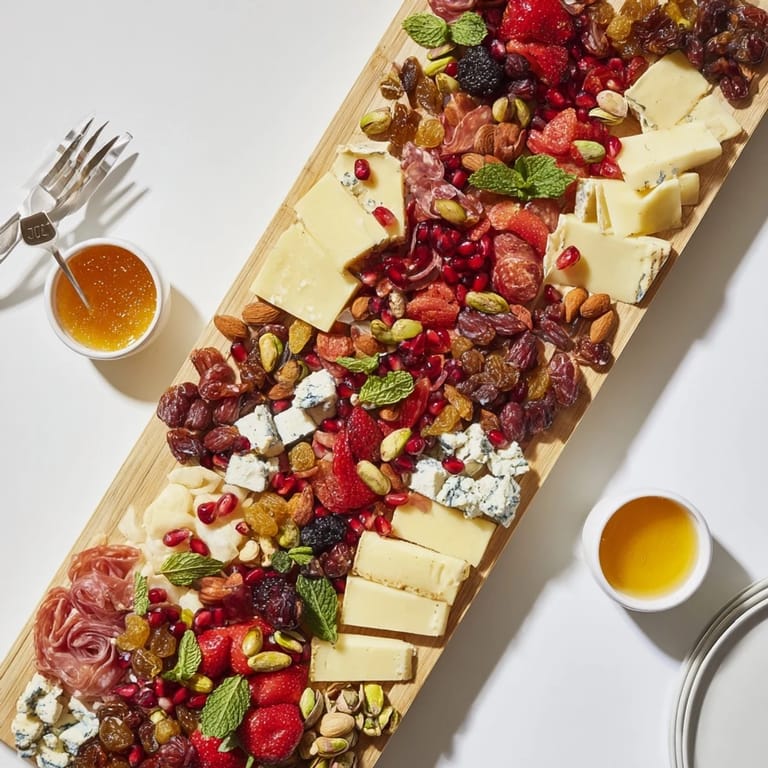
- This is where artistry meets appetite. Visualize a diagonal line running from top-left to bottom-right across your board. Place your small ramekins of honey and fig jam slightly off this central line—they're supporting actors, not the main event. Now, arrange your cheeses along the diagonal, alternating types and shapes. A wedge of manchego, then a chunk of blue, then a coin of goat cheese. Leave small gaps; you'll fill them soon. The diagonal should feel like a river flowing across the board, not a straight line. Movement matters.
- Add meats with elegance:
- Fold and drape your prosciutto along the cascade, letting it fall naturally. It should look effortless, like someone just placed it there moments ago. Layer your salami slices slightly overlapping, creating small clusters. These add richness and visual texture.
- Scatter fruits and nuts like you're painting:
- Now tuck your grapes, strawberries, dried apricots, and figs into the spaces between cheese and meats. Don't force them; let them nestle naturally. Scatter your almonds, pistachios, and candied pecans along the same diagonal path. This is where you fill the gaps and create abundance. Step back occasionally and squint at your board—your eyes should travel smoothly along that diagonal, and everywhere should feel full but not crowded.
- Position crackers and bread at the edges:
- Fan your crackers and toasted baguette slices at both ends of the cascade. Think of them as the frame that borders your artwork. Keeping them away from the juicy fruits means they'll stay crisp when guests pick them up. This detail separates a good board from a great one.
- Crown with pomegranate magic:
- Generously scatter those pomegranate seeds across the entire cascade, clustering them especially along the diagonal line. They catch light and add visual drama. Tuck fresh mint leaves throughout—their green provides contrast and their aroma adds an unexpected freshness. Step back. Admire. This is your masterpiece.
- Final polish:
- Wipe any spills or smudges from the board's edges with a clean cloth. Make sure nothing looks accidental. Everything should feel intentional and inviting. The board should make people want to gather around it and linger.
 Pin
Pin There's a moment that happens at every gathering where I watch someone take a bite of something they've never tried before—maybe it's the combination of creamy goat cheese with tart pomegranate, or candied pecans with manchego—and their face changes. That moment when food becomes a small adventure. That's what this board is for.
The Art of Board Design
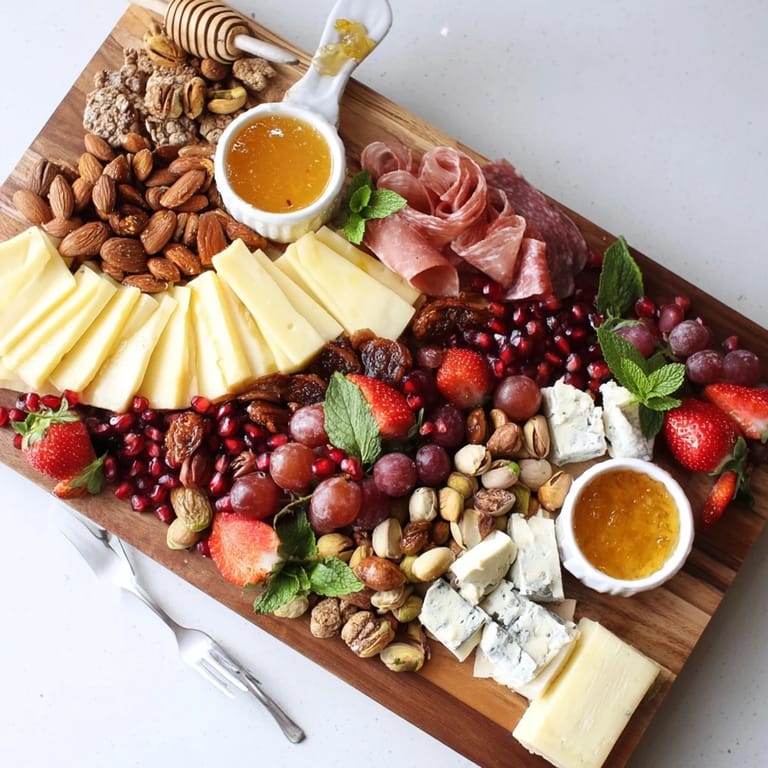
Creating a beautiful grazing board is like conducting an orchestra where every ingredient has a voice. The diagonal cascade isn't just visually stunning; it guides your guests' eyes and creates a natural flow that makes the board feel dynamic rather than static. I learned this after my first attempt, which was just random clusters scattered everywhere. It looked busy and chaotic. The moment I drew that imaginary diagonal line and organized everything along it, everything changed. The board told a story, and people responded to that narrative, moving along the cascade and discovering new flavor combinations at each point. Color matters too—place the deep ruby of pomegranate seeds near pale brie, and suddenly both look more vibrant. Position bright green pistachios next to dark blue cheese, and you've created visual contrast that draws the eye. Think of your board as a painting where you're balancing warm tones (apricots, honey, prosciutto) with cool tones (blue cheese, mint, green grapes). The more deliberately you arrange it, the more intentional it feels.
Flavor Combinations That Work
One of the joys of a grazing board is discovering unexpected flavor friendships. The creamy richness of brie becomes transcendent when paired with the tartness of pomegranate. Blue cheese, which can be intimidating on its own, becomes sophisticated and approachable when you add a drizzle of honey and pair it with dried figs. Goat cheese wants to dance with apricots and candied pecans. The salty kiss of prosciutto makes everything taste better. As you arrange your board, think about building these flavor bridges. Each cluster should have a savory-sweet balance. Each section should offer texture contrast. When guests approach the board, they should feel invited to explore rather than overwhelmed by choices.
Preparation and Timing Secrets
The secret to looking effortless is actually planning ahead. I learned this the hard way during my first party when I was still cutting cheese as guests arrived. Now, I prep everything in advance but assemble strategically. Cut and chill your cheeses a few hours ahead. Slice your baguette and toast it just before serving. Prepare your fruits and nuts in advance and keep them in separate small bowls until assembly. Then, about 30 to 40 minutes before guests arrive, remove your cheeses from the fridge. This is the timing game that changes everything. You can assemble the entire board up to 2 hours ahead and cover it loosely with plastic wrap to keep it fresh. Just before serving, sprinkle your pomegranate seeds and add your mint. This keeps everything crisp and vibrant. The honey and jam can be set out whenever—they actually improve as they sit, their flavors deepening. If you're serving this board in warm weather, keep it in a cool spot and do a final chill 15 minutes before guests arrive. No one wants to watch cheese sweat.
- Toast your baguette fresh just before serving, and brush it lightly with olive oil if desired for extra flavor and crunch.
- If you have a few pomegranates available, de-seed extras and keep them in the fridge; add them to the board fresh for maximum sparkle.
- Remember that soft cheeses like brie will continue to soften as the board sits out, so if your kitchen is warm, work quickly or keep the board in a cool spot between assembly and serving.
 Pin
Pin A beautiful board is an act of generosity. You're saying to your guests, 'I made this for you. I thought about every detail because you matter.' That's what transforms a platter of food into an experience worth remembering.
Recipe Q&A
- → How should the cheeses be prepared for the cascade?
Slice brie and manchego into thin wedges, blue cheese into small rustic chunks, and goat cheese into coins. Bring all cheeses to room temperature for 30–40 minutes to enhance flavor and texture before arranging.
- → What is the best way to extract pomegranate seeds?
Cut the pomegranate in half and hold it cut side down over a bowl. Tap the back firmly with a wooden spoon until seeds release. Remove any white pith to avoid bitterness.
- → How can I keep crackers from becoming soggy on the board?
Place crackers and toasted baguette slices on both ends of the board away from juicy fruits and cheeses. This helps keep them crisp throughout serving.
- → Can the board be prepared in advance?
Yes, assemble the board up to 2 hours ahead and refrigerate loosely covered. Add crackers, bread, and pomegranate seeds just before serving to maintain freshness and crunch.
- → What are some suggested ingredient variations?
Cheeses can be swapped (e.g., manchego for aged cheddar or blue for gorgonzola), and charcuterie replaced with smoked turkey or omitted for a vegetarian twist. Nuts can be adjusted based on allergies or preferences.
- → What tools are recommended for assembling this cascade?
Use a large rectangular or oval board (at least 18 x 12 inches), paring and chef’s knives, cutting board, small bowls for honey and jam, serving tongs or forks, a wooden spoon for pomegranate, and paper towels for cleanup.