 Pin
Pin There's something about the first warm day of spring that makes me crave asparagus soup, especially the kind where you can taste each ingredient singing rather than blending into obscurity. I discovered this particular version while standing in a farmers market, holding a bunch of the thinnest, most tender asparagus I'd ever seen, and the vendor casually mentioned that the best soups let the vegetable breathe. That stuck with me, and now every time I make this, I'm careful not to overcomplicate what's already perfectly elegant.
I made this for a dinner party where one guest mentioned she'd been diagnosed with celiac disease, and instead of scrambling, I simply checked my broth label and suddenly had a soup that worked for everyone at the table. What I remember most isn't the relief on her face, though that mattered, but how she came back for seconds and asked for the recipe right there between courses. That's when I knew this soup had crossed from nice idea to something worth keeping around.
Ingredients
- Fresh green asparagus (500 g, trimmed and cut into 2 cm pieces): The stalks go into the pot while the delicate tips get blanched separately, a technique that keeps their bright color and crisp texture where they matter most.
- Leek (1 medium, white and light green parts only, sliced): Leeks add a gentle sweetness that onions alone never quite achieve, and their mild flavor lets the asparagus take center stage.
- Onion (1 small, chopped): One small onion is all you need; too much will mask the whole point of making asparagus soup in the first place.
- Potato (1 medium, peeled and diced): The potato does the heavy lifting here, giving the soup its silky body without needing cream to do all the work.
- Vegetable broth (1 L): Use a broth you'd actually drink on its own, not the sad stuff collecting dust in your pantry, because it becomes the soup's backbone.
- Heavy cream (150 ml): This is a whisper of cream, not a shout; it rounds out the flavors without drowning them.
- Unsalted butter (2 tbsp): Butter brings everything into focus during that initial sauté, waking up the vegetables before the liquid even touches the pan.
- Salt and freshly ground black pepper: Taste as you go, especially at the end, because seasoning a pureed soup is different from seasoning a chunky one.
- Nutmeg (pinch, optional): If you use it at all, remember that nutmeg whispers rather than shouts; a pinch is genuinely enough.
- Fresh lemon juice (1 tbsp): Lemon is what keeps this soup from tasting flat or one-dimensional, so don't skip this step or reduce the amount.
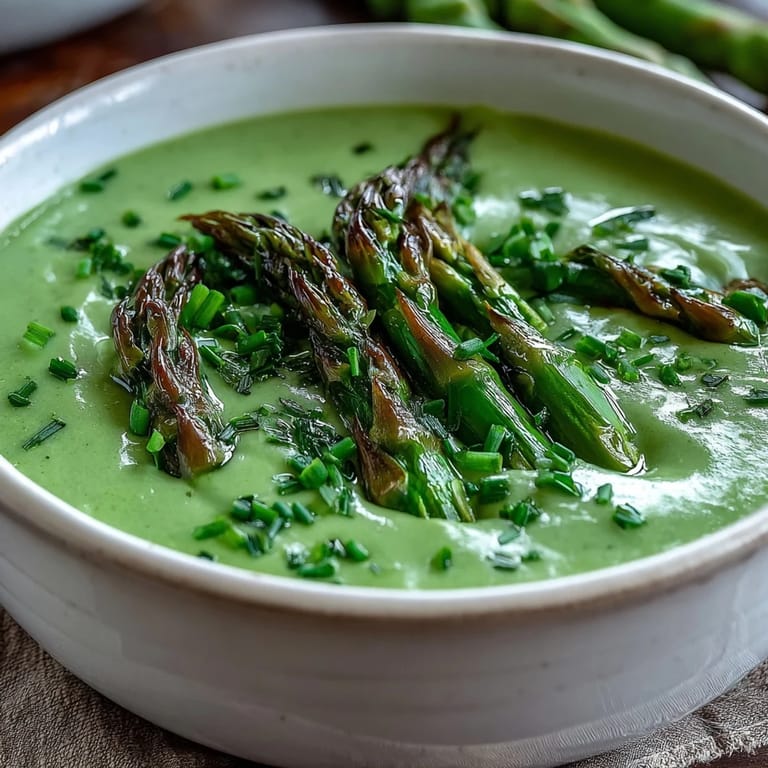
- Reserved asparagus tips and fresh chives or parsley for garnish: These aren't just decoration; they're your reminder of what makes asparagus season special.
Tired of Takeout? 🥡
Get 10 meals you can make faster than delivery arrives. Seriously.
One email. No spam. Unsubscribe anytime.
Instructions
- Melt the butter and soften the base:
- In a large saucepan over medium heat, let the butter turn golden and foamy, then add the onion, leek, and potato. You're not trying to brown anything here; just coax out their sweetness over 4 to 5 minutes until they soften and release their aroma into the kitchen.
- Add the asparagus stalks and cook briefly:
- Toss in the asparagus pieces (keeping those tips safe for later) and let them spend just 2 minutes in the hot butter, enough time to become fragrant and signal that they're ready for the broth.
- Simmer until everything is tender:
- Pour in the vegetable broth, bring the whole thing to a boil, then drop the heat down and let it bubble gently for about 15 minutes. You'll know it's ready when the asparagus is tender enough to break easily with a wooden spoon and the potato has softened completely.
- Blanch the asparagus tips separately:
- While the soup simmers, bring a small pot of salted water to a boil and give those reserved tips just 1 to 2 minutes in the water. This keeps them bright green and snappy instead of turning the gray-green of overcooked asparagus.
- Puree the soup until silky:
- Using an immersion blender (my preference, since there's no second pot to wash), work through the soup until it's completely smooth with no grainy texture. If you're using a countertop blender, work in batches and be careful with the hot liquid.
- Finish with cream and seasonings:
- Stir in the cream and bring the soup back to a gentle simmer, then taste and adjust with salt, pepper, and that optional pinch of nutmeg. The lemon juice goes in last, hitting all those bright asparagus notes and making everything suddenly feel more alive.
- Serve and garnish:
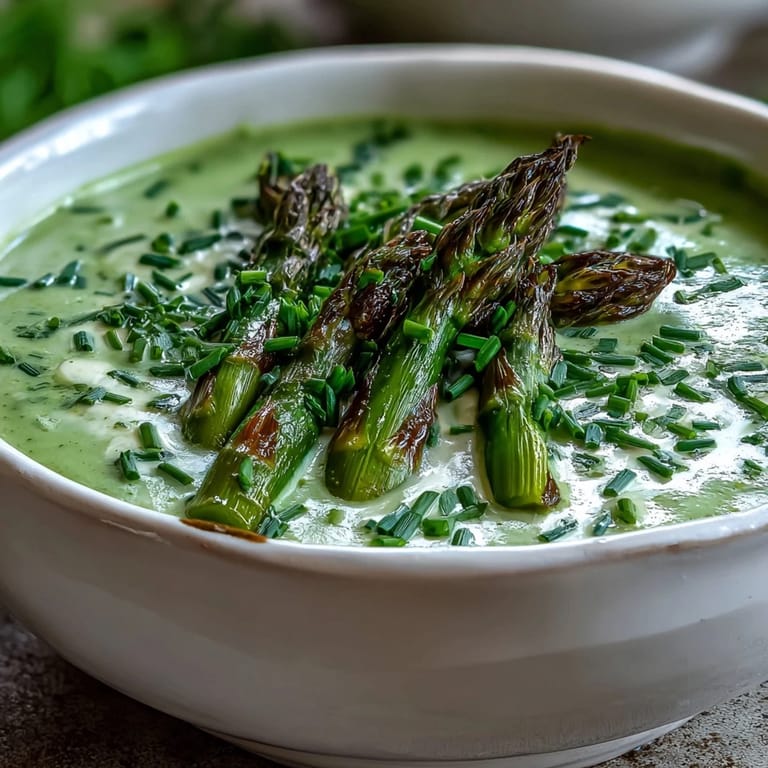
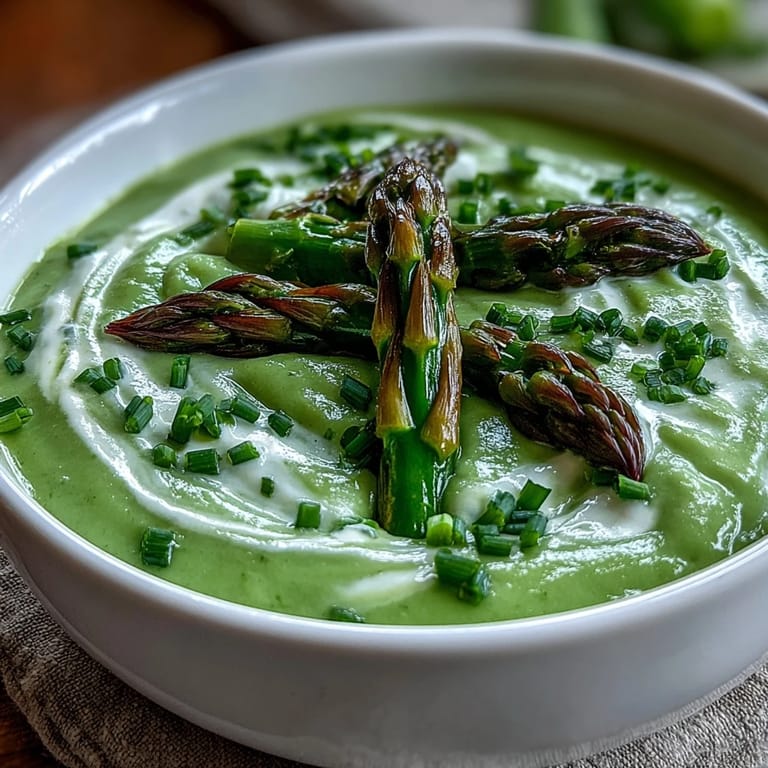
- Ladle the soup into bowls and top with those blanched asparagus tips and a scatter of fresh chives or parsley, creating that contrast between silky and crisp that makes people pause before eating.
 Pin
Pin One afternoon, my neighbor came over as I was finishing this soup, and the smell alone pulled her into the kitchen before I could even offer coffee. We ended up sitting at my counter with warm bowls, and she mentioned that this was the first time since childhood that asparagus didn't taste bitter to her. That moment felt bigger than soup; it felt like proof that cooking something thoughtfully and with attention actually changes how it tastes.
Why Spring Asparagus Matters
Asparagus has a narrow window of perfection, usually just a few weeks in spring, and that scarcity is part of why this soup feels like a celebration rather than an ordinary meal. The stalks you find in late spring are thinner and more tender than those monster spears from the middle of the season, which means you're working with better raw material from the start. This soup is the best argument for shopping seasonally and building meals around what's actually at its peak, not what's been sitting in cold storage for three months.
Making It Your Own
This recipe is a foundation, not a prison, and I've seen people take it in different directions depending on what they had on hand. Some add a handful of fresh tarragon or dill instead of chives, others swirl in a spoonful of crème fraîche or top it with crispy bacon crumbles for someone who can't abide a purely vegetarian soup. The potato can be replaced with cauliflower if you want something lighter, and the cream can be any dairy or plant-based option that works with your diet.
Serving and Pairing Ideas
This soup wants to be treated like the opening act of a proper meal, not rushed or forgotten in favor of the main course. It pairs beautifully with a crisp white wine like Sauvignon Blanc or even a light Pinot Grigio, and serving it alongside crusty bread that you can tear and dip turns it into something more complete. You could also add a poached egg on top if you're serving this as a richer appetizer or even as a light lunch, letting the yolk mingle with the cream and create something almost indulgent.
- Serve this soup at room temperature on warmer days and it becomes a completely different dish, tasting lighter and somehow more refreshing.
- Leftovers keep beautifully for three days in the refrigerator, though the asparagus tips lose their snap so always garnish fresh just before serving.
- If you're cooking for someone with dietary restrictions, this is already vegetarian and gluten-free as long as you check your broth label, making it the rare soup that doesn't require apologies or substitutions.
 Pin
Pin There's real magic in how something this simple, made with just a handful of vegetables and a moment of attention, can taste so completely refined. This soup has earned its place in my regular rotation, and I hope it becomes part of yours too.
Recipe Q&A
- → How do I store leftover soup?
Store cooled soup in an airtight container in the refrigerator for up to 3 days. Reheat gently over low heat, stirring occasionally. The cream may separate slightly but will emulsify again when warmed.
- → Can I freeze this soup?
Yes, freeze the soup before adding cream for best results. Thaw overnight in the refrigerator, reheat, then stir in fresh cream. Dairy-based soups can sometimes separate when frozen and reheated.
- → What can I use instead of heavy cream?
Coconut milk works well for a dairy-free version with subtle tropical notes. For a lighter option, use half-and-half or evaporated milk. Greek yogurt adds tanginess but add it off the heat to prevent curdling.
- → Why add potato to the soup?
The potato acts as a natural thickener, providing body and creaminess without excessive dairy. Its mild flavor complements asparagus while creating a velvety smooth texture when pureed.
- → How do I prevent the asparagus from becoming mushy?
Cook stalks just until tender, about 15-18 minutes total. Reserve the tips separately and blanch briefly for 1-2 minutes. This keeps them bright green and slightly crisp for the perfect garnish.
- → What wine pairs well with this soup?
A crisp Sauvignon Blanc or Pinot Grigio complements the vegetal notes. For red wine lovers, a light Pinot Noir works. The acidity balances the creaminess while enhancing the asparagus flavor.