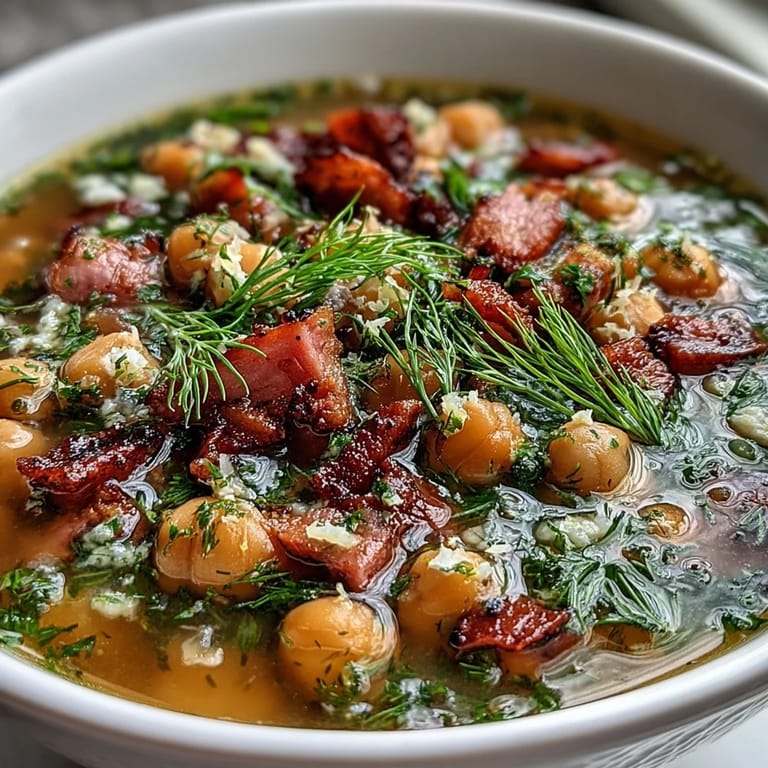
 Pin
Pin There's something about a soup that demands to be made on a quiet afternoon, when you've got ham in the fridge and an urge to do something that feels both effortless and nourishing. This one came together almost by accident one March when I was cleaning out the pantry and found a can of chickpeas staring back at me. I'd bought them months earlier with vague intentions, and that day felt like the right moment. The lemon and dill transformed what could have been ordinary into something bright and alive.
I made this for my neighbor one winter when she'd been stuck indoors with the flu. She opened her door looking exhausted, and I handed her a warm bowl with a crusty piece of bread. She texted me the next day saying she'd made it twice more. That's the thing about a good, honest soup—people want to know how to make it themselves.
Ingredients
- Cooked ham, 250 g diced: Use good quality ham if you can find it, because it's doing the talking in this soup. Leftover ham from dinner works beautifully, and it infuses everything around it with a gentle, smoky warmth.
- Canned chickpeas, 1 can drained and rinsed: Draining and rinsing matters here more than you'd think, removing that starchy liquid that can muddy the broth.
- Medium onion, finely chopped: This is your foundation, and chopping it small means it breaks down into the soup rather than floating around.
- Medium carrots, 2 diced: Dice them roughly the same size as the onion so everything cooks at the same pace and looks intentional in the bowl.
- Celery stalks, 2 diced: Celery is the quiet member of this trio, adding depth without announcing itself.
- Garlic cloves, 2 minced: Mince them fine so they dissolve into the broth and perfume the whole pot.
- Low-sodium chicken or vegetable broth, 1.2 liters: Low-sodium gives you room to taste and adjust seasoning as you go, which you'll want to do.
- Olive oil, 2 tbsp: Good olive oil makes a difference in how the aromatics smell as they hit the pan.
- Lemon juice and zest, 1 lemon: The juice goes in during cooking, but save some zest to finish the bowl—it's the bright moment at the end.
- Fresh dill, 2 tbsp chopped plus extra for garnish: Fresh dill is non-negotiable here. Dried dill tastes like dust in comparison, and this soup deserves better.
- Bay leaf, 1: One bay leaf, never more, simmering quietly in the background for exactly 20 minutes.
- Dried thyme, 1/2 tsp: Thyme gives the soup an herbal whisper that makes it feel more intentional than it is.
- Salt and freshly ground black pepper: Don't be shy. Taste as you finish and season generously.
Tired of Takeout? 🥡
Get 10 meals you can make faster than delivery arrives. Seriously.
One email. No spam. Unsubscribe anytime.
Instructions
- Heat and soften the aromatics:
- Warm the olive oil in your pot over medium heat until it shimmers slightly, then add the onion, carrots, and celery together. You'll hear them start to soften and smell them waking up after about 5 to 6 minutes—that's when you know they're ready.
- Coax out the garlic:
- Stir in the minced garlic and let it cook for just a minute or so until the raw edge disappears and it smells sweet rather than sharp. This matters because raw garlic in a long-simmering soup tastes bitter.
- Introduce the ham:
- Add the diced ham and stir it through for 2 to 3 minutes, letting its edges touch the hot pan and the flavor spread through the vegetables. You're not trying to brown it, just warm it and marry everything together.
- Build the broth:
- Pour in the broth, add the chickpeas, bay leaf, and thyme, then bring everything to a boil before turning the heat down to a gentle simmer. Let it bubble quietly for 20 minutes so the flavors meld and the vegetables finish softening.
- Wake it up with brightness:
- Fish out the bay leaf and stir in the lemon juice, lemon zest, and fresh dill. The soup will smell completely different in the best way—suddenly alive and clear.
- Taste and finish:
- Simmer for another 2 to 3 minutes, then taste everything. Add salt and pepper until it tastes like something you want to eat, not something you have to eat. Ladle into bowls and garnish with more dill if you're feeling generous.
 Pin
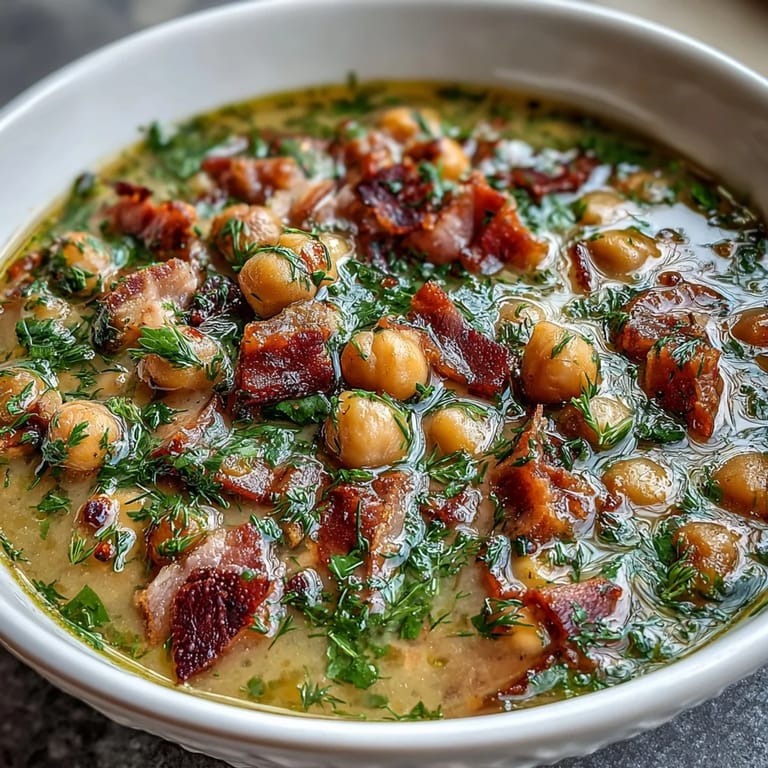
Pin There was an afternoon last fall when my daughter asked to help make this soup, and she insisted on being the one to chop the dill. She was very careful, very serious about not making it too small. When it came time to stir it into the broth, she leaned over the pot and said, 'It smells like spring.' That's when I realized this soup has a way of making people feel like they're part of something seasonal and good, even if it's not the season where it originally belongs.
Why Ham and Chickpeas Work So Well Together
Ham is salty and rich, and chickpeas are mild and creamy, so they balance each other perfectly. The ham doesn't overpower the soup because the chickpeas soak up that flavor and spread it around, while the chickpeas stay interesting because the ham keeps them from tasting bland. It's the kind of partnership that feels obvious once you've tasted it.
What to Serve Alongside This Soup
Crusty bread is not optional here—you need something to tear apart and drag through the broth. A crisp white wine like Sauvignon Blanc cuts through the richness of the ham and echoes the lemon brightness, so if you're drinking while you cook, you're already eating what pairs with dinner. A small green salad with a sharp vinaigrette is nice if you want to feel like you've eaten vegetables in a deliberate way.
Making This Soup Your Own
This soup is flexible in the ways that matter and rigid in the ways that don't. You can swap the ham for smoked turkey if you have it, or leave it out entirely if you're cooking for someone vegetarian—just use vegetable broth instead and maybe add a bit more lemon to make up for the savory depth you're losing. The celery can be more or less depending on how much you like its flavor. The one thing you shouldn't skip is the dill and lemon at the end, because that's what makes this soup feel special instead of just warm.
- For a thicker soup that feels more substantial, mash about a quarter of the chickpeas with a fork before you add them to the pot.
- If you're making this ahead, leave the lemon and dill out until just before serving so they stay bright and don't fade into the background.
- A squeeze of fresh lemon juice at the table, even after the soup is served, is never wrong and often exactly what it needs.
 Pin
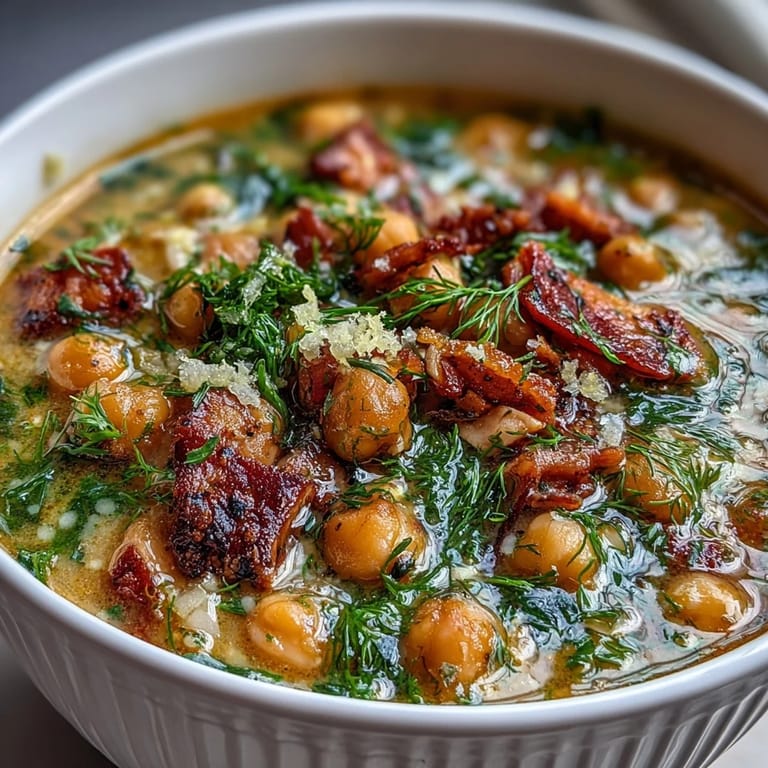
Pin There's comfort in a soup like this, the kind that asks for nothing fancy and gives back warmth and flavor in return. Make it when you need something honest, share it with someone who's had a day, and don't be surprised when they ask you for the recipe.
Recipe Q&A
- → Can I substitute the ham with another protein?
Yes, smoked turkey makes a great alternative, offering a similar smoky flavor without overpowering the other ingredients.
- → How can I make the soup thicker?
Mash some chickpeas before adding them to the pot to create a thicker, creamier texture without extra ingredients.
- → Is it necessary to use fresh dill?
Fresh dill provides the brightest flavor, but dried dill can be used if fresh is unavailable. Add it earlier in cooking for better flavor release.
- → What type of broth works best for this soup?
Low-sodium chicken or vegetable broth allows control over salt levels and complements the hearty ingredients well.
- → Can I prepare this soup in advance?
Absolutely. The flavors deepen when chilled overnight. Reheat gently on the stove before serving.