 Pin
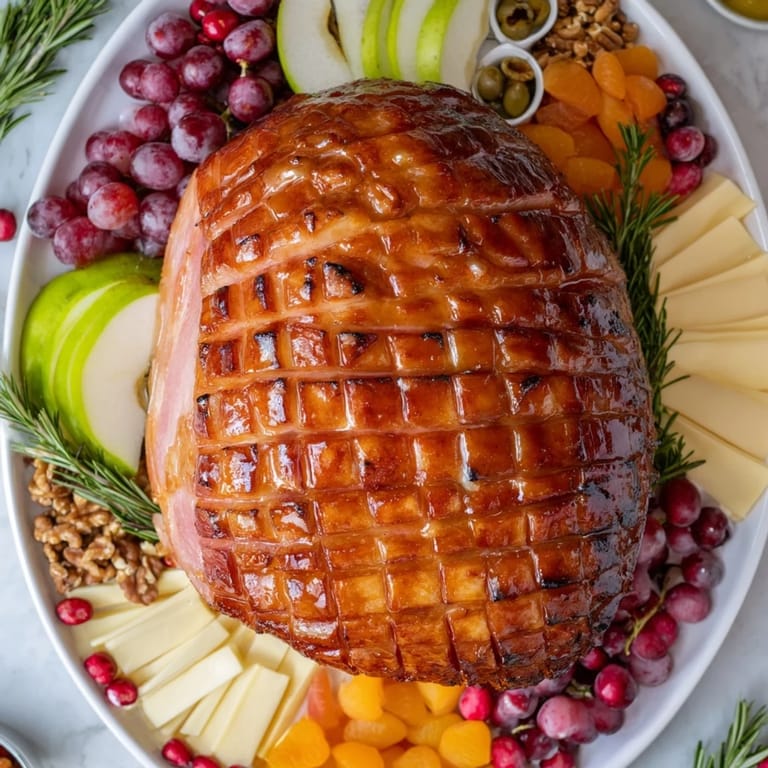
Pin I'll never forget the year I decided to stop bringing the same old glazed ham to my family's holiday gathering and instead create something that would make people pause when they walked into the dining room. I wanted to build a centerpiece that told a story of abundance and care, so I arranged that beautiful spiral-sliced ham at the heart of a sprawling board, surrounded by jewel-toned fruits, creamy cheeses, and briny pickles. The moment my aunt saw it, she stopped mid-conversation and said, 'Now that's what Christmas looks like.' That board became the memory everyone talked about for months, and I realized then that food isn't just about taste—it's about creating a moment where people feel truly welcomed.
I made this board for my first big holiday dinner as a married couple, and I was absolutely terrified. My new husband's family tradition was potluck, which meant everyone was watching to see what I'd bring. When I unveiled that glazed ham centerpiece board, his grandmother—who had never been warm to me—reached over and squeezed my hand. She later told me it reminded her of boards her mother used to make. I've made it every year since, and now it's become our family's expected centerpiece. Food really does bridge the spaces between people.
Ingredients
- Small bone-in ham (4–6 lbs, pre-cooked, unsliced): The foundation of this whole celebration. Buy it a day or two before and let it sit in the fridge—this actually helps it hold moisture during roasting. Look for hams labeled 'fully cooked' to save time, and don't skip the bone; it keeps everything tender and adds incredible flavor to the pan drippings.
- Brown sugar (1 cup, packed): This is what creates that mahogany lacquer everyone will admire. Pack it into your measuring cup so you get the full richness; loose brown sugar won't give you enough sweetness to build proper layers of glaze.
- Honey (1/3 cup): The secret ingredient that keeps your glaze glossy instead of dull. I learned this the hard way after making ham with only brown sugar—the honey adds moisture and that beautiful shine that catches the light.
- Dijon mustard (1/4 cup): Don't use yellow mustard here; Dijon adds sophistication and a subtle tang that makes people taste the complexity without realizing it's there. It's the ingredient that separates 'nice ham' from 'where did you get this?'
- Apple cider vinegar (2 tbsp): This cuts through the richness and keeps the glaze from being cloying. I always use real apple cider vinegar, not white vinegar—the flavor is deeper and more seasonal.
- Ground cloves (1/2 tsp): Just enough to whisper 'holiday' without announcing it. Too much and your ham tastes like a medicine cabinet; this amount is the sweet spot I discovered after several experiments.
- Ground black pepper (1/2 tsp): Fresh-cracked if you have it. This adds the tiniest bite that makes your guests say, 'What is that flavor?' without being able to identify it.
- Sharp cheddar (8 oz, sliced): The bold flavor stands up next to the ham without getting lost. Slice it just before serving so it hasn't oxidized or dried out.
- Brie (8 oz, cut into wedges): This is the creamy luxury on the board. People often go for the brie first, so don't skimp—it's worth the investment.
- Gouda (8 oz, cubed): The caramel notes in gouda echo the glaze on the ham. Cutting it into cubes instead of slices makes it easy to grab and adds textural variety to the board.
- Assorted olives (2 cups): Mix green, black, and Castelvetrano if you can find them. The variety of flavors and brines keeps things interesting. Keep them in a small bowl with a slotted spoon so the brine doesn't migrate across your board.
- Spicy or Dijon mustard for dipping (8 oz): Pour this into a small dish—it's not just for bread, it's for dotting around the board as a flavor anchor. A good mustard makes ham taste even better.
- Cornichons or baby gherkins (8 oz): The briny crunch these provide is essential. They're what people reach for when they want to reset their palate between bites of rich cheese and ham.
- Seeded rye or sourdough baguette (16 slices, toasted): Toast these yourself instead of buying pre-toasted; you control the crunch and can catch them at that perfect moment before they harden. The seeds on rye add texture and visual interest.
- Salted mixed nuts (1 cup): Cashews, almonds, and pecans work beautifully together. The salt ties everything on the board together and provides contrast to the sweet elements.
- Pickled pearl onions (1 cup): These are little flavor bombs that surprise people. They add sweetness and vinegar notes that balance the richness of cheese and ham.
- Seedless grapes (2 cups, red and green in small clusters): Keep them in clusters instead of individual grapes—it looks more intentional and gives people something beautiful to reach for. The sweetness is a palate cleanser.
- Fresh pears (2, cored and sliced): Slice these at the last possible moment before serving. If you must do them earlier, toss with a squeeze of lemon juice to prevent browning. Pears add an elegant, almost delicate element.
- Fresh apples (2, cored and sliced): Choose a mix of red and green varieties for color. Again, the lemon juice is your friend if you're prepping ahead.
- Dried apricots (1/2 cup): These add jewel-like color and chewy sweetness. I love the way their golden hue echoes the glaze on the ham.
- Dried figs (1/2 cup, halved): Split them open when you halve them—the interiors are gorgeous and add textural contrast. They're more sophisticated than raisins and pair beautifully with cheddar.
- Fresh cranberries (1/2 cup, for garnish): Use these as pure garnish only—they're tart raw, but they add a festive pop of color that ties the whole board together. Arrange them in little clusters.
- Fresh rosemary sprigs (1/4 cup, for garnish): The aroma is as important as the appearance. Brush your hand across the rosemary as you pass by the board and your kitchen smells like a holiday feast.
Tired of Takeout? 🥡
Get 10 meals you can make faster than delivery arrives. Seriously.
One email. No spam. Unsubscribe anytime.
Instructions
- Preheat and prep:
- Heat your oven to 350°F (175°C). This temperature is the Goldilocks zone—hot enough to caramelize the glaze beautifully, but not so hot that it burns before the ham cooks through. While the oven preheats, take your ham out of the fridge. Cold ham will have uneven cooking, so letting it sit at room temperature for 20 minutes makes a real difference in the final texture.
- Score like you mean it:
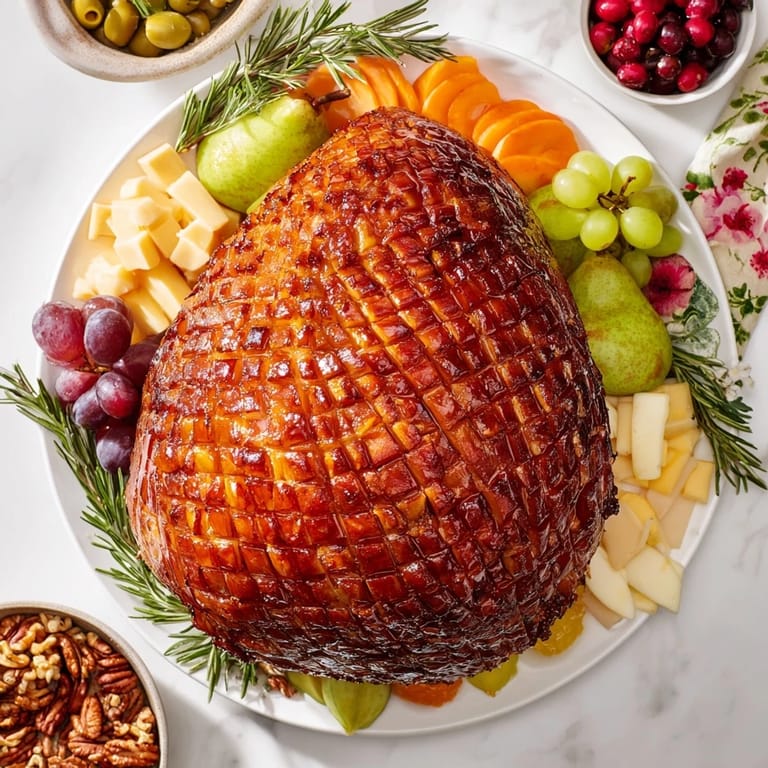
- Using a very sharp chef's knife, score the surface of the ham in a 1-inch diamond pattern. Cut just through the skin and fat layer—you're not trying to cut into the meat itself. The scoring serves two purposes: it gives the glaze somewhere to sink in and caramelize, and it creates those gorgeous grill marks that make people think you're a professional. Take your time with this step; even, deliberate cuts look infinitely better than rushed, jagged ones.
- Mix your liquid gold:
- In a small saucepan, combine the brown sugar, honey, Dijon mustard, apple cider vinegar, cloves, and black pepper. Set the heat to medium and whisk constantly—don't walk away. You want to watch as the sugar dissolves and the mixture transforms into something glossy and thick, which takes about 3–5 minutes. The sensory checkpoint here is important: the glaze should coat the back of a spoon with a slight drip, and it should smell like warm spices and caramel. If you let it cook too long, it will harden and become brittle, so remove it from heat as soon as it reaches that glossy, coat-the-spoon stage. This is where I learned to trust my nose as much as my timer.
- Begin the glaze layers:
- Place the ham flat-side down on a rack in a roasting pan lined with foil (the foil makes cleanup so much easier, and trust me, you'll thank yourself). Brush about a third of the glaze over the ham, working it into all those scored crevices you just created. Be generous but not wasteful—you want an even coating that glistens without pooling at the bottom of the ham. The foil lining catches any drips, which is important because those drips turn into burnt sugar if left to char on the pan.
- Roast and baste with intention:
- Slide the ham into the oven and set a timer for 30 minutes. When that timer goes off, pull the pan out and brush on another layer of glaze, making sure to coat all the surfaces. The layering is what creates that restaurant-quality lacquered finish. Pop it back in and repeat this process every 30 minutes for the full 1 hour 30 minutes of cooking. By the final layer, your ham should be a deep mahogany color with a sticky, glossy finish. If it's darkening too rapidly in the final 30 minutes, tent it loosely with foil to prevent burning. Use a meat thermometer to check that the internal temperature reaches at least 140°F (60°C)—remember, this is a pre-cooked ham, so you're really just heating it through and creating that glaze.
- Rest and reflect:
- Remove the ham from the oven and tent it with foil (not tightly—just loosely draped). Let it rest for 15–20 minutes. This is when the juices redistribute throughout the meat, ensuring that every slice is moist and tender instead of dry. While it's resting, you can finish preparing your board and accompaniments. Don't skip this step; I learned the hard way that rushing from oven to carving board results in a disappointing texture.
- Toast your bread just right:
- While the ham is resting, arrange bread slices in a single layer on a baking sheet. Bake at 350°F (175°C) for about 10 minutes, until the edges are golden and the bread is crispy but not hard. Watch it closely—bread can go from golden to burnt in moments. The goal is a crunch that doesn't shatter your teeth. Remove from the oven and let cool slightly; it will crisp up even more as it cools.
- Prepare your produce at the right moment:
- Just before you assemble the board, slice your apples and pears. Toss them immediately with a squeeze of fresh lemon juice to prevent browning. Keep your grapes in clusters—don't separate them—and arrange your dried fruits so they catch the light. The cranberries and rosemary stay in your hands until the very end; they're the final garnish that ties everything together.
- Assemble with intention:
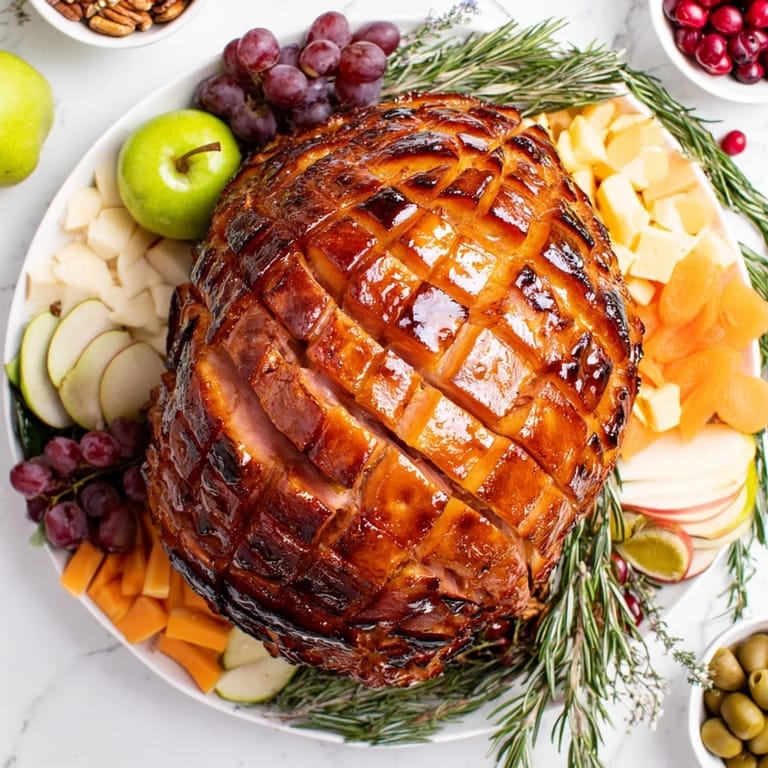
- This is where it all comes together. Place your glazed ham at the exact center of your board or platter (a large wooden board about 20 inches in diameter works beautifully). The ham is your anchor point—everything radiates from here. Fan your cheese slices in even arcs outward from the ham, alternating between cheddar, brie, and gouda so there's color variation. Arrange your toasted bread in gentle curves, creating pathways for the eye to follow. Fill the spaces between these arcs with small bowls of olives, pickles, mustard, and nuts. Tuck your fruit clusters into any remaining gaps, maintaining balance so that red grapes are distributed evenly with green, and that your dried apricots and figs create little pockets of color throughout. Step back and look at your board. There should be no empty patches—it should look lush and abundant, like you're saying 'there's enough for everyone' without saying a word.
- Garnish with the finale:
- Place fresh rosemary sprigs at intervals around the ham, fanning them out like rays of green. Scatter the fresh cranberries in little clusters among the rosemary. They're decorative and not meant to be eaten raw, but they add that final festive sparkle. Step back again. The board should smell like rosemary and ham, look like abundance and care, and feel like an invitation to gather.
- Serve with grace:
- When you're ready to eat, carve the ham at the table. Slice it thinly across the grain—this is key for tenderness. Use a carving fork to steady the ham as you work. Encourage your guests to build their own bites, combining sliced ham with cheese, bread, fruit, and pickles. Everyone gets to create their own perfect bite, which makes the eating experience feel personal and interactive. Watch people's faces as they taste that glossy, spiced ham combined with creamy brie and tart cornichon—that moment is what you were cooking for all along.
 Pin
Pin I made this board for my daughter's graduation celebration, and I remember standing back from it as my whole extended family arrived, watching their faces light up as they walked past it toward the dining room. My dad, who rarely compliments my cooking, whispered to my mom that it looked like something from a magazine. My daughter later told me that board made her feel celebrated, seen, and loved in a way that fancy speeches couldn't. That's when I understood that feeding people isn't just about nourishment—it's about saying 'you matter enough for me to create something beautiful.'
The Art of Board Assembly
Building a grazing board is part practical, part artistic. I used to think it was just about fitting things on a platter, but I've learned that the real magic is in the intentional arrangement. Start by thinking of your ham as the sun and everything else as planets orbiting it. Create lines and arcs that guide the eye. Alternate colors—place red grapes near golden apricots, surround sharp cheddar with the creamy brie, put briny pickles next to sweet dried figs. The contrast is what makes people keep reaching for more. Use small bowls for anything with liquid (olives, pickled onions, mustard) so the brine doesn't seep into your bread and other items. Leave strategic gaps and fill them last—it's easier to see what's needed when you step back and look at the whole board with fresh eyes. Think of it like you're designing a landscape instead of just arranging food.
Creating the Perfect Glaze
The glaze is what transforms a basic ham into something people will remember. I've learned through trial and error that the balance of sweet, spiced, and tangy is crucial. The brown sugar and honey provide sweetness and that glossy finish. The Dijon mustard adds depth and sophistication without being noticeable to most palates. The apple cider vinegar and cloves create complexity—they make people taste something they can't quite name. The magic happens in the patience: you're not rushing this glaze, you're building it slowly over heat until it's thick and glossy. When you brush it on, you're creating layers. Each layer caramelizes in the oven, adding depth. By the final coat, you have something that tastes rich and complicated, like you've been tending this ham all day.
Timing and Temperature Considerations
I've learned that the oven temperature is everything. Too low and your glaze won't caramelize properly; too high and it burns before the ham heats through. 350°F is the sweet spot. The 1 hour 30 minutes of cooking time accounts for a fully pre-cooked ham being brought up to serving temperature while the glaze develops. Don't trust that the ham just needs warming—it needs time for the outside to develop that beautiful finish. Use a meat thermometer and aim for 140°F internal temperature. The resting period afterward is non-negotiable. Those 15–20 minutes allow the juices to settle back into the meat, preventing the slices from being dry. Plan your timing so that the ham finishes resting about 15 minutes before you need to assemble the board—this keeps everything warm and allows you to slice it fresh without it sitting in transition.
- Have all your board components prepped and arranged before the ham comes out of the oven, so you can focus entirely on the final assembly and slicing.
- If you're cooking for a crowd that arrives at different times, you can keep sliced ham warm by covering it loosely with foil and placing it in a 200°F oven until guests arrive.
- Remember that this board actually improves a little as it sits—the flavors continue to meld, and the presentation stays fresh for at least 2–3 hours at room temperature if the room isn't too warm.
 Pin
Pin This board has taught me that the best food is food that brings people together, and the most memorable meals are the ones where the presentation makes people pause and feel celebrated before they even taste anything. Make this for the people you love most.
Recipe Q&A
- → How do I ensure the ham glaze turns out glossy and flavorful?
Combine brown sugar, honey, Dijon mustard, apple cider vinegar, and spices, then whisk over medium heat until thick and shiny. Apply in layers while roasting.
- → What is the best way to slice the ham for serving?
Carve thin slices across the grain after resting to retain moisture and tenderness, encouraging easy pairing with accompaniments.
- → How should I arrange accompaniments for an attractive board?
Fan cheeses and bread in even arcs around the ham, fill gaps with bowls of olives, nuts, and mustard, and tuck in fruit clusters for color and balance.
- → Can I substitute ingredients for dietary restrictions?
Yes, gluten-free bread and lactose-free cheeses work well; smoked turkey breast is a lighter alternative to ham.
- → How do I keep the board fresh during serving?
Refrigerate perishable items promptly and limit room temperature exposure to 2 hours; cover leftovers tightly and reheat gently.