 Pin
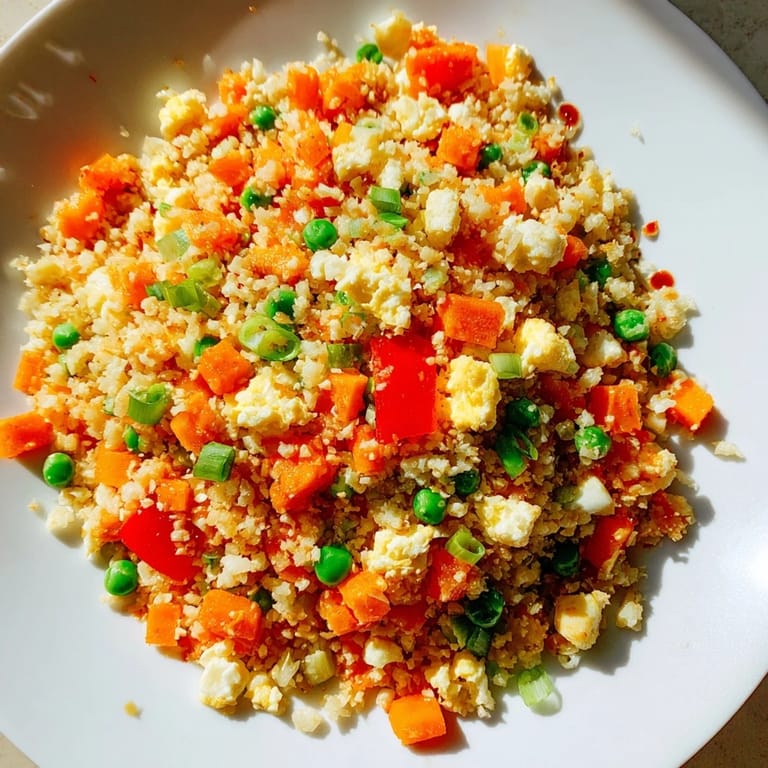
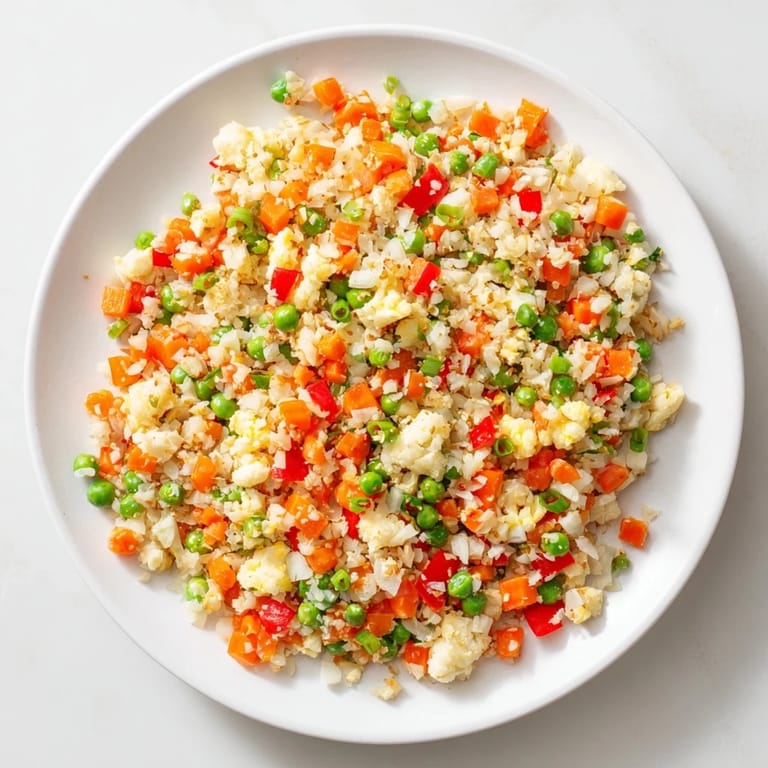
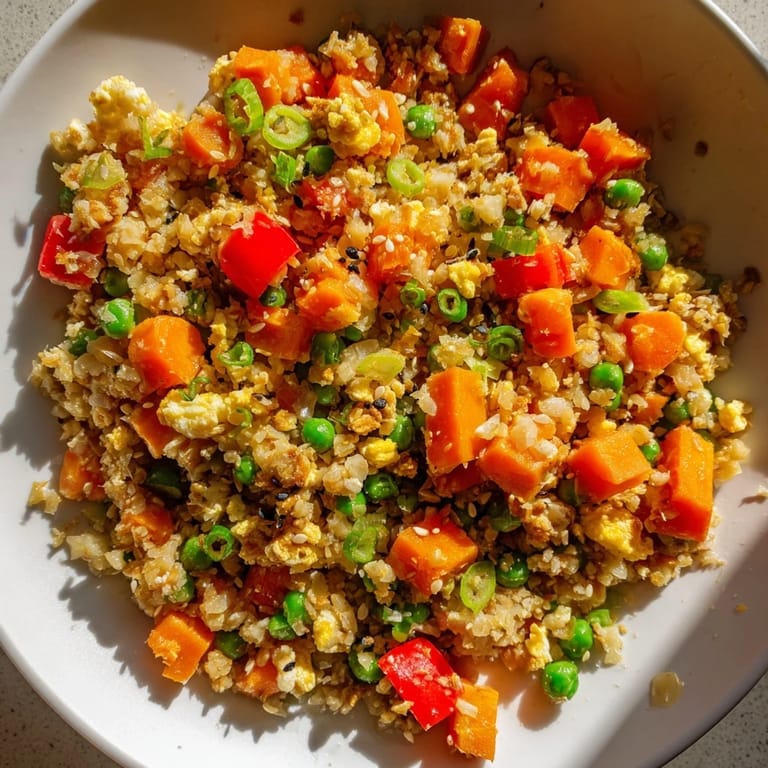
Pin I discovered cauliflower fried rice by accident on a Tuesday when I was trying to use up vegetables before they went bad. My friend had been raving about low-carb cooking, and I was skeptical until I tasted how the riced cauliflower picks up all those savory aromatics and transforms into something that doesn't feel like a compromise at all. That first bite—ginger and garlic hitting first, then the slight sweetness of the carrots and peas—made me realize this wasn't a diet trick. It was just genuinely delicious.
I made this for a dinner party where someone mentioned they were avoiding rice, and I watched their face when they realized what they were eating was light enough to have seconds without that heavy feeling afterward. The whole table wanted the recipe, and that moment taught me something about how food brings people together differently when it's made with real ingredients and actual care.
Ingredients
- 1 medium head cauliflower (about 600 g), cut into florets: This is your grain, and the size of the florets matters—smaller pieces pulse into rice more evenly, so break down anything too large before processing.
- 1 medium carrot, peeled and diced: The slight sweetness here balances the savory sauce and adds natural color without needing anything fancy.
- 1/2 cup frozen peas: Frozen ones are actually better because they thaw gently in the pan and stay intact instead of turning to mush.
- 1 small red bell pepper, diced: The brightness of red peppers is worth seeking out—they add sweetness and visual warmth that makes the dish feel less austere.
- 2 green onions, thinly sliced: These go in at the very end so they stay fresh and sharp, cutting through the richness of the sesame oil.
- 2 cloves garlic, minced: Mince it fine so it distributes evenly and doesn't leave harsh bites; rough chunks will overpower everything.
- 1-inch piece fresh ginger, grated: Ginger is what makes people ask what the secret ingredient is—it brings heat and brightness without any spice burn.
- 2 large eggs, lightly beaten: The scrambled eggs add protein and richness; they create little pockets of creaminess throughout the rice.
- 2 tablespoons sesame oil or neutral oil, divided: Use neutral oil for cooking since sesame oil has a low smoke point, then finish with toasted sesame oil for flavor.
- 2 tablespoons low-sodium soy sauce or tamari: Tamari is naturally gluten-free and tastes just as good if that matters for your table.
- 1 teaspoon toasted sesame oil (optional, for finishing): This optional touch is where the magic happens—it transforms the whole dish into something memorable.
- 1/4 teaspoon ground white or black pepper and salt to taste: White pepper is traditional here and dissolves invisibly, but black pepper works too if that's what you have.
Tired of Takeout? 🥡
Get 10 meals you can make faster than delivery arrives. Seriously.
One email. No spam. Unsubscribe anytime.
Instructions
- Process the cauliflower into rice:
- Rinse the florets and pat them completely dry—any moisture will make them stick and clump instead of becoming fluffy grains. Pulse in batches in your food processor, working in stages so you get even pieces rather than some mushy and some chunky.
- Scramble the eggs first:
- Heat 1 tablespoon of oil in a large nonstick skillet or wok over medium-high heat, add the beaten eggs, and scramble until just set but still slightly soft. Remove them to a plate immediately so they don't overcook—they'll finish cooking when they go back into the pan later.
- Wake up the aromatics:
- Add the remaining oil to the skillet, then sauté the minced garlic and grated ginger for about 30 seconds until the kitchen smells incredible and the raw edge softens. This quick blooming releases all their flavor into the oil.
- Build in layers with vegetables:
- Add the carrots, bell pepper, and peas, cooking for 2 to 3 minutes until they're just tender but still have a little snap when you bite them. This keeps everything bright instead of turning into a sad, mushy pile.
- Toast the cauliflower rice:
- Stir in the riced cauliflower and cook for 4 to 5 minutes, stirring frequently, until it's tender but not falling apart and starting to look slightly golden at the edges. You're not trying to brown it aggressively—just enough to develop flavor and break down the raw taste.
- Bring it all together:
- Stir in the soy sauce, pepper, and salt to taste, then return the scrambled eggs along with the sliced green onions and toss everything together. Heat for just 1 minute more so the onions stay fresh and the eggs warm through without any further cooking.
- Finish with intention:
- Drizzle with toasted sesame oil if you have it—this final touch transforms everything into something restaurant-quality. Serve immediately while it's hot and the textures are still distinct.
 Pin
Pin The moment I stopped seeing this as a diet compromise and started seeing it as its own beautiful thing was when someone asked if I missed rice. I realized I didn't—not when cauliflower cooked this way tastes like intention and care instead of sacrifice.
Customizing Your Bowl
The beauty of this recipe is that it invites improvisation without demanding perfection. I've made it with whatever vegetables were reaching the end of their week in my crisper drawer—broccoli, snap peas, mushrooms, even shredded zucchini—and every version has been genuinely good. The ratio stays roughly the same: enough cauliflower to fill your pan, enough other vegetables to add color and texture, and enough sauce to make everything sing together.
Adding Protein
The eggs in this recipe provide protein, but sometimes you want something more substantial or different. I've added everything from shredded rotisserie chicken to cubed tofu to frozen shrimp, and the dish accommodates all of it gracefully because the seasoning profile is bold enough to tie everything together. If you're adding pre-cooked protein, warm it through gently rather than cooking it from scratch—timing becomes complicated and something always ends up overdone.
Serving and Storing
This is best served immediately while the textures are still distinct and the aromatics are at their brightest, though I've found it reheats respectably in a hot pan with a splash of water if you're planning leftovers for lunch. Cold from the refrigerator it's less magical but still good, almost like a salad when served at room temperature with a squeeze of lime and fresh cilantro if you want to brighten it. A final squeeze of lime and a small handful of fresh cilantro will add brightness that makes the whole dish feel alive again if you're reheating.
- Store leftovers in an airtight container for up to 4 days, and reheat gently in a hot pan rather than the microwave to keep the textures from turning mushy.
- If you're serving this for a crowd, you can prep all the vegetables and process the cauliflower ahead of time, keeping everything in separate containers until you're ready to cook.
- Add a squeeze of lime juice just before serving to cut through the richness and make every bite feel bright and fresh.
 Pin
Pin This recipe taught me that good food doesn't require compromise—it just requires paying attention to what you're doing. Every time I make it, I feel like I'm cooking with purpose instead of following rules.
Recipe Q&A
- → How do I prepare the cauliflower for frying?
Rinse and dry cauliflower florets, then pulse in a food processor until the texture resembles rice. If you don’t have a processor, finely grate the cauliflower.
- → Can I substitute the eggs for a vegan version?
Yes, omit eggs or replace them with a tofu scramble to maintain protein without using animal products.
- → What vegetables work best in this dish?
Carrots, bell peppers, peas, and green onions are ideal for added color and crunch, but broccoli, snap peas, or corn also blend nicely.
- → Which oils are recommended for sautéing?
Use sesame oil or a neutral oil for cooking. Toasted sesame oil can be drizzled at the end for a fragrant finish.
- → How can I make this dish gluten-free?
Swap regular soy sauce with tamari to keep the flavors gluten-free without sacrificing depth.
- → What proteins can I add to enrich this dish?
Cooked chicken, shrimp, or tofu can be added to boost protein and create a heartier meal.