 Pin
Pin The first time I decided to weave vegetables like fabric, I was standing in my kitchen on a Saturday morning with way too much ambition and a pile of fresh asparagus. Something about the way the morning light hit the green spears made me think about patterns, about texture, about turning something simple into something that stops people mid-conversation. What started as a wild idea—binding it all together with chives like delicate ribbons—somehow became one of those dishes that feels like magic but tastes even better.
I made this for the first time at a spring dinner party where I was trying to impress a friend who'd recently gone vegan. I remember standing over that platter thinking it looked too pretty to eat, and then watching people carefully disassemble the lattice to get the exact combination of fruit and vegetable. That moment when someone said it was the best thing they'd eaten all week—that's when I knew this wasn't just pretty, it was actually delicious.
Ingredients
- Asparagus stalks (16 medium): Choose stalks that are straight and firm, with tight tips. The size matters because you want them to bend without snapping when you weave them.
- Fresh chives (16 long stems): These become your edible twine, so pick ones with the longest stems you can find. They're surprisingly strong once softened.
- Blueberries (1/2 cup): Their color pops against the green, and they stay firm enough not to squish during assembly.
- Raspberries (1/2 cup): Delicate but worth it for that tart brightness that plays against the asparagus.
- Strawberries (1/2 cup, halved if large): The sweetness anchor that makes people close their eyes for a second when they taste it.
- Golden berries (1/2 cup, halved if large): These add a tropical hint and keep their shape perfectly in those little squares.
- Extra virgin olive oil (1 tablespoon): Use one you actually like tasting, because you'll taste it. It's the final whisper of flavor.
- Flaky sea salt (1/4 teaspoon): Flaky salt dissolves faster than you'd expect and brings everything into focus.
- Black pepper: Freshly ground, added right before serving so it stays crisp and visible.
Tired of Takeout? 🥡
Get 10 meals you can make faster than delivery arrives. Seriously.
One email. No spam. Unsubscribe anytime.
Instructions
- Blanch the asparagus until it's just barely tender:
- Bring a large pot of salted water to a rolling boil—you should hear it, taste it. Drop the asparagus in and watch it turn that impossible bright green almost immediately. One to two minutes is all it takes; pull it out before you think it's done, because it keeps cooking just a little in the ice bath.
- Soften the chives gently:
- Dip each chive stem into hot water for just five seconds, like you're teaching them to bend. Too long and they'll turn mushy; too short and they'll snap. Cool them right away and pat them completely dry.
- Build your lattice base:
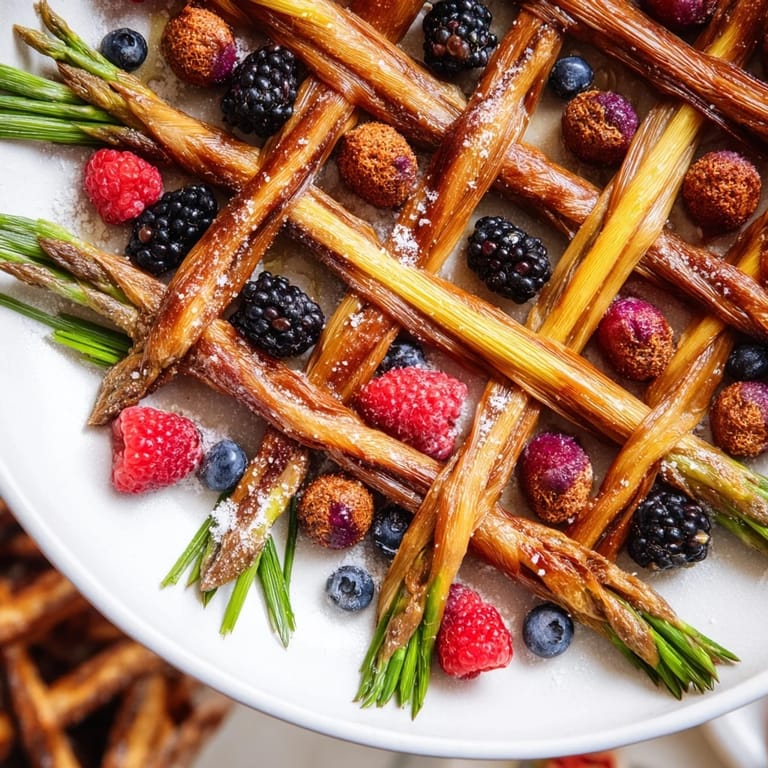
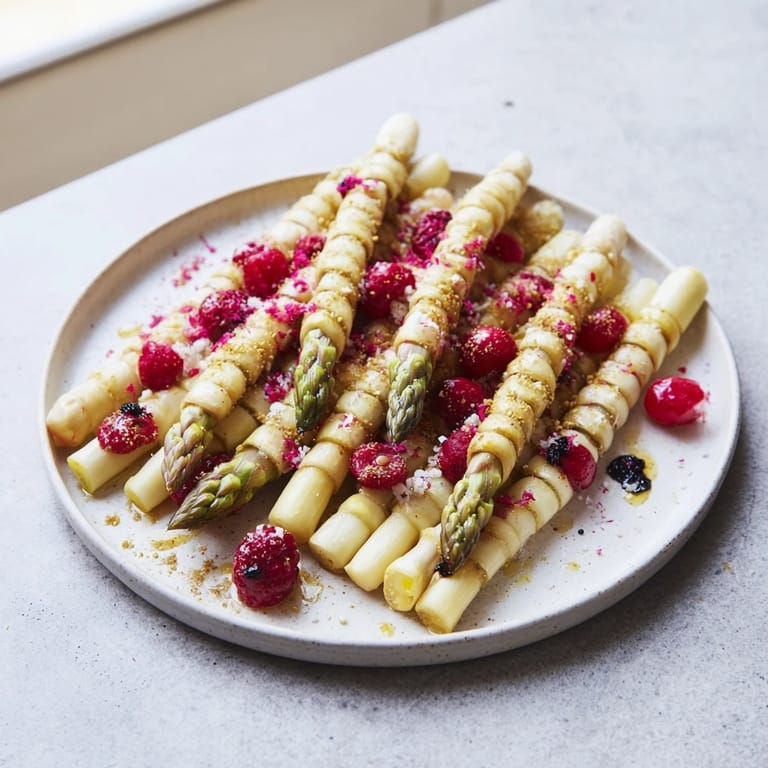
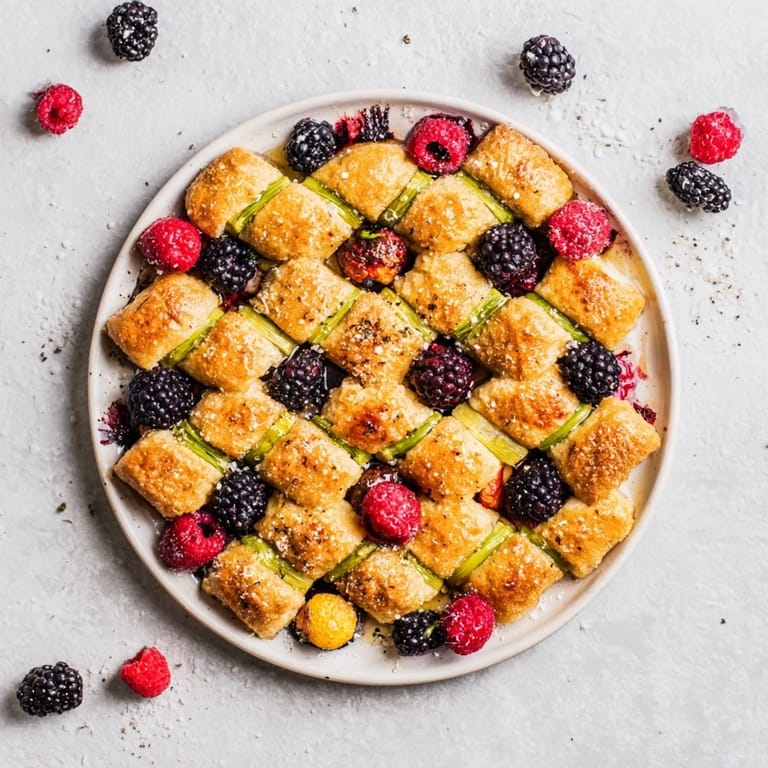
- Lay eight asparagus stalks on your platter parallel to each other, leaving about an inch of space between them. This is where you need patience and a steady hand. Weave the remaining eight stalks perpendicular, going over and under like you're weaving cloth.
- Tie everything together at the intersections:
- This is the part that feels like you're sculpting. Gently wrap a softened chive around each crossing point where the asparagus pieces meet, and tie a loose knot. Don't pull too tight or the asparagus will crack.
- Fill the squares with fruit:
- Now comes the fun part. Scatter your berries into each open square, mixing colors so no two adjacent squares look exactly the same. Trust your instincts about what looks balanced.
- Finish with oil, salt, and pepper:
- Drizzle the olive oil evenly across the whole lattice, sprinkle the sea salt so you can see it catching the light, and finish with fresh pepper right before you serve it. This timing matters because salt and pepper soften if they sit.
 Pin
Pin There's something about the moment when you step back and look at what you've made, and it actually looks like it belongs in a magazine. I remember my kitchen getting quiet when I showed the finished platter to my partner. For a second, nobody wanted to be the first to break the grid apart, and I think that's exactly the point.
Why This Works as a Starter
Appetizers should wake up your mouth and make you curious about what comes next, and this does both. The asparagus is savory and clean, the fruit is bright and slightly sweet, and the combination feels light but interesting enough to hold attention. Because it comes together in under thirty minutes, you can actually make it while your guests are arriving instead of spending the whole party in the kitchen.
Improvising with What You Have
Raspberries not in season or out of budget? Use blackberries, pomegranate seeds, or even red currants. The logic here is about mixing textures and colors rather than hitting specific fruits. You could also weave in thin slices of beet or radish for earthiness, or swap the asparagus entirely for long green beans if that's what's at the market. The structure is what matters; the ingredients are just what you dress it up with.
The Small Details That Change Everything
The difference between this tasting like a regular vegetable plate and tasting like something you'll remember comes down to a few tiny choices. Use the best olive oil you own. Make sure your fruits are actually ripe and flavorful. Pat everything completely dry so there's no water pooling on the platter. These aren't complicated, but they're the difference between good and memorable.
- If your platter isn't cold, chill it in the freezer for five minutes before plating so everything stays as crisp as possible.
- A drizzle of aged balsamic or a scatter of fresh mint leaves adds a layer of complexity that surprises people.
- Serve this straight from the fridge if you're making it a few hours ahead, and don't cover it with plastic wrap—let it breathe on a shelf.
 Pin
Pin This is one of those dishes that teaches you something about cooking that goes beyond recipes. It shows you that simple ingredients, when you pay attention to how they look and taste together, can become something that feels like more than the sum of its parts. Make it once, and you'll make it again.
Recipe Q&A
- → How is the asparagus prepared for the lattice?
Asparagus stalks are briefly blanched in salted boiling water until tender and bright green, then cooled in ice water and dried to maintain crispness and color.
- → What technique is used to assemble the lattice?
The asparagus stalks are woven perpendicularly to form a grid, then chive stems are tied around intersections to hold the structure together securely.
- → Which fruits complement the asparagus lattice best?
Blueberries, raspberries, strawberries, and golden berries add natural sweetness and vivid color nestled within each square of the lattice.
- → Can other fruits be substituted in the lattice?
Yes, small firm fruits like blackberries, red currants, or pomegranate seeds can be used as alternatives for varying flavor and appearance.
- → What seasoning enhances the flavors of this dish?
A light drizzle of extra virgin olive oil combined with flaky sea salt and freshly ground black pepper enhances the natural ingredients without overpowering them.