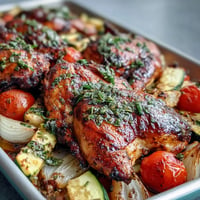
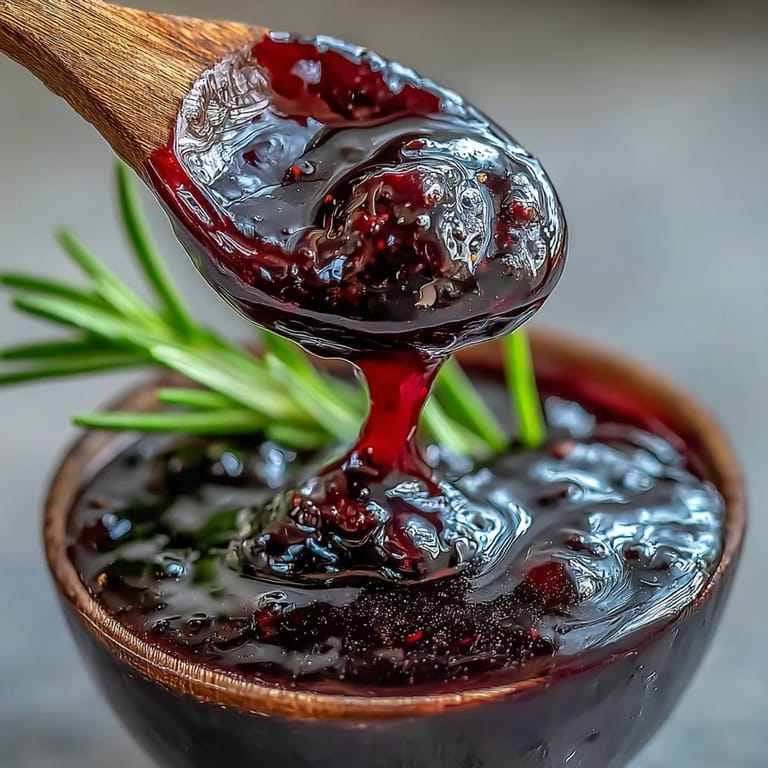
 Pin
Pin Last winter, I was preparing a dinner for friends who'd driven hours through snow to visit, and I wanted something that felt special without fussing over a complicated sauce. A bottle of black currant juice caught my eye at the market, and I remembered my grandmother mentioning how the Scandinavians made magic with tart berries and game. That afternoon, I simmered together this glossy, wine-dark reduction that filled the kitchen with an aroma so unexpectedly sophisticated that my guests asked about it before they even sat down. What started as an impulse became the dark ribbon that transformed simple roasted duck into something memorable.
My partner was skeptical about a fruit sauce for the venison we'd been planning to cook, so I let him taste a spoonful straight from the pan while it was still warm. His eyebrows shot up, and without saying anything, he handed me the spoon back and disappeared to set the table, which I've learned is his highest form of approval. That quiet moment of recognition—when someone tastes something and just knows it's right—is why I keep making this sauce.
Ingredients
- Black currant juice (1 cup): The backbone of this sauce; unsweetened varieties give you control over the final sweetness and let the tart berry flavor shine through without tasting cloying.
- Dry red wine (1/2 cup): Choose something you'd actually drink, as the flavor concentrates during reduction and will carry through to your finished sauce.
- Balsamic vinegar (2 tablespoons): This adds depth and a subtle sweetness that rounds out the sharpness of the black currants.
- Black currant jam (2 tablespoons): A small amount acts as a thickener and intensifies the berry flavor without requiring cornstarch or flour.
- Fresh rosemary (2 sprigs): The piney, slightly minty notes cut through richness and remind you that this isn't a dessert sauce but something meant to accompany savory food.
- Shallot and garlic (1 small shallot, finely chopped; 1 clove garlic, minced): These add umami and a whisper of onion sweetness that anchors all the fruit and herbs together.
- Sea salt and freshly ground black pepper (1/4 teaspoon and 1/2 teaspoon): Taste at the end and adjust; black pepper especially becomes more pronounced as the sauce reduces.
Tired of Takeout? 🥡
Get 10 meals you can make faster than delivery arrives. Seriously.
One email. No spam. Unsubscribe anytime.
Instructions
- Combine your liquids and jam:
- Pour the black currant juice, red wine, and balsamic vinegar into a medium saucepan and set it over medium heat. Stir in the jam and watch as it dissolves into the liquid, turning everything a deep, glossy burgundy color that signals you're on the right track.
- Build the flavor:
- Add your rosemary sprigs, chopped shallot, and minced garlic to the pan, stirring gently so everything gets to know each other. You'll smell the rosemary waking up immediately, mixing with the wine and fruit into something that smells like a restaurant kitchen.
- Simmer down to richness:
- Bring the mixture to a gentle boil, then lower the heat to medium-low and let it bubble softly, uncovered, for 15 to 18 minutes. Stir occasionally and watch the sauce become darker and thicker as the liquid reduces by about half, which is when it shifts from a juice to something with real body and character.
- Finish with intention:
- Once the sauce has thickened slightly and smells concentrated and aromatic, remove it from heat and discard the rosemary sprigs. If you prefer a silky finish, pour the sauce through a fine-mesh sieve to catch the shallot and garlic pieces, though leaving them in is also perfectly lovely and adds texture.
- Season and serve:
- Taste a small spoonful and adjust the salt and pepper until the flavors feel balanced and bright. Serve it warm drizzled over whatever protein or vegetable brought you to make this sauce in the first place.
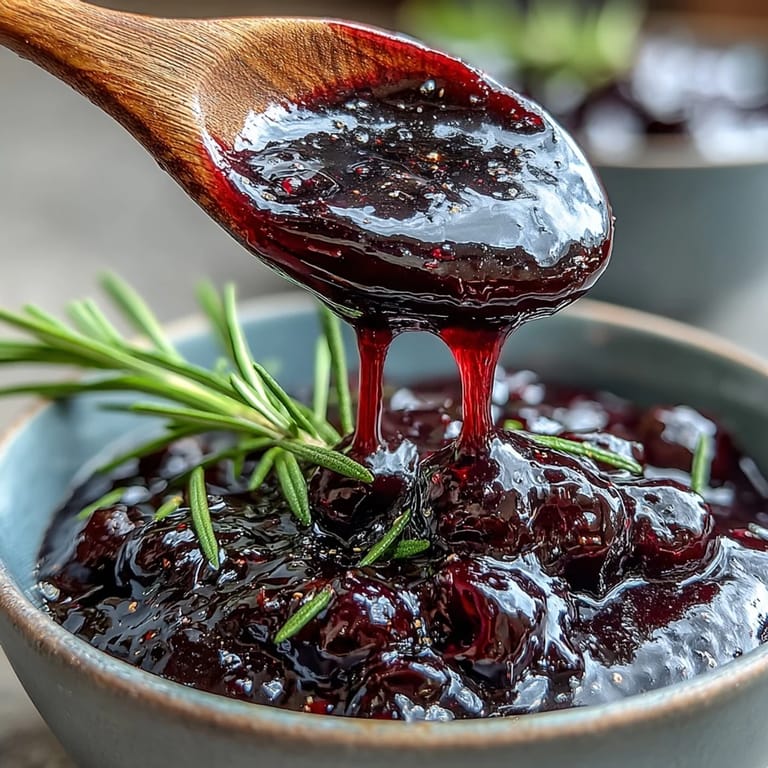 Pin
Pin There's something quietly satisfying about serving a sauce that looks handmade and tastes like it came from somewhere with a real culinary tradition, even though you made it in your own kitchen in less than half an hour. It's the kind of small luxury that makes people feel cared for without you having to spend your entire evening cooking.
When to Make This Sauce
I reach for this sauce most often in autumn and winter when game meats and deep red wines feel right, but it's equally at home alongside spring lamb or even roasted root vegetables in any season. The tartness cuts through richness beautifully, making it perfect for fatty cuts of meat that need something sharp to balance them out.
Variations That Work
Substitute port wine if you want a richer, sweeter sauce with a dessert-like quality, or add an extra tablespoon of jam if you're serving it to someone who prefers their sauces less tart. I've also made this with blackberry juice in a pinch and found it works wonderfully, though you lose the slight tartness that makes black currants special.
Storage and Serving Ideas
This sauce keeps beautifully in a sealed jar in the refrigerator for up to two weeks, and you can gently reheat it over low heat without worrying about it breaking or separating. Beyond meat, try drizzling it over roasted Brussels sprouts, crispy tofu, or even a sharp cheese board for an unexpected flavor contrast.
- Make a double batch and freeze it in ice cube trays so you always have a sophisticated sauce ready to elevate weeknight dinners.
- If the sauce thickens too much when chilled, warm it gently and whisk in a splash of red wine or water to loosen it back to the right consistency.
- Taste again just before serving because flavors can shift after sitting, and a pinch more salt or a crack of pepper might be exactly what it needs.
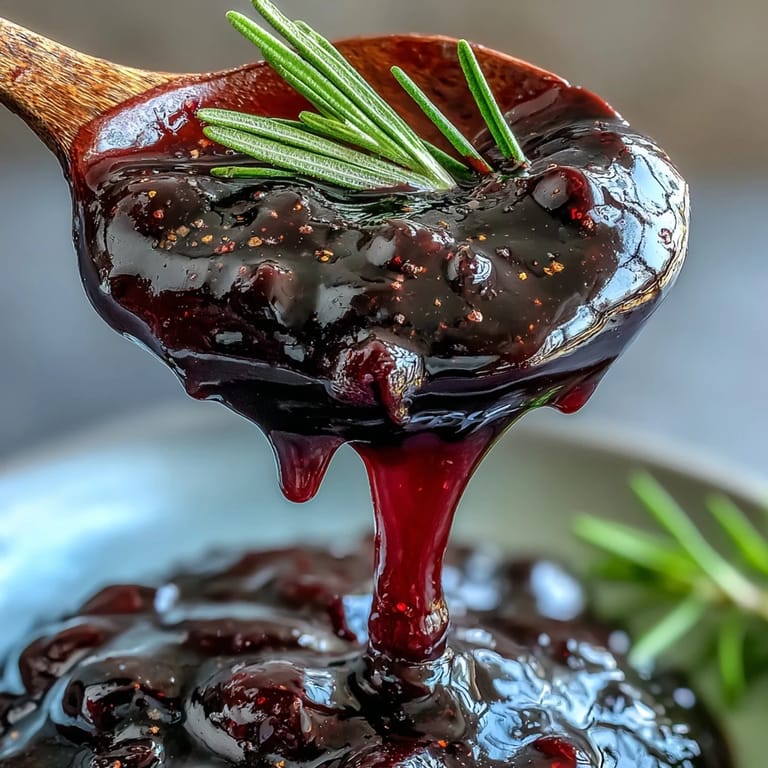 Pin
Pin This sauce has quietly become one of my most-requested recipes, not because it's complicated but because it tastes like you understand flavor and care about the experience of eating. Make it once and you'll understand why.
Recipe Q&A
- → What dishes pair best with black currant reduction?
This reduction complements roasted lamb, duck breast, venison, and game birds exceptionally well. The fruit's natural acidity cuts through rich meats while the tangy sweetness enhances their savory flavors. It also works beautifully with grilled portobello mushrooms or roasted root vegetables for vegetarian options.
- → Can I make this reduction ahead of time?
Absolutely. Prepare the reduction up to 3 days in advance and store it in an airtight container in the refrigerator. Reheat gently over low heat, adding a splash of water if it has thickened too much. The flavors often develop and meld better after resting overnight.
- → What can I substitute for black currant juice?
Cranberry juice or pomegranate juice work well as alternatives, though they will shift the flavor profile. Cranberry offers more tartness while pomegranate provides deeper earthy notes. You can also use blackberry or cherry juice for similar dark fruit characteristics.
- → How do I know when the reduction is ready?
The reduction is properly cooked when it has reduced by half in volume and coats the back of a spoon. You should be able to draw a line through the sauce on the spoon and have it hold briefly. The consistency should be syrupy but still pourable, not sticky like molasses.
- → Is straining the sauce necessary?
Straining is optional but recommended for an elegant, smooth finish. It removes the rosemary sprigs, shallot pieces, and garlic, leaving only the infused liquid. If you prefer more texture and visual interest, simply remove the rosemary and leave the vegetables in for a rustic presentation.
- → How long will this sauce keep?
Store the reduction in the refrigerator for up to one week. For longer storage, freeze in ice cube trays and transfer frozen portions to a freezer bag for up to 3 months. Thaw overnight in the refrigerator and reheat gently before serving.