 Pin
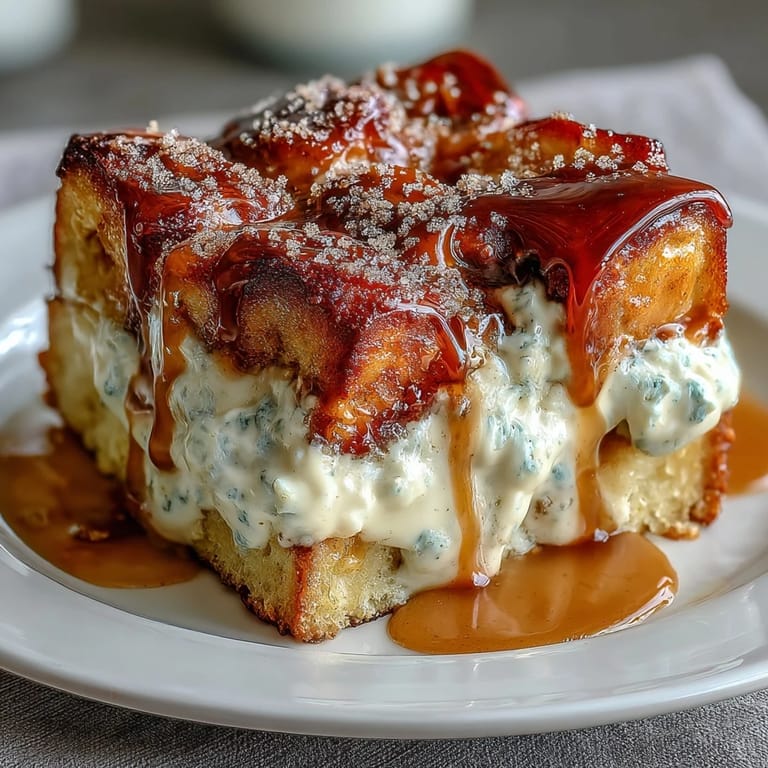
Pin My sister called me panicked the morning of her engagement brunch, asking if I could whip up something impressive but not fussy. I'd never made a French toast casserole before, but something about the combination of caramel, cream cheese, and brioche felt instinctively right. That overnight version turned out to be a game changer—not just because it freed me from morning chaos, but because the bread soaked up all those custard flavors while I slept, creating something far more luxurious than I'd imagined possible.
I've made this casserole probably fifteen times now, and the moment that stuck with me most was watching my neighbor's teenage son come down the stairs, stop mid-step, and just inhale deeply when it came out of the oven. He didn't say anything, just breathed in that cinnamon-caramel-butter aroma and grinned. That's when I realized this dish does something beyond feeding people—it creates a moment.
Ingredients
- Brioche or challah bread: Use a loaf that's slightly older if you can, or leave it on the counter overnight, because fresh bread dissolves into mush while stale bread holds its shape and soaks up the custard without becoming porridge.
- Cream cheese: Softening it at room temperature matters more than you'd think—cold cream cheese won't distribute evenly and you'll end up with gritty pockets instead of smooth layers.
- Eggs and dairy: The combination of whole milk and heavy cream gives you richness without making the custard feel curdled or separated after overnight sitting.
- Light brown sugar: It dissolves into the caramel faster than granulated sugar and adds a subtle molasses depth that regular white sugar won't give you.
- Vanilla extract: Use actual vanilla, not imitation, because imitation can taste slightly bitter when baked this long at lower temperature.
- Ground cinnamon: Measure it generously here—it's what makes the whole thing smell like someone's grandmother's kitchen in the best possible way.
Tired of Takeout? 🥡
Get 10 meals you can make faster than delivery arrives. Seriously.
One email. No spam. Unsubscribe anytime.
Instructions
- Make your caramel foundation:
- Melt the brown sugar and butter together on medium heat, watching it bubble and turn glossy—this takes about two to three minutes and you'll know it's ready when it smells rich and slightly nutty. Stir in the cream, which will bubble up dramatically, then pour the whole thing into your prepared baking dish where it'll sit and wait patiently overnight.
- Layer the bread strategically:
- Spread half your cubed brioche over that caramel in a single layer, filling gaps loosely but not compressing anything. The cubes should look comfortable, not crowded.
- Distribute the cream cheese:
- Beat softened cream cheese until it's completely smooth, then drop spoonfuls across the bread layer and spread gently with your fingers—you want it distributed but not uniform, with little pockets of concentrated creaminess throughout. This isn't about neat presentation; it's about flavor distribution.
- Top with remaining bread:
- Add your second layer of brioche cubes and press down just slightly to nestle them into the cream cheese.
- Prepare the custard mixture:
- Whisk eggs, milk, heavy cream, granulated sugar, vanilla, cinnamon, and salt until completely smooth and homogeneous. Pour this evenly over everything, then press down gently with a spatula so the bread actually absorbs the liquid instead of just floating on top.
- Chill overnight:
- Cover tightly with plastic wrap and refrigerate for at least six to eight hours, preferably overnight, so the bread becomes saturated and the flavors meld together into something cohesive. This waiting period is non-negotiable—it's what transforms this from a bake into an actually special dish.
- Bring to room temperature before baking:
- Remove the casserole from the refrigerator and let it sit on the counter for twenty to thirty minutes while your oven preheats to 175°C (350°F). This prevents the cold center from staying gummy while the edges burn.
- Add the cinnamon sugar topping:
- Mix granulated sugar and cinnamon in a small bowl, then sprinkle this combination evenly across the whole casserole just before it goes into the oven.
- Bake until set and golden:
- Bake uncovered for forty to forty-five minutes, watching for that gorgeous golden-brown puffiness that indicates everything has set through. If the top starts browning too aggressively before the center sets, tent loosely with foil.
- Rest before serving:
- Let the whole thing cool for ten minutes after coming out of the oven—this lets everything set slightly so you don't end up with custardy mess when you cut and serve. Serve warm, with extra caramel drizzled on top and fresh berries on the side if you want to feel fancy.
 Pin
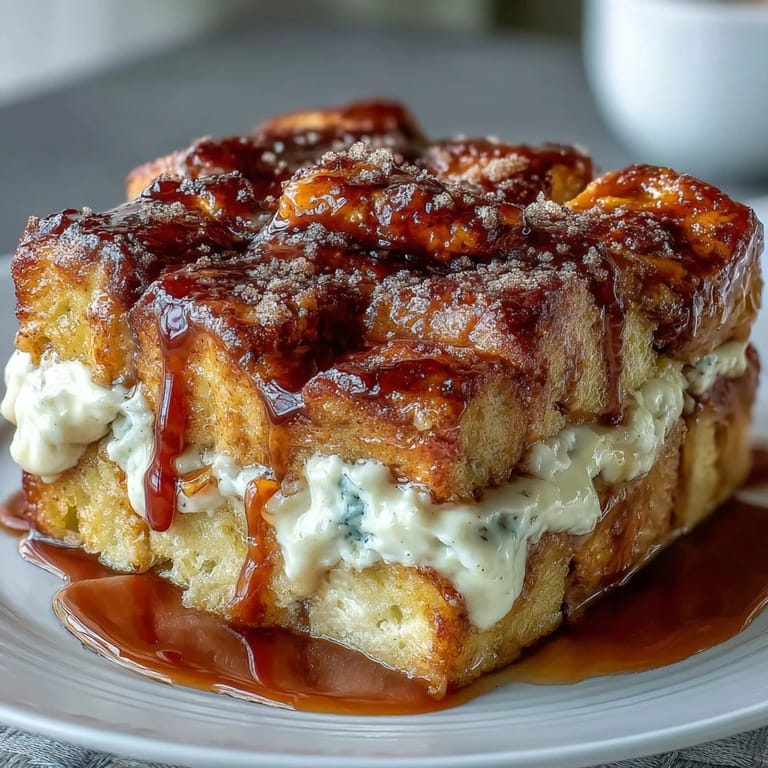
Pin The thing about making this casserole is that it becomes less of a breakfast recipe and more of a ritual—something you assemble the night before with quiet anticipation, knowing that tomorrow morning will smell and taste extraordinary. It's comfort food dressed up as something impressive, which might be the best kind of thing to serve people you actually want to impress.
Why Overnight Chilling Changes Everything
There's a real difference between baking this immediately and letting it sit overnight, and I learned this the hard way by rushing through the process once. The custard doesn't just soak into the bread—it fundamentally transforms it, creating this almost bread pudding texture that's neither entirely custardy nor entirely bread. The brioche becomes almost creamy throughout, while the caramel on the bottom deepens and concentrates, turning into something almost toffee-like by morning.
The Caramel Sauce Secret
That brown sugar caramel at the bottom isn't just a flavor layer—it's actually a structural element that prevents the casserole from getting soggy while simultaneously flavoring everything from underneath. The butter and brown sugar combination creates this rich, almost molasses-forward taste that plays beautifully against the cream cheese coolness. When you slide a spatula under a finished piece, you'll see how that caramel has caramelized further in the oven, creating these crispy-edged pockets of pure butterscotch intensity.
Customization and Serving Ideas
This casserole is forgiving enough to bend to your preferences without losing what makes it special. You can lighten it by swapping half-and-half for heavy cream, add pecans or walnuts between layers for crunch, or fold in some chocolate chips if you're feeling decadent. Serve it with fresh berries to cut through the richness, a light mimosa alongside, or honestly just warm from the pan with a cup of coffee and nobody will complain.
- For a nut-forward version, toast chopped pecans lightly and layer them between the bread and cream cheese for textural contrast.
- Fresh raspberries or sliced strawberries brighten the heaviness and add visual appeal without much extra effort.
- A drizzle of extra caramel sauce right before serving turns something good into something people will actually ask you to make again.
 Pin
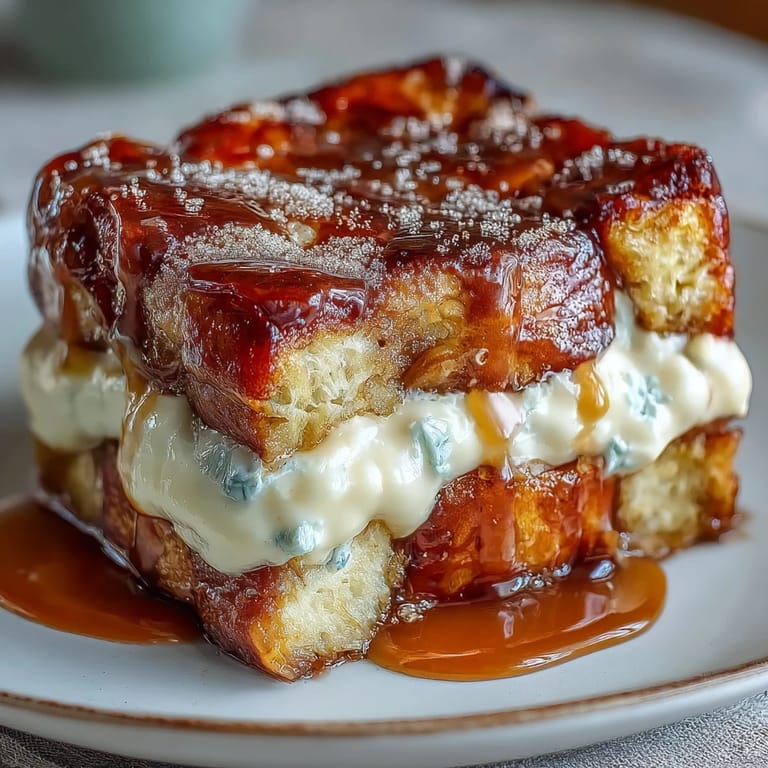
Pin This casserole became one of those dishes I make when I want breakfast to feel like an event rather than just fuel. It's proof that sometimes the best meals are the ones that ask you to slow down, prepare ahead, and trust the process.
Recipe Q&A
- → Can I prepare this the night before?
Yes, this dish is designed to be prepared ahead. The overnight chilling time allows the bread to fully absorb the custard, resulting in a creamier texture. Simply assemble, cover, and refrigerate for 6-24 hours before baking.
- → What type of bread works best?
Brioche or challah are ideal choices due to their rich, eggy structure and ability to absorb liquid without becoming mushy. Stale bread (1-2 days old) works even better than fresh loaves. French bread or Texas toast can be substituted in a pinch.
- → Can I make this without cream cheese?
While cream cheese adds tangy richness, you can omit it entirely for a simpler version. Alternatively, substitute with mascarpone for a milder flavor or Greek yogurt for a lighter twist with pleasant tang.
- → How do I know when it's done baking?
The casserole is ready when it's puffed significantly, golden brown on top, and set in the center with no jiggly liquid remaining. A knife inserted near the center should come out clean. If the top browns too quickly, cover loosely with foil.
- → Can I freeze leftovers?
Yes, individual portions freeze well for up to 2 months. Wrap slices tightly in plastic and foil, then thaw overnight in the refrigerator before reheating. Reheat in the microwave or oven at 175°C (350°F) until warmed through.
- → What toppings pair well?
Fresh berries like strawberries or raspberries add bright contrast. A drizzle of maple syrup enhances the caramel notes, while toasted pecans or walnuts provide crunch. A dollop of whipped cream or a sprinkle of powdered sugar makes it extra special.