 Pin
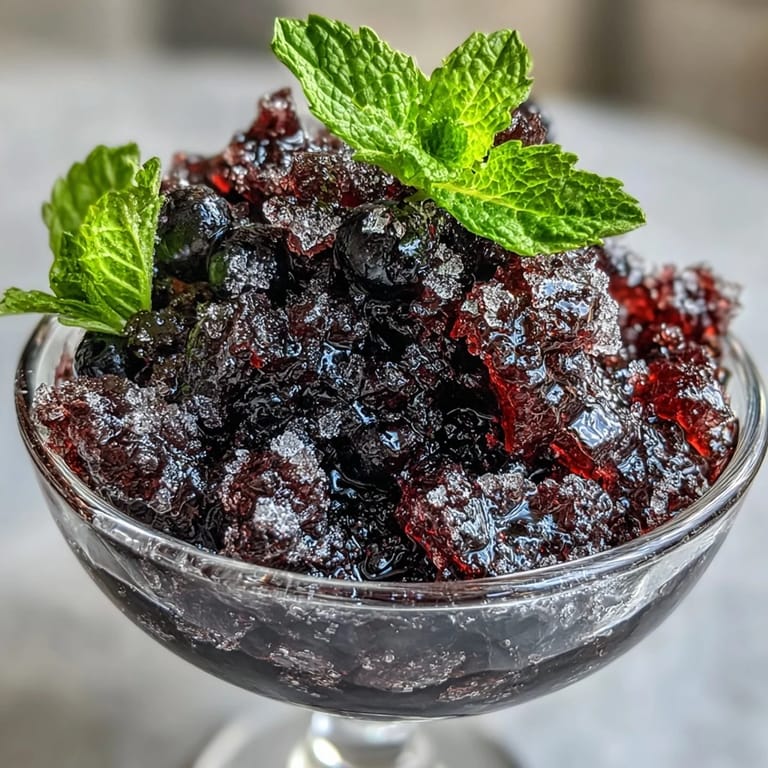
Pin Experience the bold and tangy essence of summer with this refreshing Black Currant Granita. This crystalline frozen dessert is bursting with flavor, making it the perfect treat for warm afternoons or a sophisticated, palate-cleansing finale to any dinner party.
Pin Creating this granita is a rewarding process that transforms simple ingredients into a vibrant, snow-like texture. By simmering the currants to release their juices and then hand-scraping the ice as it sets, you achieve a unique consistency that is light, flaky, and incredibly satisfying.
Ingredients
Tired of Takeout? 🥡
Get 10 meals you can make faster than delivery arrives. Seriously.
One email. No spam. Unsubscribe anytime.
- Fruit: 500 g (about 3 cups) fresh or frozen black currants
- Sweetener: 150 g (3/4 cup) granulated sugar
- Liquid: 400 ml (1 2/3 cups) water
- Citrus: 1 tablespoon freshly squeezed lemon juice
Instructions
- 1.
- Rinse the black currants thoroughly. If using fresh currants, remove stems.
- 2.
- In a medium saucepan, combine the black currants, sugar, and water. Bring to a simmer over medium heat. Stir occasionally until the sugar dissolves and the currants burst, about 10 minutes.
- 3.
- Remove from heat and let cool slightly.
- 4.
- Puree the mixture using a blender or immersion blender until smooth.
- 5.
- Strain the puree through a fine-mesh sieve into a large bowl, pressing to extract as much juice as possible. Discard seeds and skins.
- 6.
- Stir in the lemon juice.
- 7.
- Pour the strained mixture into a shallow metal baking dish.
- 8.
- Place in the freezer. After 45 minutes, use a fork to scrape and break up any icy edges. Return to the freezer.
- 9.
- Every 30–45 minutes, scrape and fluff the mixture with a fork until the granita is fully frozen and fluffy, about 4 hours total.
- 10.
- Serve immediately in chilled glasses or bowls.
Zusatztipps für die Zubereitung
Using the right tools is key for this recipe: a medium saucepan for the initial simmer and a fine-mesh sieve to ensure a smooth, seed-free base. For freezing, a shallow metal baking dish is highly recommended as metal conducts cold faster, helping the crystals form more effectively.
Varianten und Anpassungen
For a more sophisticated adult version, consider adding 2 tablespoons of crème de cassis or black currant liqueur to the mixture before freezing. This not only enhances the fruit flavor but also adds a rich depth to the dessert.
Serviervorschläge
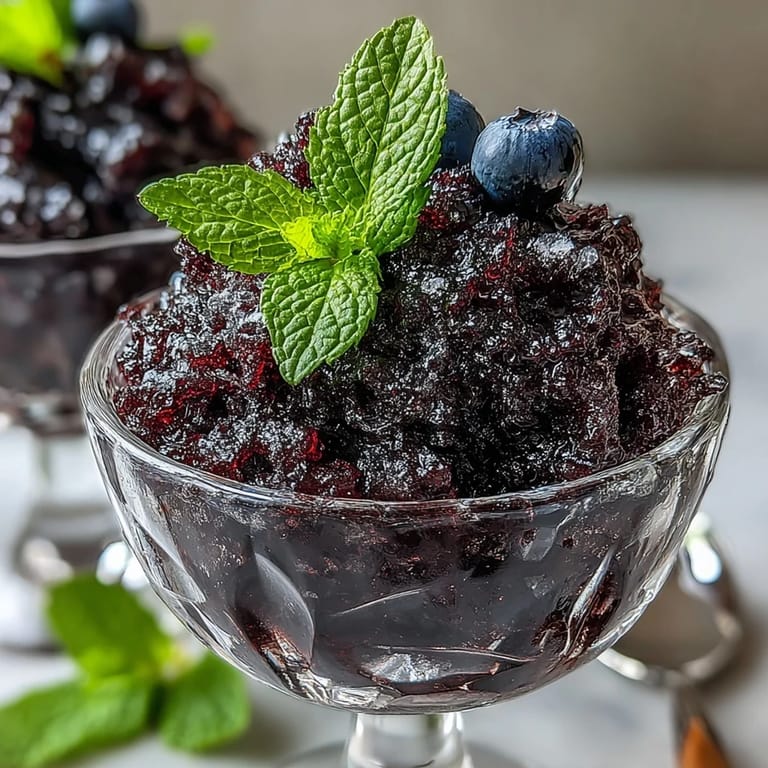
To maintain the perfect texture, serve the granita in chilled glasses or bowls. For a professional finish, garnish each portion with a sprig of fresh mint or a few whole black currants for a beautiful contrast against the vibrant red ice.
 Pin
Pin This Black Currant Granita is a stunning example of how simple ingredients can create a world-class dessert. Enjoy the cool, tangy burst of flavor in every bite and make the most of the black currant season with this easy and elegant recipe.
Recipe Q&A
- → What is granita?
Granita is a traditional Italian semi-frozen dessert made from sugar, water, and various flavorings. Unlike sorbet or ice cream, granita has a coarser, crystalline texture achieved by periodically scraping the mixture during freezing.
- → Can I use frozen black currants?
Absolutely. Frozen black currants work perfectly in this preparation. There's no need to thaw them first—simply add them directly to the saucepan with the sugar and water.
- → How long does black currant granita keep in the freezer?
You can store the granita in an airtight container for up to 2 days. Before serving, simply fluff it with a fork to restore the crystalline texture.
- → What's the difference between granita and sorbet?
Granita has a coarser, more crystalline texture compared to sorbet's smooth consistency. Granita is made by repeatedly scraping the freezing mixture, while sorbet is churned in an ice cream maker.
- → Can I reduce the sugar in this recipe?
You can reduce the sugar slightly, but keep in mind that sugar helps create the proper texture and prevents the mixture from freezing rock-hard. The amount specified balances the tartness of the currants while ensuring proper consistency.
- → What other fruits work well for granita?
Excellent alternatives include berries like raspberries, strawberries, or blueberries, as well as citrus fruits like lemon or blood orange. Coffee and almond granitas are also classic Sicilian variations.