 Pin
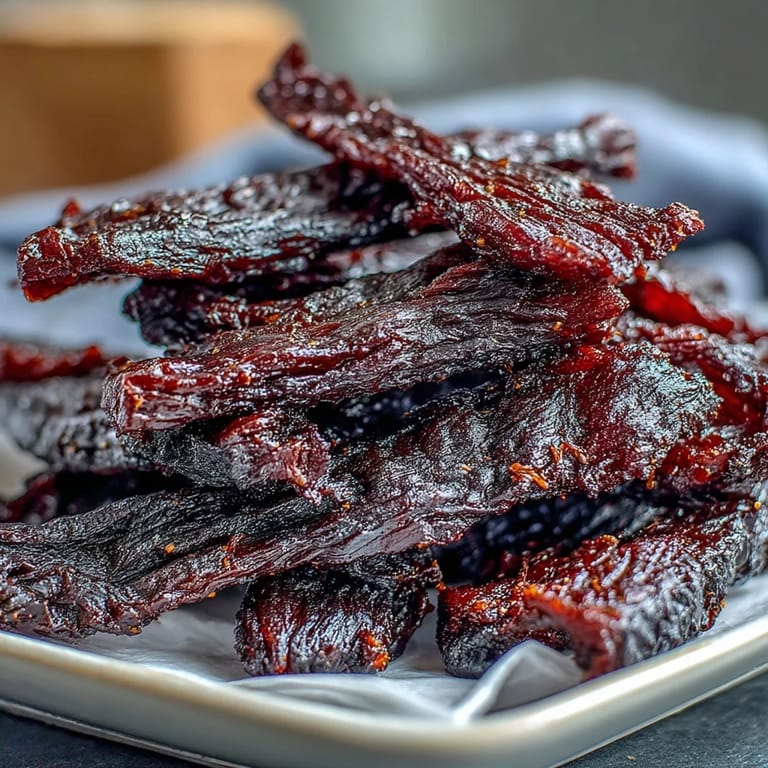
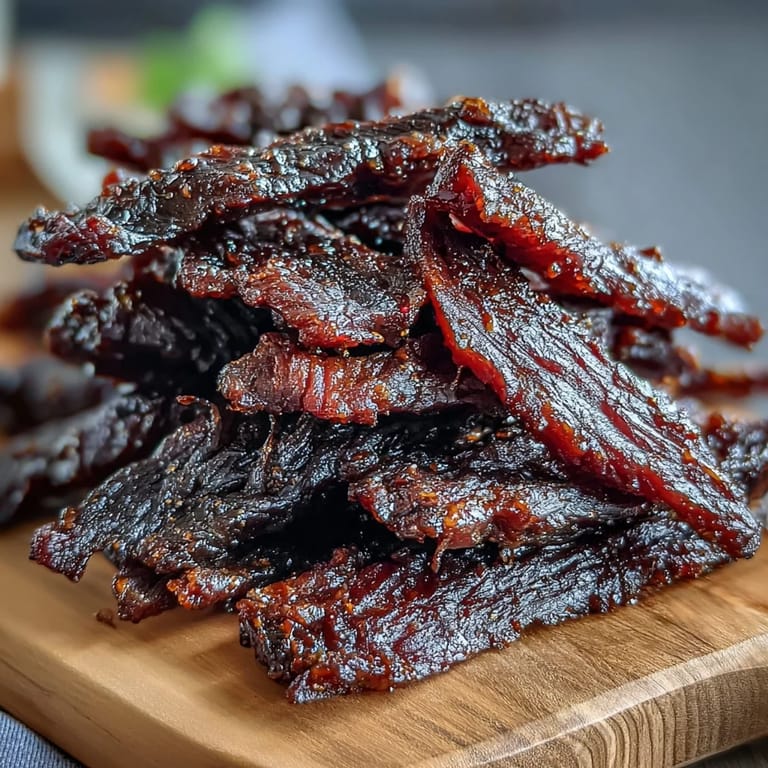
Pin My neighbor showed up at my door one Saturday with a jar of homemade black currant jam and said, "Make something weird with this." That jar sat on my counter for three days before I realized jerky was the answer, not dessert. The first batch was a gamble, marinating beef strips in that deep purple marinade while cherry wood smoke curled through my garage setup. When I pulled out those first pieces—glossy, dark, and impossibly fragrant—I knew we'd stumbled onto something special.
I made this for a camping trip with friends who thought they were getting regular beef jerky, and the moment someone tasted it, the whole vibe shifted. We sat around the fire longer that night, just chewing and talking, and someone asked for the recipe before we even left. That's when I knew this wasn't just a snack—it was the kind of thing that makes people remember a moment.
Ingredients
- Lean beef (top round, flank, or sirloin): Slice it thin against the grain so each piece bends without cracking, and choose the leanest cuts you can find because fat turns rancid faster than you'd think.
- Black currant jam or preserves: This is the secret backbone—that fruity tartness cuts through smoke and salt in ways regular barbecue sauce never could.
- Soy sauce: Use tamari if you're keeping this gluten-free, and don't skimp on the quality because it carries half the umami weight here.
- Worcestershire sauce: The fermented depth it adds is non-negotiable, though heads up that most brands contain anchovies.
- Apple cider vinegar: This keeps the black currant from becoming cloying and adds a brightness that balances the smoke.
- Brown sugar: Just enough to help the marinade stick and caramelize slightly during smoking.
- Smoked paprika, garlic powder, and onion powder: These layer the savory foundation without overpowering the fruit-smoke balance.
- Ground black pepper and kosher salt: Toast your peppercorns fresh if you can—the difference is subtle but real.
- Cayenne pepper: Optional, but a pinch transforms this from sweet-savory to sweet-savory-sneaky-hot in the best way.
- Cherry wood chips: Milder and sweeter than oak or hickory, which means the black currant actually gets to sing instead of being buried.
Tired of Takeout? 🥡
Get 10 meals you can make faster than delivery arrives. Seriously.
One email. No spam. Unsubscribe anytime.
Instructions
- Build Your Marinade:
- Whisk the black currant jam with soy sauce, Worcestershire, vinegar, brown sugar, smoked paprika, garlic powder, onion powder, pepper, salt, cayenne, and water until it's smooth and glossy. You're creating the flavor foundation here, so taste it—it should be funky and complex, not sweet.
- Coat the Beef:
- Add your sliced beef to the marinade and make sure every single piece gets coated. The jam can clump up, so use your hands to massage it in if you need to.
- Let Time Do the Work:
- Cover and refrigerate for at least 8 hours, though overnight is better. The salt and soy begin breaking down the muscle fibers, and the flavors deepen in ways you won't believe until you taste it.
- Prepare for Smoke:
- Drain the beef carefully and pat each piece dry with paper towels—excess liquid will steam instead of creating that desirable jerky texture. Get your smoker or oven ready and soak your cherry wood chips if you're smoking.
- Arrange and Smoke:
- Lay beef strips on wire racks or dehydrator trays in a single layer with no overlapping. At 160°F, start smoking or dehydrating, and flip everything halfway through the 4–6 hour cook.
- Find the Sweet Spot:
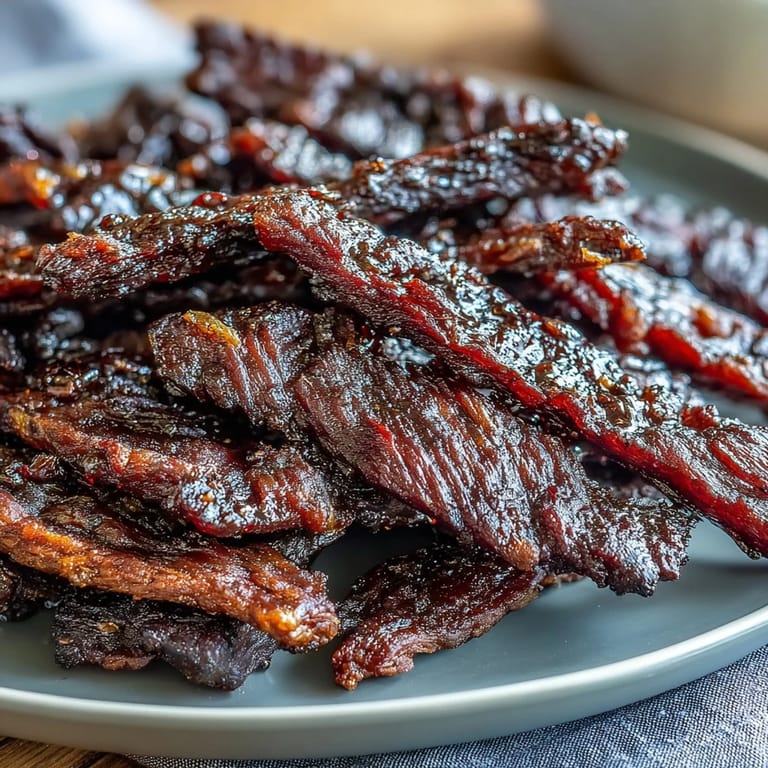
- You're hunting for jerky that bends without cracking and doesn't have any moisture when you squeeze it. Pull it out when it still has a tiny bit of give—it'll continue drying as it cools.
- Cool and Store:
- Let everything come to room temperature completely before sealing it away, or it'll sweat and get moldy.
 Pin
Pin There was a moment when I pulled the first batch out and the kitchen smelled like a campfire met a fruit preserve factory, and I just stood there grinning like an idiot. My partner walked in, skeptical about the whole thing, took one piece, and that was it—skepticism turned into "when are you making the next batch?"
The Black Currant-Smoke Dynamic
The magic here is that black currant jam and cherry wood smoke actually belong together in ways your brain doesn't expect. The fruit is tart and slightly floral, and when smoke wraps around it, something herbaceous happens. It's not candied jerky and it's not just smoky meat—it's something totally its own, which is why people keep coming back asking what they just ate.
Temperature and Timing Matters
I learned the hard way that cranking the heat to 200°F to speed things up just gives you chewy beef jerky, not the dense, satisfying texture you're after. Going low and slow at 160°F might feel slow, but those 4–6 hours are non-negotiable if you want proper jerky. The slower drying actually pulls more moisture out and lets the marinade flavors concentrate into every fiber.
Making It Your Own
This recipe is sturdy enough to play with, and I've made it a dozen different ways now depending on mood and what's in my pantry. Once you get the base right, you start realizing you can adjust the balance—more jam for sweeter results, more cayenne if you want heat, or even swapping the wood for something stronger if you're feeling bold. The framework holds everything together while leaving room for your own discoveries.
- If you don't have a smoker, a low oven works perfectly fine, and you'll still get incredible jerky—you just lose the smoke character but keep everything else.
- Vacuum sealing stretched my batches from two weeks in the fridge to a solid month, which is huge if you want to make this ahead.
- Taste your marinade before committing the beef, because everyone's palate is different and you might want to tweak sweetness or salt right at the start.
 Pin
Pin This jerky changed how I think about homemade snacks, and the fact that you can make it gluten-free and protein-packed without any weird ingredients is just the cherry on top. Once you taste it, store-bought jerky tastes like cardboard.
Recipe Q&A
- → What cut of beef works best for jerky?
Lean cuts like top round, flank steak, or sirloin are ideal. These cuts have minimal fat, which helps the jerky stay fresh longer and dry evenly. Always slice against the grain for tenderness.
- → Can I make this without a smoker?
Yes. Use your oven set to the lowest temperature (usually 160°F/71°C) with the door slightly propped open. The jerky won't have the same cherry wood smoke flavor, but you can increase the smoked paprika slightly to compensate.
- → How long should I marinate the beef?
Marinate for at least 8 hours, but overnight (12–24 hours) yields the best flavor penetration. The acidic elements and fruit preserves need time to fully infuse the meat fibers.
- → How do I know when the jerky is done?
Properly dried jerky should be dry to the touch but still slightly pliable when bent. It shouldn't snap or break. The texture should be chewy without any moist or soft spots remaining.
- → How should I store the finished jerky?
Store in an airtight container or vacuum-sealed bag in the refrigerator for up to 2 weeks. For longer storage, freeze for up to 6 months. Always ensure jerky is completely cooled before storing.