 Pin
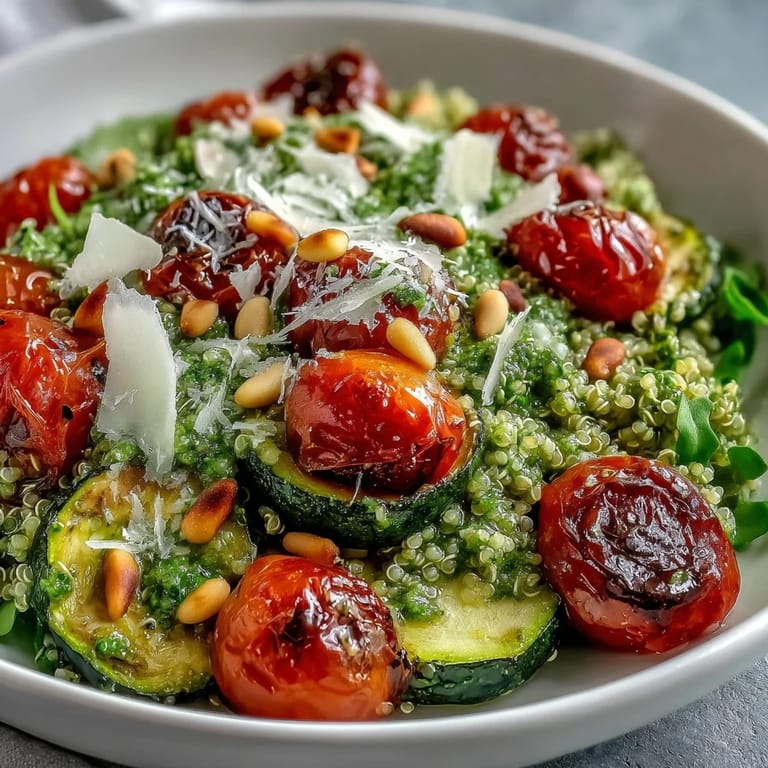
Pin The smell of arugula pesto hit me before I even opened the food processor lid. That sharp, grassy bite mixed with toasted walnuts reminded me why I kept coming back to this bowl every time I needed something that felt like both comfort and a reset. I'd started making it on Sundays when the farmer's market arugula was almost too peppery to eat raw, and it quickly became the meal I craved after long weeks when I wanted something nourishing without feeling heavy. There's something about the way roasted vegetables get sweet and caramelized that balances out the boldness of fresh greens.
I made this for a friend who swore she didn't like quinoa, and she scraped her bowl clean. She kept asking what was in the pesto, convinced there was some secret ingredient beyond arugula and nuts. I think it was the lemon juice that did it, that little bit of acid that made everything else come alive. We sat on my back porch with our bowls balanced on our knees, and she admitted she'd been eating the same boring salads for weeks. This felt like permission to make vegetables interesting again.
Ingredients
- Quinoa: Rinse it well or it can taste bitter, the little step that makes all the difference in getting fluffy, nutty grains instead of something gummy.
- Cherry tomatoes: They burst and caramelize in the oven, turning jammy and sweet, which is why I always use them instead of larger tomatoes that just get watery.
- Zucchini: Slice them evenly so they roast at the same rate, and don't crowd the pan or they'll steam instead of getting those golden edges.
- Red bell pepper: Adds a pop of color and a slight sweetness that plays nicely with the peppery arugula.
- Fresh arugula: The star of the pesto and the base of the bowl, look for bunches that are bright green and not wilted.
- Walnuts or pine nuts: I usually go with walnuts because they're cheaper and just as good, toasting them first makes them taste richer.
- Garlic: One clove is enough, more than that and it overpowers the delicate arugula flavor.
- Parmesan cheese: Use the real stuff, not the green can, it adds a salty, umami depth that makes the pesto cling to everything.
- Olive oil: A good quality one matters here since it's the base of the pesto, something fruity and smooth works best.
- Lemon juice: Freshly squeezed brightens the whole dish and keeps the pesto from tasting too heavy or rich.
Tired of Takeout? 🥡
Get 10 meals you can make faster than delivery arrives. Seriously.
One email. No spam. Unsubscribe anytime.
Instructions
- Cook the quinoa:
- Combine rinsed quinoa, water, and salt in a saucepan, bring it to a boil, then lower the heat and let it simmer covered for 15 minutes until the water disappears and little tails appear on the grains. Fluff it with a fork and let it sit uncovered so it doesn't get mushy.
- Roast the vegetables:
- Toss the tomatoes, zucchini, and bell pepper with olive oil and black pepper, then spread them in a single layer on a baking sheet and roast at 400 degrees for 18 to 20 minutes until they're tender and starting to brown at the edges. Don't skip the single layer part or they'll just steam.
- Blend the pesto:
- Throw the arugula, nuts, garlic, and Parmesan into a food processor and pulse until it's chopped, then with the motor running, slowly drizzle in the olive oil and lemon juice until it comes together into a thick, vibrant green sauce. Taste it and add the salt, adjusting if it needs more lemon or a pinch more cheese.
- Toss it all together:
- In a big bowl, combine the warm quinoa, roasted vegetables, and about half the pesto, tossing gently so everything gets coated without smashing the vegetables. Save the rest of the pesto for drizzling.
- Assemble the bowls:
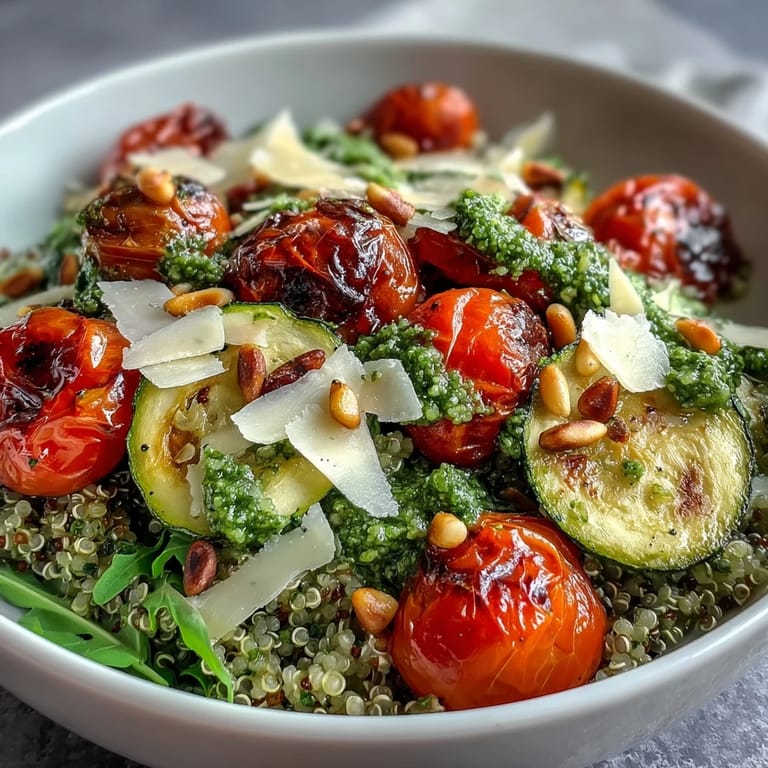
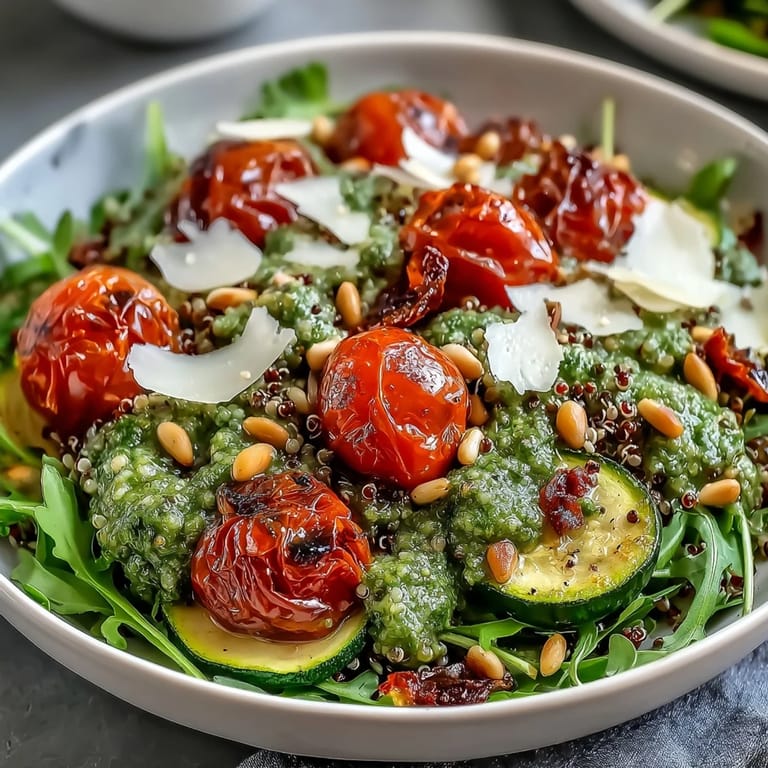
- Divide fresh arugula among your serving bowls, then pile the quinoa and vegetable mixture on top and drizzle with the remaining pesto. Finish with shaved Parmesan, toasted pine nuts if you have them, and a few cracks of black pepper.
 Pin
Pin This bowl became my answer to the question of what to make when I wanted something that felt like taking care of myself. It's the kind of meal that doesn't require much thought once you've made it a few times, but it always feels special enough to serve to other people. I've brought it to potlucks, packed it for lunches, and eaten it straight from the mixing bowl standing at the counter more times than I can count.
Making It Your Own
The beauty of this bowl is that it bends to whatever you have on hand. I've swapped quinoa for farro when I wanted something chewier, used whatever vegetables were lingering in the crisper drawer, and even stirred in canned chickpeas when I needed more protein. The pesto is the anchor, everything else is negotiable. One time I ran out of arugula and used half spinach, half basil, and it was just as good, maybe even a little sweeter.
Storing and Reheating
I like to keep the components separate if I'm meal prepping, quinoa and roasted vegetables in one container, pesto in a small jar, fresh arugula in another. That way everything stays fresh and you can assemble bowls throughout the week without anything getting soggy. The pesto keeps for about five days in the fridge with a thin layer of olive oil on top to keep it from browning. You can eat it cold or gently reheat the quinoa and vegetables, but add the fresh arugula and pesto after warming so they don't wilt.
Finishing Touches
The toppings are where you get to add a little extra something that makes each bowl feel complete. I always keep a block of Parmesan in the fridge for shaving, and a jar of toasted pine nuts in the pantry for when I want a little crunch. Sometimes I'll add a soft-boiled egg on top, or a handful of crispy roasted chickpeas for texture.
- A drizzle of good balsamic vinegar adds a sweet, tangy finish that plays well with the roasted vegetables.
- Fresh herbs like basil or parsley stirred in at the end make it taste even brighter and more garden-fresh.
- If you like heat, a pinch of red pepper flakes in the pesto or sprinkled on top gives it a nice kick.
 Pin
Pin This is the kind of recipe that grows with you, changing slightly each time you make it until it feels like yours. I hope it becomes a staple in your kitchen the way it has in mine.
Recipe Q&A
- → Can I make this bowl ahead of time?
Yes, prepare components up to 2 days in advance. Store quinoa, roasted vegetables, and pesto separately in airtight containers. Assemble bowls just before serving for best texture and flavor.
- → What can I substitute for quinoa?
Farro, brown rice, couscous, or barley work beautifully. Adjust cooking time according to grain package directions. Each brings slightly different texture and nuttiness to the bowl.
- → How do I make this vegan?
Replace Parmesan cheese with nutritional yeast in both the pesto and garnish. Use an equal amount of nutritional yeast to maintain the savory, umami flavor profile throughout the dish.
- → Can I freeze the arugula pesto?
Absolutely. Store pesto in an ice cube tray or small freezer-safe container for up to 3 months. Thaw overnight in the refrigerator and stir well before using. Add a splash of olive oil if needed.
- → What protein additions work well?
Grilled chicken breast, baked tofu, roasted chickpeas, or pan-seared shrimp complement the flavors beautifully. Add your chosen protein during assembly or serve alongside for a heartier meal.
- → How can I adjust the pesto flavor?
For more brightness, increase lemon juice. Add fresh basil leaves for milder flavor. Swap walnuts for pine nuts or almonds. Reduce garlic if sensitive to raw heat, or add a pinch of red pepper flakes for warmth.