 Pin
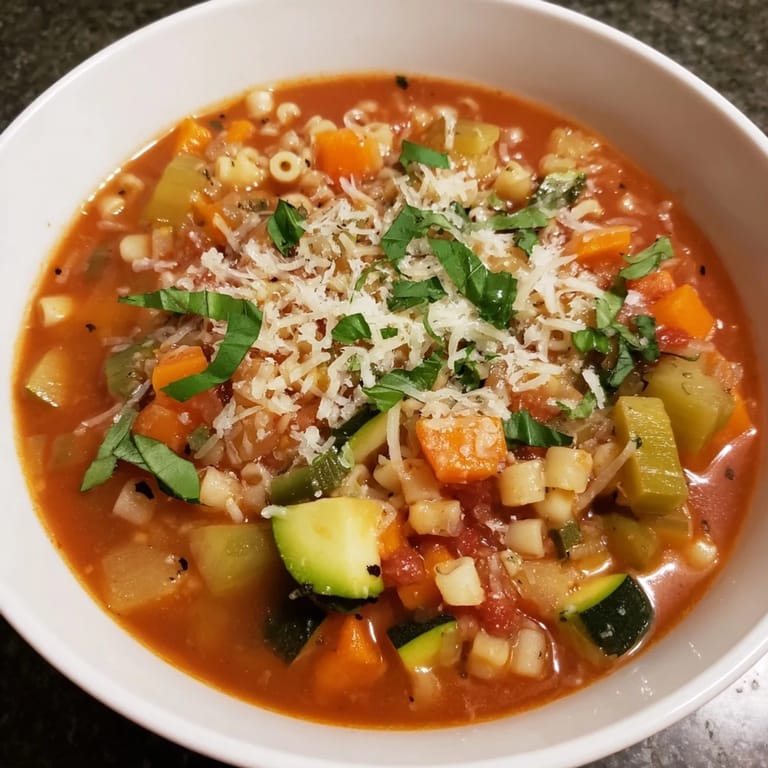
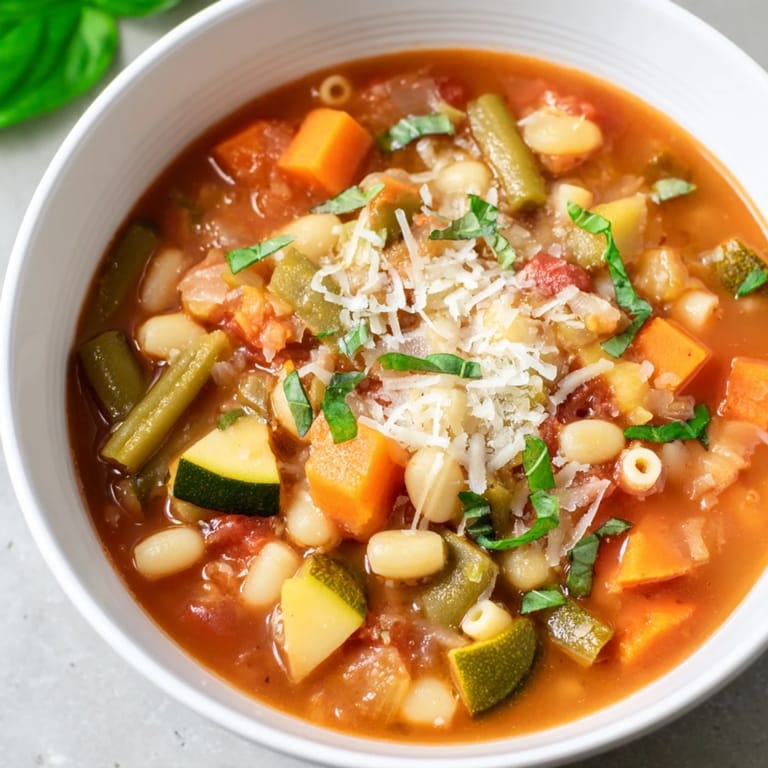
Pin There's something about minestrone that makes you feel like you're cooking in someone's Italian kitchen, even if you've never been to Italy. I stumbled onto this version on a chilly Tuesday when I had nothing but odds and ends in my vegetable drawer and a sudden craving for something warm that didn't feel like settling. The way the basil hits you at the end, green and alive, made me understand why this soup has been around for centuries—it's the kind of dish that gets better the longer it simmers, like it's telling a story with every bubble.
I made this soup for my neighbor when her family was dealing with something heavy, and she called me three days later asking for the recipe because her kids—the ones who usually push food around their plates—asked for seconds. That moment stuck with me: how a bowl of soup can do more than fill your stomach, it can signal that someone cares enough to spend time in the kitchen thinking of you.
Ingredients
- Olive oil: The foundation here—use something you'd actually taste, not the cheapest bottle. It matters in soup where nothing else distracts from its flavor.
- Onion, carrots, and celery: This trio is the backbone of so many soups it's almost boring to mention, but boring foundations make extraordinary dishes.
- Garlic: Minced, not sliced, so it melts into the broth rather than catching between your teeth.
- Zucchini and green beans: These keep things light and fresh—they soften without turning to mush if you time it right.
- Diced and crushed tomatoes: The diced ones stay chunky, the crushed ones thicken the broth; together they create a tomato depth that canned tomatoes deserve credit for.
- Vegetable broth: Good quality makes a real difference, but homemade is even better if you have it on hand.
- Oregano and thyme: Dried herbs work perfectly here since they have time to bloom in the simmering liquid.
- Tomato paste: A two-tablespoon hit of concentrated tomato flavor that rounds everything out.
- Small pasta: Ditalini or elbow shapes nestle into the broth instead of sinking or floating awkwardly.
- Cannellini beans: They add protein and creaminess without overpowering the vegetables.
- Fresh basil and parsley: These go in at the very end so they taste green and alive, not cooked away.
- Parmesan cheese: Optional, but it adds a salty, umami note that makes people reach for the cheese grater.
Tired of Takeout? 🥡
Get 10 meals you can make faster than delivery arrives. Seriously.
One email. No spam. Unsubscribe anytime.
Instructions
- Build your base:
- Heat the olive oil in a large pot and let it shimmer—you want to hear it whisper when you add the onion, carrot, and celery. Sauté for about five minutes, stirring occasionally, until the onion turns translucent and the kitchen starts smelling like something good is happening.
- Wake up the vegetables:
- Add the minced garlic, zucchini, and green beans, cooking just long enough to smell the garlic without letting it brown. About three minutes is your sweet spot.
- Pour in the tomato world:
- Combine the diced tomatoes, crushed tomatoes, vegetable broth, oregano, thyme, salt, pepper, red pepper flakes if you like heat, and tomato paste. Stir everything together, then turn up the heat to bring it to a boil—you'll know it's there when the surface starts dancing.
- Let it simmer and mellow:
- Once boiling, lower the heat and let it bubble gently for fifteen minutes, uncovered. This is when the flavors start talking to each other.
- Add the pasta and beans:
- Stir in the small pasta and drained cannellini beans. Simmer for another ten to twelve minutes until the pasta is tender but still has a little structure—not mushy, which is the line between minestrone and paste.
- Finish with fresh herbs:
- Right before serving, stir in the chopped basil and parsley. Taste it and adjust salt or pepper if needed—you're the boss of your own broth.
 Pin
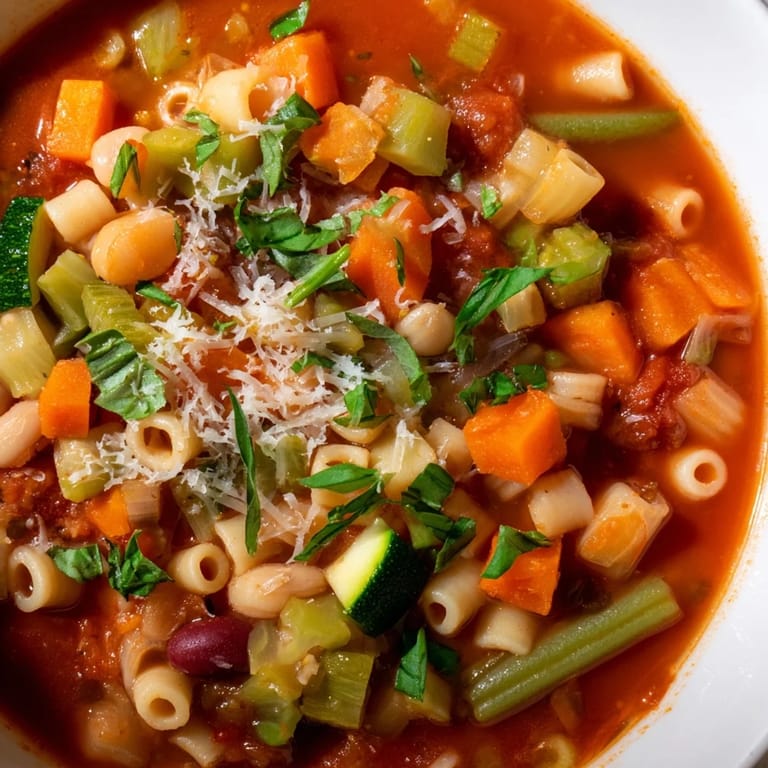
Pin The best bowl of this soup I ever had was sitting at a kitchen counter with my sister, both of us in pajamas on a Sunday morning because we'd made it the night before and couldn't wait until lunch. We added extra Parmesan and ate it straight from the pot, no judgment, no formality, just two people and a pot of soup that somehow made everything feel okay.
The Magic of Minestrone
Minestrone means big soup in Italian, and that name carries the whole spirit of the dish—it's meant to be generous, to include what you have, to feed people without fussing. There's a reason it's been around for centuries across different regions of Italy: it's adaptable, it's nourishing, and it tastes like someone loves you. This version sticks to the tomato-basil path that works everywhere, but it's also a template you can follow your own instincts with.
Building Depth in Simple Ingredients
The reason this soup tastes like it took hours comes down to layering flavors rather than piling on ingredients. The tomato paste adds a concentrated sweetness, the herbs have time to steep in the broth, and the vegetables soften enough to release their sugars and body into the liquid. It's cooking chemistry that tastes like care.
Flexibility and Freedom
One of the greatest gifts of minestrone is that it welcomes improvisation. Have kale instead of green beans? Spinach that needs using? A different small pasta shape? The soup will still taste like itself because the tomato-basil identity is strong enough to hold everything together.
- Add leafy greens like kale or spinach in the last few minutes so they wilt gently rather than turn bitter.
- For a vegan version, skip the Parmesan and let the fresh basil shine, or add a squeeze of lemon juice for brightness.
- Serve with crusty bread for dipping and soaking up every drop of broth.
 Pin
Pin This minestrone will become your go-to recipe because it's honest, it's good, and it tastes like home no matter where you're eating it. Make it, share it, and let it do what soup does best—bring people together.
Recipe Q&A
- → Can I use gluten-free pasta in this minestrone?
Yes, substituting with gluten-free pasta works well without changing the overall flavor or texture.
- → What vegetables enhance the flavor best?
Carrots, celery, zucchini, and green beans add both texture and depth when simmered in the tomato basil broth.
- → How do fresh herbs affect the taste?
Fresh basil and parsley brighten the soup at the end, adding a vibrant, aromatic finish.
- → Can I prepare this soup in advance?
Yes, flavors develop beautifully overnight. Reheat gently to preserve texture and freshness.
- → Is Parmesan necessary for serving?
Parmesan adds a creamy, savory touch but is optional, especially for vegan or dairy-free preferences.