 Pin
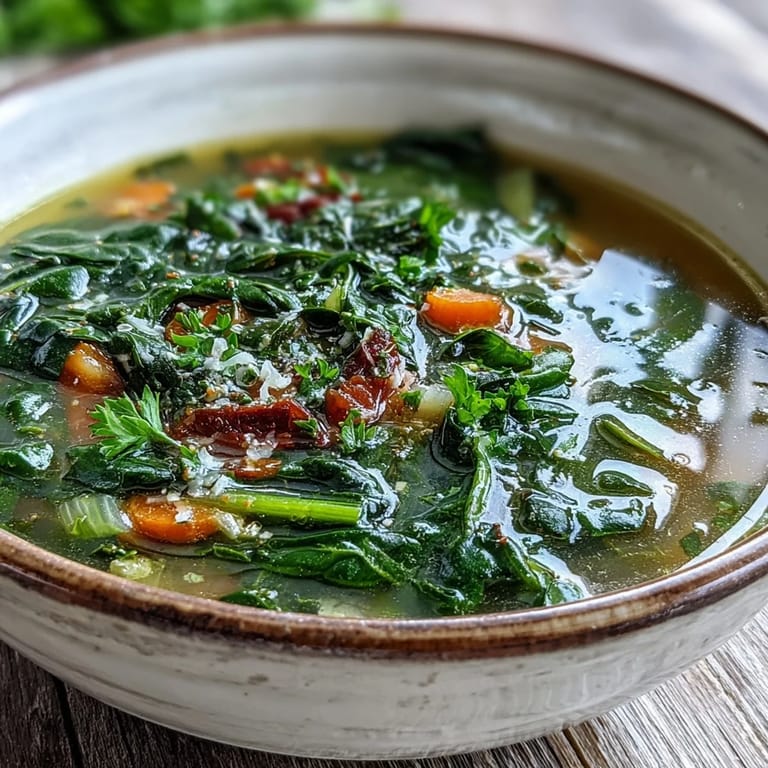
Pin There's something about a pot of Swiss chard soup that stops me mid-afternoon, the kind of smell that pulls you into the kitchen whether you planned to cook or not. My neighbor handed me a bundle of chard from her garden one spring, still dewy from the morning, and I had no idea what to do with it beyond a quick sauté. That evening, I threw together what I had on hand—garlic, carrots, broth—and something clicked. It wasn't fancy or complicated, just honest and warm, the kind of soup that tastes like it's been simmering longer than it actually has.
I made this for my sister during one of those winters when everyone around us was getting sick, and she came over looking exhausted and defeated. She sat at my kitchen counter while I worked, and by the time I set that bowl in front of her, the steam had already started doing its quiet work. She took one spoonful and actually closed her eyes—not in a dramatic way, just in the way people do when they realize something is exactly what they needed.
Ingredients
- Swiss chard (1 large bunch, about 400 g), stems and leaves separated and chopped: The stems hold their texture and add a subtle earthiness, while the leaves melt into the broth—keep them separate until the right moment so nothing turns mushy.
- Yellow onion (1 medium, finely chopped): This is your flavor foundation, so don't rush it; let it soften completely so the sweetness comes through.
- Carrots (2 medium, diced): They add natural sweetness and a gentle pop of color that makes the whole pot look alive.
- Celery stalks (2, diced): This is the quiet hero that creates depth without announcing itself; it's worth using fresh rather than skipping it.
- Garlic (3 cloves, minced): Mince it fine so it disperses through the broth rather than sitting in chunks—you want its presence felt, not seen.
- Vegetable broth (1.2 liters or 5 cups): Quality broth makes a real difference here; if you have homemade, this is the time to use it.
- Olive oil (2 tablespoons): Use something you'd actually taste on its own, not the cheapest bottle on the shelf.
- Sea salt and freshly ground black pepper: Season in layers, tasting as you go, because salt brings everything into focus.
- Crushed red pepper flakes (1/4 teaspoon, optional): Just a whisper if you add them—this soup doesn't need heat to be interesting.
- Lemon juice (from 1/2 lemon): This arrives at the very end and suddenly makes everything brighter and more alive.
- Fresh parsley (2 tablespoons chopped): Fresh herbs at the finish feel like a small kindness you're giving yourself.
- Grated Parmesan cheese (for serving, optional): A light dusting adds richness, but the soup stands perfectly well without it.
Tired of Takeout? 🥡
Get 10 meals you can make faster than delivery arrives. Seriously.
One email. No spam. Unsubscribe anytime.
Instructions
- Build your base:
- Heat olive oil in a large pot over medium heat and add the onion, carrots, and celery. Let them soften for 5–6 minutes, stirring occasionally—you'll know it's ready when the onion turns translucent and the kitchen starts smelling like something good is happening.
- Wake up the garlic:
- Stir in the minced garlic and chard stems, sautéing for 2–3 minutes until fragrant. This is the moment the smell becomes almost insistent, pulling you closer to the pot.
- Introduce the greens:
- Add the chard leaves along with the broth, salt, pepper, and red pepper flakes if you're using them. Bring everything to a boil, then lower the heat to a gentle simmer—you want bubbles breaking the surface slowly, not aggressively rolling.
- Let it simmer:
- Cook uncovered for 15–20 minutes, letting the vegetables become completely tender and the flavors meld into something cohesive. You'll notice the broth darkens slightly as the chard releases its color and essence.
- Finish with brightness:
- Stir in the lemon juice and fresh parsley, then taste and adjust the salt and pepper. This is your moment to make it yours—add more lemon if you want tang, or hold back if you prefer subtlety.
- Serve and celebrate:
- Ladle into bowls and top with grated Parmesan if desired. A drizzle of good olive oil over the top is never unwelcome.
 Pin
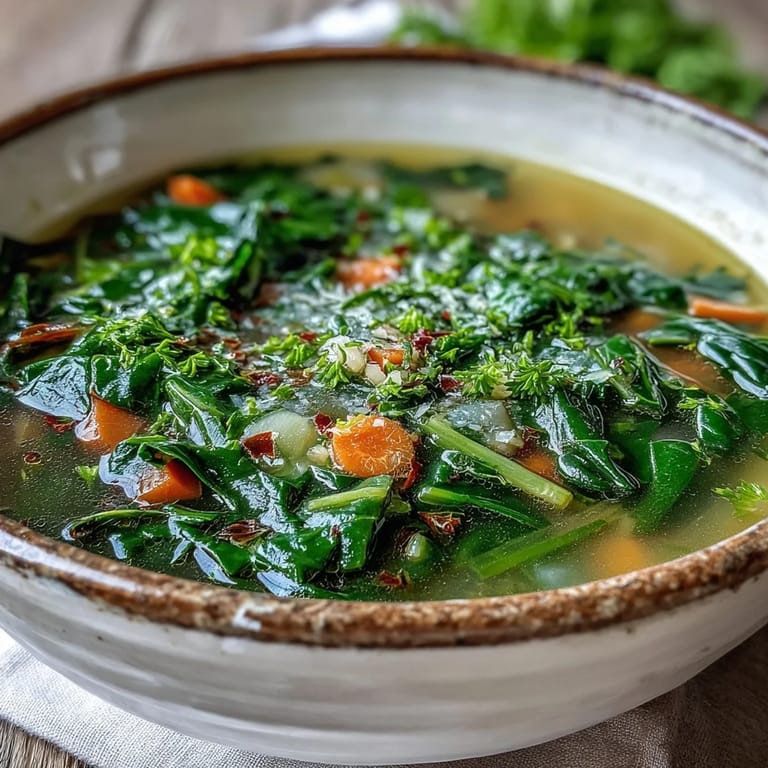
Pin I've learned that this soup works best when you stop thinking of it as something you're making and start thinking of it as something you're building, piece by piece. There's a rhythm to it that becomes almost meditative once you've made it a couple of times, and that's when you realize why people have been making versions of this soup for centuries.
When to Make This
This soup lives in that beautiful middle ground between seasons—it's light enough for spring and early summer when chard is abundant at the farmers market, but warming enough to comfort you on cool afternoons when the sun dips early. I find myself making it most often in that transition time when you're not quite ready to commit to heavy soups but regular salads feel like they're missing something. It's the kind of dish that works equally well as a quiet lunch for one or as a starter for a casual dinner with friends.
Make It Your Own
The beauty of this soup is that it's a conversation starter rather than a final word. One week I added a can of white beans and suddenly it became hearty enough for dinner, the next week I stirred in a handful of cooked rice and it felt like something my grandmother might have made. I've added diced potatoes, swapped the vegetable broth for chicken broth when I had it, and even stirred in a splash of cream when I wanted to feel a little indulgent. None of these changes broke anything; they just made the soup tell a slightly different story.
Kitchen Lessons and Variations
The first time I made this, I didn't separate the chard stems from the leaves and the result was mushy in a way that wasn't entirely pleasant. That taught me something about respecting ingredients and their different needs. I've also learned that homemade broth makes a noticeable difference here—the soup tastes fuller, more intentional. If you're vegan, skip the Parmesan entirely or use a nutritional yeast, and honestly, the soup doesn't miss it. For a dairy-free version that still feels rich, a drizzle of good olive oil at the end does more than you'd expect.
- For heartier appetites, stir in a drained can of white beans or add diced potato with the carrots for extra body.
- To make it vegan, omit the Parmesan or use a plant-based alternative, and the soup remains equally delicious.
- Fresh herbs like basil or thyme can be added during cooking, though I prefer to let the chard shine without too much competition.
 Pin
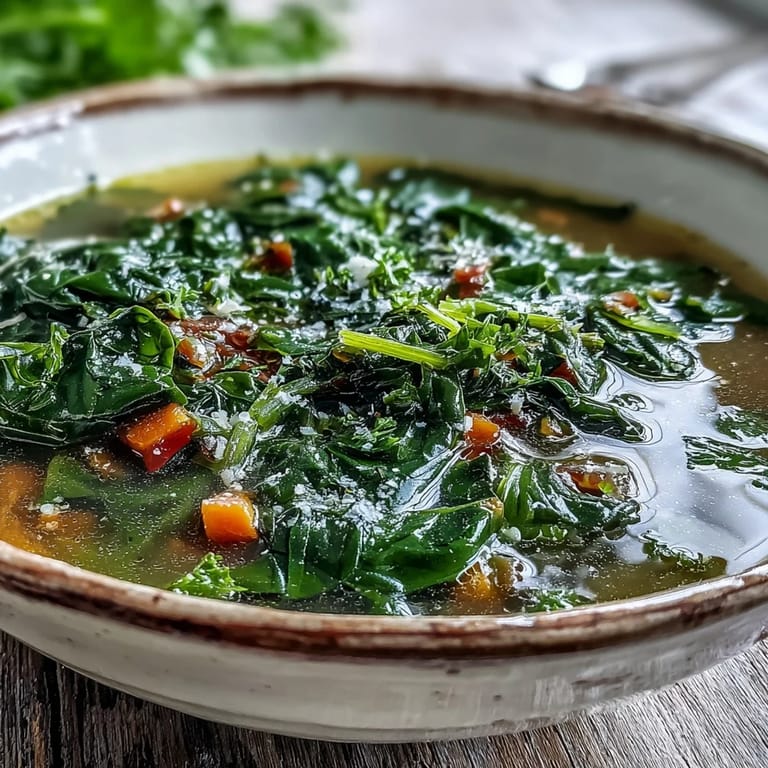
Pin This soup has become one of those recipes I turn to when I want to feel capable in the kitchen without feeling stressed. There's something quietly satisfying about turning a bunch of vegetables and some broth into something nourishing and real.
Recipe Q&A
- → Can I use other greens instead of Swiss chard?
Yes, kale, spinach, or bok choy work well as substitutes. Adjust cooking time slightly as spinach cooks faster than chard.
- → How long does this soup keep in the refrigerator?
Stored in an airtight container, it keeps well for 3-4 days. The flavors often develop and improve after a day.
- → Can I freeze this soup?
Yes, freeze for up to 3 months. The texture may soften slightly upon reheating, but flavors remain excellent.
- → What can I add to make it more filling?
White beans, diced potatoes, or small pasta shapes like orzo or ditalini work beautifully for added substance.
- → Is it necessary to separate the stems from the leaves?
Separating helps both components cook properly—stems need more time while leaves wilt quickly. This ensures perfect texture.
- → Can I make this with chicken broth instead?
Absolutely. Chicken broth adds a deeper flavor profile, though vegetable broth keeps it vegetarian.