 Pin
Pin The first time I assembled a Buddha bowl without thinking twice about it, I realized I'd stopped following recipes like a checklist and started trusting my instincts instead. There was something liberating about roasting chickpeas until they crackled, watching vegetables caramelize into sweet, burnished rounds, and knowing exactly how to tie it all together with a tahini sauce that felt like silk in a spoon. This bowl became my answer to those midweek moments when I wanted something that tasted indulgent but felt nourishing, something I could prep on Sunday and still enjoy fresh on Thursday. It's the kind of meal that made me realize bowls don't have to be complicated to be completely satisfying.
I made this for a friend who'd been experimenting with plant-based eating, and watching her face light up when she realized how satisfying and flavorful it was reminded me why I keep coming back to this bowl. She asked if it was hard to make, and I realized it wasn't—it was just intentional, which somehow feels like its own kind of magic in the kitchen.
Ingredients
- Chickpeas (1 can, drained and rinsed): The foundation of your crispiness—patting them dry makes all the difference between soggy and shatteringly crisp.
- Smoked paprika, cumin, and garlic powder: These three spices are the secret to making chickpeas taste like they've been slow-roasted over a campfire rather than baked in your oven.
- Sweet potato, red bell pepper, red onion, and zucchini: Choose vegetables that roast at roughly the same speed so everything finishes golden at the same moment.
- Brown rice: It holds texture better than white rice and adds a subtle nuttiness that plays well with the earthiness of chickpeas.
- Tahini: The anchor of the whole bowl—buy the unsweetened kind and give it a good stir before using since the oil separates.
- Lemon juice and garlic in the sauce: These brighten everything and keep the tahini from tasting heavy or one-dimensional.
- Baby spinach or mixed greens: Don't skip this step; the fresh greens cut through the richness and add a peppery contrast.
Tired of Takeout? 🥡
Get 10 meals you can make faster than delivery arrives. Seriously.
One email. No spam. Unsubscribe anytime.
Instructions
- Start your mise en place:
- Preheat your oven to 200°C and line two baking sheets with parchment paper—this matters because it prevents sticking and cleanup is instant. While the oven warms, rinse your brown rice under cold water until the water runs clear, which helps it cook evenly.
- Crisp up those chickpeas:
- Pat your drained chickpeas completely dry with a paper towel; moisture is the enemy of crispiness. Toss them with olive oil and your spice blend (smoked paprika, cumin, garlic powder, salt, and pepper), spread them on one baking sheet in a single layer, and let them roast.
- Prepare your vegetable medley:
- While the chickpeas settle in, cut your sweet potato, bell pepper, onion, and zucchini into roughly the same size pieces so they roast evenly. Toss them with olive oil, salt, and pepper, spread them on the second baking sheet, and slide both sheets into the oven at the same time.
- Keep everything moving:
- About halfway through the 25-30 minute roasting time, give both sheets a gentle stir with a wooden spoon or spatula; this ensures nothing sticks and everything caramelizes evenly. The chickpeas should sound crispy when you shake the pan, and the vegetables should have dark, sweet-smelling edges.
- Cook your rice simultaneously:
- In a saucepan, combine your rinsed rice with water and a pinch of salt, bring it to a boil, then cover and reduce heat to low. Let it simmer undisturbed for 30-35 minutes; resist the urge to peek, which lets heat escape.
- Whisk together your tahini sauce:
- In a small bowl, combine tahini, fresh lemon juice, minced garlic, a touch of maple syrup for balance, water, and salt. Whisk until it's smooth and pourable; if it's too thick, add a tablespoon more water at a time until it reaches the consistency of loose yogurt.
- Assemble with intention:
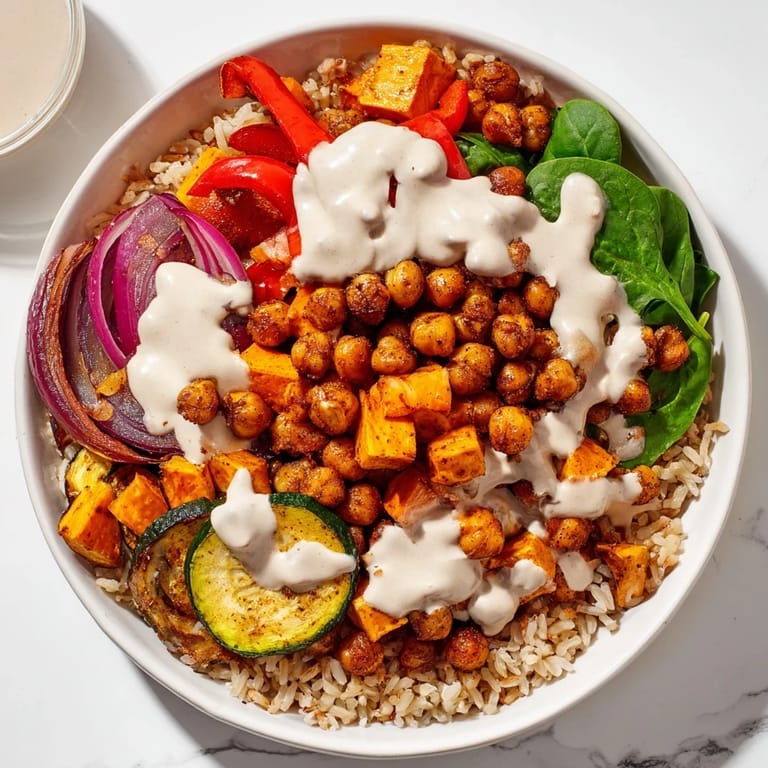
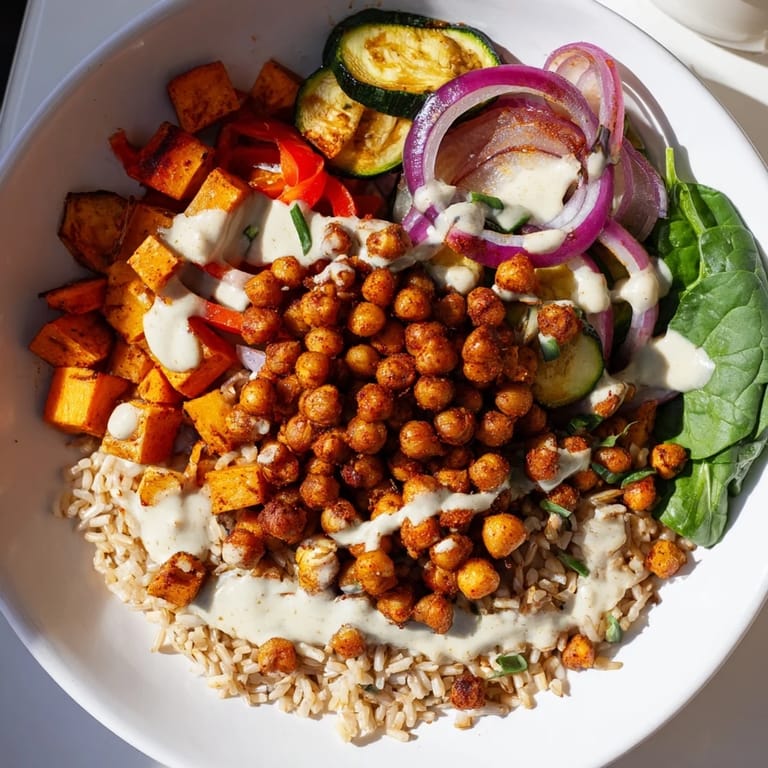
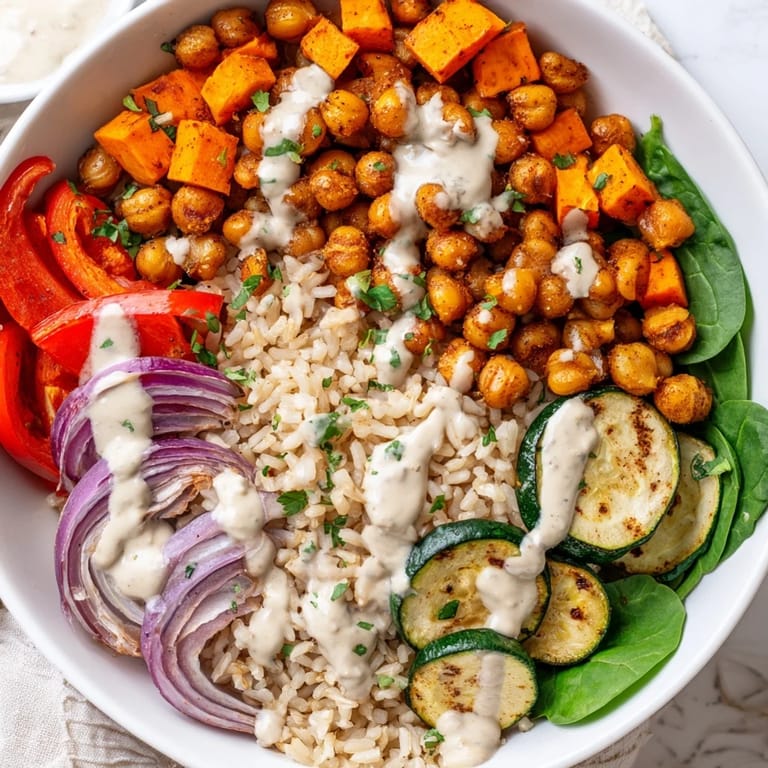
- Divide warm rice among four bowls as your base, then arrange roasted chickpeas, vegetables, and a handful of fresh greens on top. Drizzle generously with tahini sauce, finish with fresh parsley or cilantro, and serve with lemon wedges on the side so everyone can adjust the brightness to their taste.
 Pin
Pin I remember making this bowl for myself on a rainy Tuesday when I wasn't feeling great, and somewhere between the first bite and the last, the simple act of eating something I'd made with my own hands shifted my mood completely. It wasn't magic; it was just the small ceremony of sitting down with something warm and colorful and intentional.
Why Roasted Chickpeas Changed My Cooking
Roasted chickpeas taught me that texture matters as much as flavor, and that a single ingredient can anchor an entire dish when treated with respect. The first time I bit into one and it actually crackled, I realized I'd been cooking chickpeas all wrong before—boiling them into submission when what they really wanted was heat and air. Now I roast them for snacks, toss them into salads, and crumble them over soups, but this bowl is still their finest moment.
How to Build Your Own Version
The magic of Buddha bowls is that they're infinitely adaptable—this is a foundation, not a mandate. Some days I swap the brown rice for quinoa or farro, other times I'll use cauliflower rice if I'm in the mood for something lighter. The vegetables rotate with the seasons: in winter I'll add roasted Brussels sprouts and squash, in summer I'll throw in asparagus and cherry tomatoes. The tahini sauce is your tether to consistency, so keep that, but everything else is an invitation to play and adjust to what you have on hand or what sounds good that day.
Storage, Leftovers, and Make-Ahead Tips
This bowl is one of the rare dishes that actually improves after a night in the fridge, because the flavors have time to mingle and settle. Store each component separately—rice in one container, roasted chickpeas and vegetables in another, greens in a third, and tahini sauce in a small jar—and they'll all keep for up to four days. When you're ready to eat, warm the rice gently, assemble, and drizzle with fresh sauce.
- The crispy chickpeas stay perfectly textured for three days if stored in an airtight container away from moisture.
- Make your tahini sauce a day ahead and it'll taste even better as the garlic mellows and the flavors deepen.
- Don't dress the greens with tahini sauce until you're ready to eat; they'll soften and wilt if you do.
 Pin
Pin This bowl has become my shorthand for what it means to eat well without overthinking it—nutritious, delicious, and genuinely easy to make. I hope it becomes yours too.
Recipe Q&A
- → How do I ensure chickpeas get crispy when roasting?
Pat the chickpeas thoroughly dry before tossing with oil and spices. Roast at a high temperature and stir midway for even crispiness.
- → Can I substitute the brown rice with other grains?
Yes, jasmine rice, quinoa, or cauliflower rice work well as moist or fluffy alternatives.
- → What can I add to customize the bowl’s flavor?
Try adding sliced avocado or pickled red onions for extra creaminess and tang.
- → How to adjust the tahini sauce consistency?
Whisk in extra water gradually to thin the sauce until you reach your preferred texture.
- → How far ahead can I prepare the roasted chickpeas?
Roasted chickpeas can be stored airtight in the fridge for up to 3 days without losing texture.