 Pin
Pin My neighbor showed up at my door one autumn evening with a bunch of muddy beets from her garden, insisting I do something spectacular with them. I'd always been intimidated by beets—their earthy intensity felt too assertive for my usual cooking style. That night, I roasted them whole wrapped in foil, and when I opened that little package, the kitchen filled with this warm, almost chocolatey aroma that made me rethink everything I thought I knew about root vegetables. By the time I'd blended that silky soup, I understood: sometimes the ingredient everyone overlooks is exactly what you needed to discover.
I made this for my book club last winter when everyone was tired of the same old butternut squash routine. The moment I ladled it into those bowls and the deep magenta color caught the light, the whole table went quiet. One friend said it looked like something you'd eat at a fancy place, but tasted like comfort—and somehow that felt like the highest compliment possible.
Ingredients
- 4 medium beets, trimmed and scrubbed: Roasting concentrates their natural sugars and mellows that raw earthiness into something almost sweet; don't skip the foil wrapping or your oven will look like a crime scene.
- 1 medium yellow onion, diced: This builds the savory foundation that keeps the soup from tasting like you're eating dessert in a bowl.
- 2 medium carrots, peeled and diced: They add subtle sweetness and body that rounds out the beet's intensity without announcing themselves.
- 2 cloves garlic, minced: Just enough to add a whisper of depth; more than that and it starts competing for attention.
- 4 cups vegetable broth: Use something with actual flavor—the kind you'd actually drink on its own, not the sad stuff that tastes like sadness in liquid form.
- 1 tablespoon olive oil: Quality matters here since it's one of the few fat components; this isn't the time for the bargain bottle.
- 1/2 cup heavy cream or coconut cream: This is your velvety promise; don't skip it or you'll end up with something that tastes healthy but feels thin.
- 1 teaspoon salt, plus more to taste: Taste as you go because every broth and beet batch behaves differently.
- 1/2 teaspoon freshly ground black pepper: Fresh ground tastes alive; pre-ground tastes like it's been sitting in a cabinet.
- 1 tablespoon fresh lemon juice: This brightens everything and prevents the soup from tasting one-dimensional and heavy.
- 1 teaspoon fresh thyme leaves or 1/2 teaspoon dried: Thyme and beets were made for each other; this isn't optional seasoning, it's the translator.
Tired of Takeout? 🥡
Get 10 meals you can make faster than delivery arrives. Seriously.
One email. No spam. Unsubscribe anytime.
Instructions
- Get your oven ready and wrap those beets:
- Preheat to 400°F and wrap each beet individually in foil like you're giving them a little spa treatment. This keeps the moisture in and makes peeling them later feel like opening a present instead of a chore.
- Roast until they surrender:
- 40 to 45 minutes, until a fork slides through like they're barely holding on. You'll know it's done when the kitchen smells like concentrated earthiness and your mouth is already watering.
- Cool, peel, and chop:
- Let them sit just long enough that you can handle them without cursing, then the skin practically falls away. Chop them into roughly the size of dice—uniform enough that they blend evenly but not so precise that you spend forever on this step.
- Build your flavor base:
- Heat that olive oil over medium and let the onion and carrots soften for about 5 minutes, stirring occasionally so they don't brown. Add garlic for just one more minute and you'll smell when it's done—that sweet toasted note tells you to stop.
- Combine everything except the cream:
- Stir in the beets, thyme, salt, and pepper, then pour in that broth. Bring it to a boil so you feel like something is actually happening, then lower the heat and let it bubble gently for 10 minutes.
- Blend until silky:
- This is where the magic happens—whether you use an immersion blender right in the pot or work in batches with a countertop version, blend until it's completely smooth with absolutely no gritty bits. You're aiming for the texture of melted velvet.
- Finish with cream and brightness:
- Stir in the cream slowly so it swirls in like a secret, then add the lemon juice and taste. Adjust salt and pepper until it tastes like the best version of itself—bold but not aggressive.
- Serve with intention:
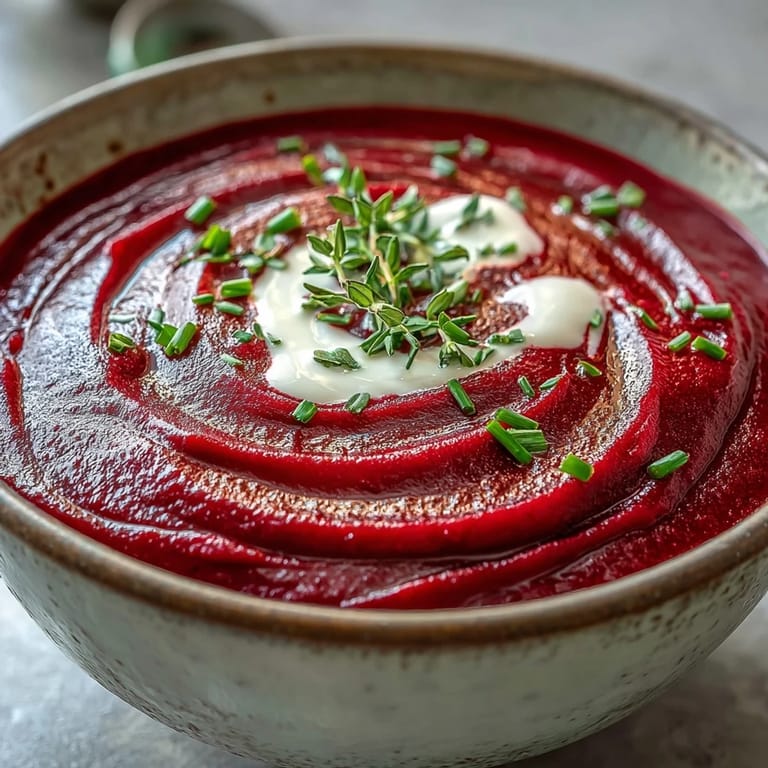
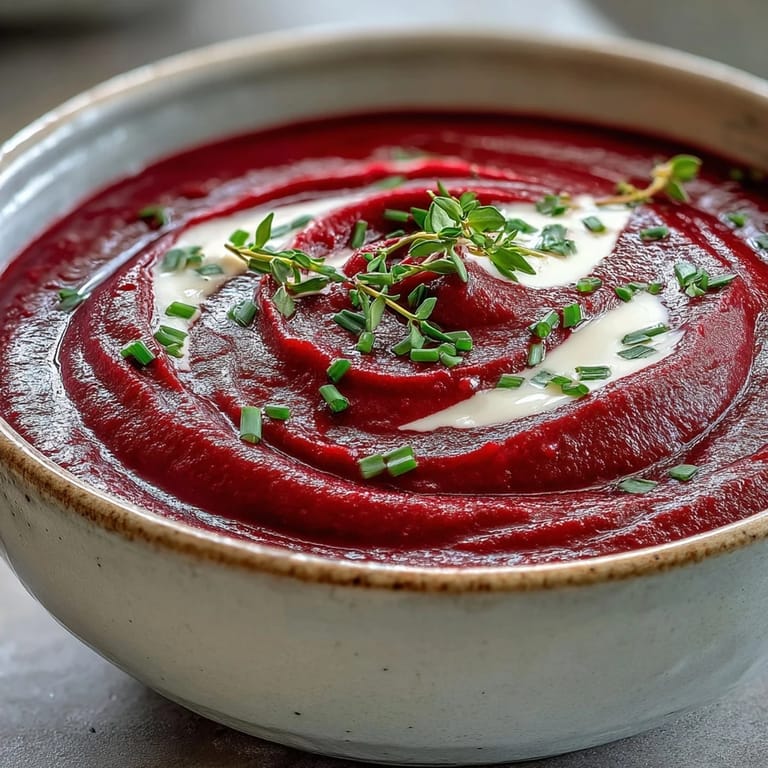
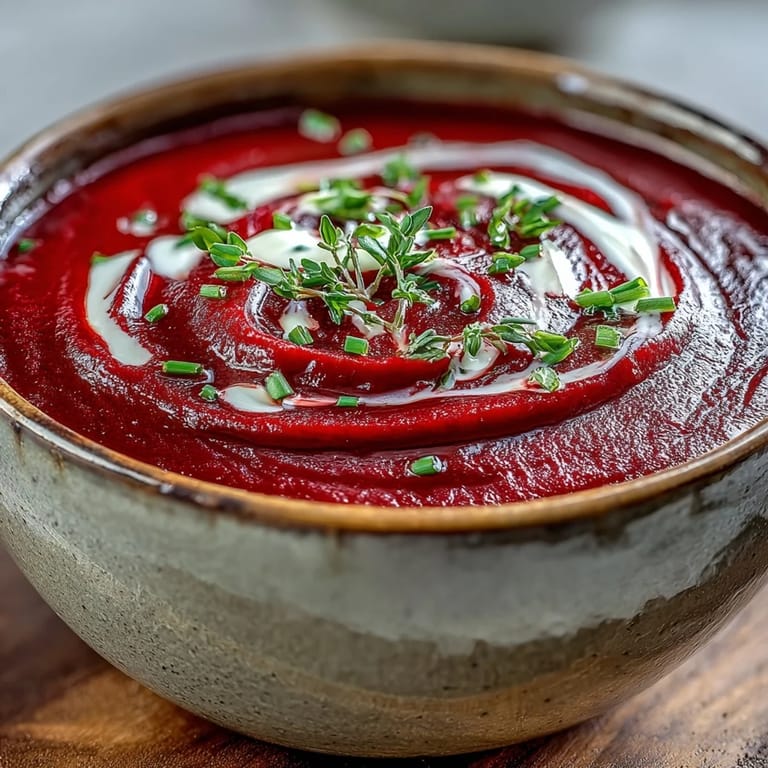
- Ladle into warm bowls and top with a small pour of cream that you can swirl with the back of a spoon, a few thyme leaves if you're feeling fancy, or leave it simple and let the soup speak for itself.
 Pin
Pin A friend who usually sticks to plain chicken and rice told me this soup changed how she thought about vegetables. She said it proved that cooking something unfamiliar didn't have to be complicated—it just had to be treated with a little attention. That compliment meant more than any five-star review ever could.
The Roasting Game-Changer
The real revelation here is that roasting beets instead of boiling them is the difference between a good soup and the kind you think about days later. Boiling leaches flavor into water you throw away; roasting concentrates everything wonderful into the vegetable itself. I learned this by accident—I was out of pot space and decided to roast them on a whim—and it completely shifted how I approach earthy vegetables now.
Pairing and Serving Ideas
This soup feels elegant but isn't fussy, which means it works as a standalone lunch or as the opening act for something more elaborate. Pair it with crusty bread that you've actually toasted to golden and crispy, and maybe a dry white wine if that's your thing. The combination of earthy soup and bright wine creates this moment where you feel like you planned something special even if you threw it together because you had beets.
Adaptations and Variations
The beauty of this recipe is that it responds to what you have and what you're feeling that day. If coconut cream is your life, use it—the soup becomes slightly lighter and the coconut adds this subtle sweetness that echoes the beets beautifully. You can also finish it with crumbled goat cheese, crispy chives, toasted pumpkin seeds, or even a crack of really good cider vinegar if you want to push the brightness even further. The foundation is strong enough to support these variations without losing its identity.
- Try swirling in a dollop of horseradish cream for an unexpected savory note that wakes everything up.
- Toast some pumpkin seeds separately and scatter them on top for texture and a subtle nuttiness that lingers.
- If you have beet greens, don't throw them away—chop and sauté them in olive oil as a garnish that adds color and proves you used the whole vegetable.
 Pin
Pin This soup taught me that sometimes the most satisfying dishes are the ones that make you feel like you discovered something new, not that you followed instructions perfectly. It's rooted, nourishing, and asks for very little except your attention and fresh thyme.
Recipe Q&A
- → How do I prepare beets for roasting?
Trim and scrub the beets clean, then wrap each one individually in foil. Roast at 400°F for 40-45 minutes until fork-tender. Let them cool slightly before peeling—the skins will slip right off.
- → Can I make this soup ahead of time?
Absolutely. This soup actually tastes better the next day as flavors meld together. Store in an airtight container in the refrigerator for up to 4 days. Reheat gently on the stovetop, adding a splash of broth or cream if needed.
- → How can I make this soup vegan?
Simply substitute the heavy cream with full-fat coconut cream or your favorite plant-based cream alternative. The coconut cream adds a subtle sweetness that pairs beautifully with the earthy beets.
- → What can I serve with roasted beet soup?
Crusty bread or baguette slices are perfect for dipping. A crisp white wine like Sauvignon Blanc complements the earthy flavors. For a heartier meal, pair with a fresh green salad or goat cheese crostini.
- → Why is my soup bitter?
If your soup tastes bitter, it might be from over-roasting the beets or using older beets. The fresh lemon juice helps balance any bitterness. You can also add a touch of honey or maple syrup to round out the flavors.
- → Can I freeze roasted beet soup?
Yes, freeze before adding the cream. Let the soup cool completely, transfer to freezer-safe containers, and freeze for up to 3 months. Thaw overnight in the refrigerator, reheat, and stir in the cream just before serving.