 Pin
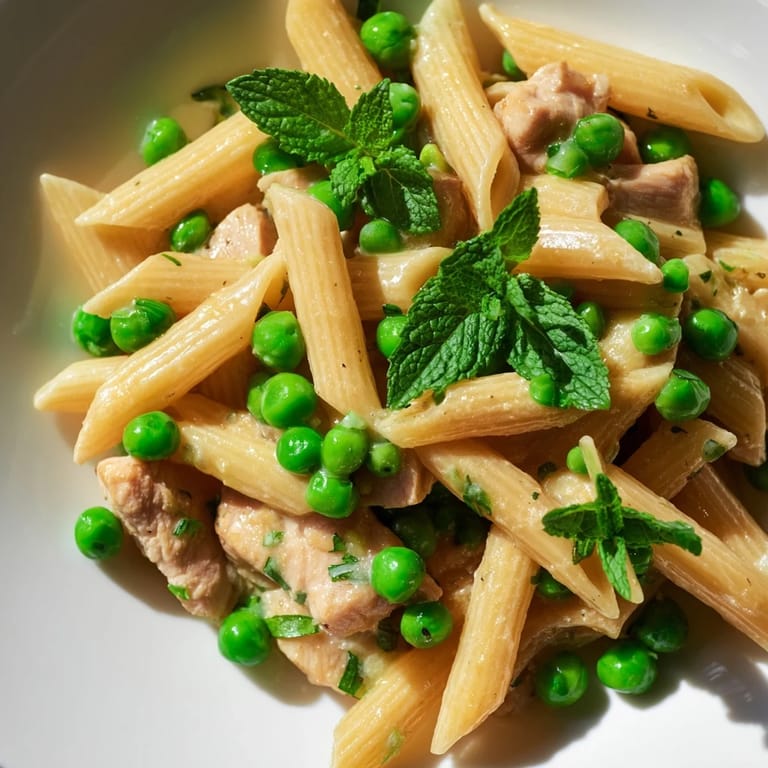
Pin Spring cleaning the fridge one rainy Sunday, I found a bag of frozen peas I'd forgotten about, half a lemon shriveling in the crisper, and a wilted bunch of mint that still had some fight left. The chicken was already defrosted, and I had pasta in the cupboard. What started as desperation cooking turned into one of those accidental victories that you end up making on purpose every few weeks. The brightness of that first bite, minty and sharp with lemon, made me forget I was eating leftovers at all.
I made this for my sister when she came over stressed about a work deadline, and she ate two bowls without saying much, which is the highest compliment she gives. Halfway through her second helping, she looked up and asked if I'd used cream, surprised when I said no. The buttery Parmesan does all the work, clinging to every piece of pasta like a secret. Now she texts me whenever she needs comfort food that doesn't feel like giving up.
Ingredients
- Penne or fusilli pasta: The ridges and curves catch the sauce beautifully, but any short pasta works if that's what you have open.
- Chicken breasts: Cutting them into strips instead of cubes helps them cook faster and gives you more golden edges to enjoy.
- Olive oil: Just enough to get the chicken started without making the pan greasy or heavy.
- Frozen peas: They're sweeter than you'd think and save you from shelling fresh ones, which I've tried exactly once and never again.
- Garlic: Mince it fine so it melts into the sauce instead of sitting in chunky bits that burn your tongue.
- Lemon: Zest it first before you juice it, and try not to get the bitter white pith, which I learned after ruining a batch early on.
- Chicken broth: Low sodium gives you control over the saltiness, especially once the Parmesan goes in.
- Butter: This is what makes the sauce glossy and luxurious without any cream, just three tablespoons of magic.
- Parmesan cheese: Freshly grated melts smoother and tastes sharper than the pre shredded kind, which has a weird coating that makes it clump.
- Fresh mint: It sounds odd if you've never tried it, but it's the ingredient people always ask about after the first bite.
- Flat leaf parsley: Optional, but it adds a little earthiness that balances the brightness if you're into that sort of thing.
Tired of Takeout? 🥡
Get 10 meals you can make faster than delivery arrives. Seriously.
One email. No spam. Unsubscribe anytime.
Instructions
- Boil the pasta:
- Salt your water generously, like the sea, and cook the pasta until it still has a tiny bite in the center. Don't forget to scoop out half a cup of that starchy water before you drain, it's your sauce insurance policy.
- Cook the chicken:
- Heat the olive oil until it shimmers, then add the seasoned chicken in a single layer so it gets golden instead of steamed. Let it sit without moving for a minute or two, that's where the flavor lives.
- Sauté garlic and peas:
- The garlic should just barely start to smell amazing before you add the peas, maybe 30 seconds. Peas only need a couple minutes to warm through since they're already cooked from being frozen.
- Build the sauce base:
- Pour in the lemon zest, juice, and broth, then scrape up all those tasty brown bits stuck to the pan. Let it bubble gently for a minute to concentrate the flavors a bit.
- Combine everything:
- Slide the chicken back in along with the drained pasta and toss it all together over low heat. This is where everything starts to become a dish instead of separate ingredients.
- Add butter and cheese:
- Drop in the butter and Parmesan, stirring until they melt into a silky coating. If it looks too thick, splash in some of that reserved pasta water and watch it loosen beautifully.
- Finish with herbs:
- Turn off the heat before you add the mint and parsley so they stay bright green and vibrant. Taste it now and add more salt or lemon juice if it needs a nudge.
- Serve warm:
- Plate it up immediately while it's steaming and top with extra Parmesan and a few torn mint leaves. It's best eaten right away, though leftovers reheat surprisingly well with a splash of water.
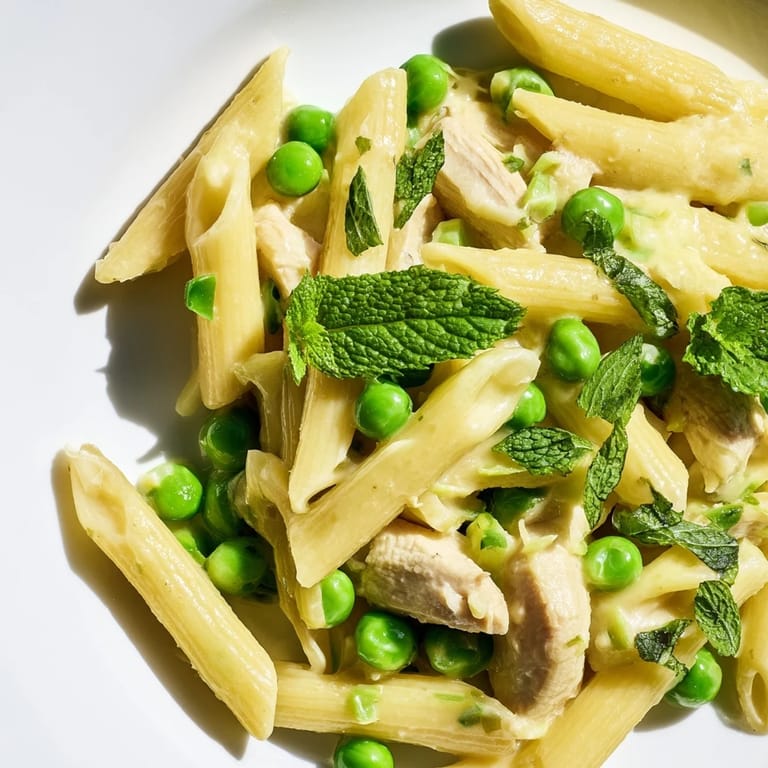 Pin
Pin My neighbor brought over her kids one evening, and I'd made this earlier planning to eat it alone with a book. Her youngest, who supposedly hates vegetables, ate every single pea on his plate and asked if the green stuff was candy. His mom just stared at me like I'd performed a miracle. Sometimes a dish wins you over not because it's complicated, but because it's honest and bright and makes even the picky eaters curious.
Ingredient Substitutions That Actually Work
If you don't eat chicken, thick sliced mushrooms or small zucchini rounds sautéed until golden work beautifully and soak up the lemony sauce. I've also used leftover rotisserie chicken torn into shreds when I'm too tired to cook raw meat, and it tastes just as good. For a dairy free version, swap the butter for more olive oil and the Parmesan for nutritional yeast, though I'll be honest, it's not quite the same magic.
Make Ahead and Storage Tips
You can cook the chicken and prep all your ingredients a few hours ahead, then just toss everything together when you're ready to eat. Leftovers keep in the fridge for up to three days, and I reheat them in a skillet with a splash of broth or water to bring the sauce back to life. Freezing isn't ideal because the pasta gets mushy and the mint loses its brightness, so this is one I prefer to make fresh or eat within a couple of days.
Serving and Pairing Ideas
This pasta is light enough that you don't need much alongside it, maybe some crusty bread to mop up the sauce or a simple arugula salad with olive oil and shaved Parmesan. It pairs wonderfully with a chilled glass of Sauvignon Blanc or Pinot Grigio, something crisp that echoes the lemon without fighting it. If you're feeling fancy, a handful of toasted pine nuts or slivered almonds on top adds a nice crunch that makes it feel a little more special.
- Serve with garlic bread or focaccia for soaking up every last drop of sauce.
- Add a handful of arugula right at the end for peppery bite and extra green.
- Top with toasted nuts or seeds for texture if you want a little more interest in each bite.
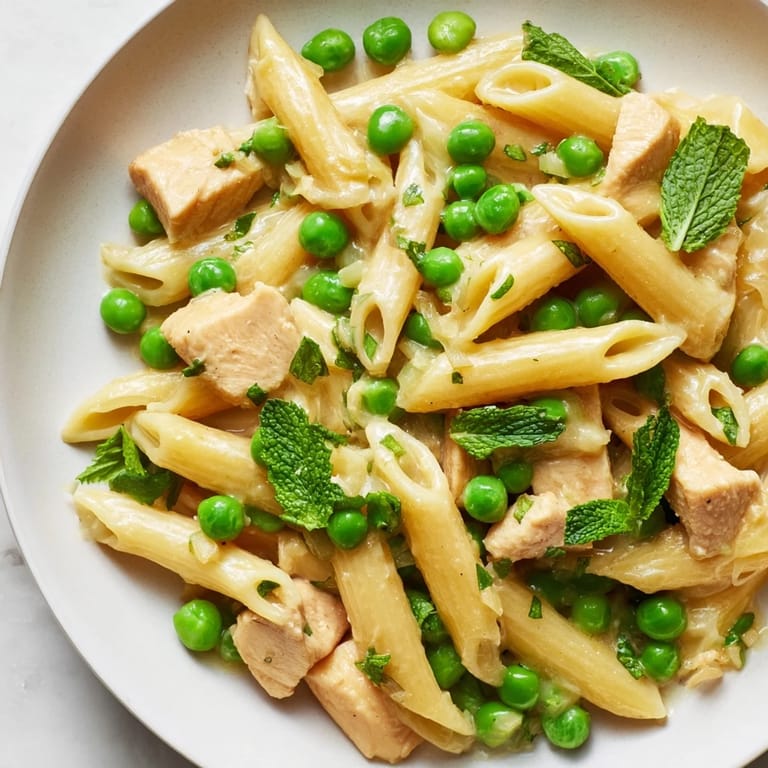 Pin
Pin This is the kind of dinner that reminds you cooking doesn't have to be stressful or complicated to be memorable. Make it on a Tuesday, make it for someone you love, or make it just for yourself with a good podcast on, it works every time.
Recipe Q&A
- → Can I prepare this dish ahead of time?
This pasta is best served fresh, but you can prepare components in advance. Cook the pasta and chicken separately, then combine just before serving to maintain the fresh herb flavor and sauce consistency.
- → What pasta shapes work best?
Penne and fusilli are ideal as their ridged surfaces capture the lemon-butter sauce beautifully. Farfalle, orecchiette, or short tube pasta also work well with this light, citrus-forward preparation.
- → How do I prevent the chicken from drying out?
Cut chicken into uniform bite-sized pieces and cook over medium-high heat until just golden, about 5-6 minutes. Don't overcook. The residual heat from the pasta and sauce will keep it moist and tender.
- → Can I substitute frozen peas with fresh?
Absolutely. Fresh peas provide wonderful flavor and texture. Add fresh peas in the final 2 minutes of cooking if they're tender varieties, or blanch larger peas briefly before adding to maintain their vibrant color.
- → What's the purpose of reserved pasta water?
Pasta water contains starch that emulsifies with the butter and Parmesan to create a silky, cohesive sauce. Add it gradually to achieve your desired sauce consistency without making it watery.
- → How can I make this vegetarian?
Omit the chicken and replace with sautéed mushrooms, zucchini, or roasted cherry tomatoes. Ensure you use vegetable broth instead of chicken broth for consistent flavor throughout the dish.