 Pin
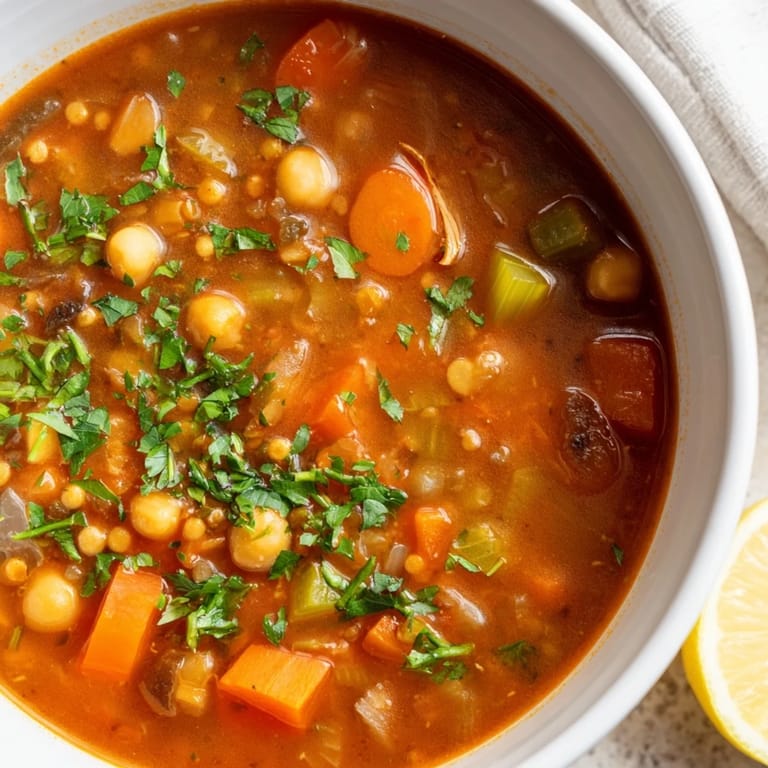
Pin My neighbor Leila taught me how to make harira one November morning when a cold snap hit the city and I'd complained about the chill in my bones. She arrived with a bag of spices that smelled like her kitchen—warm, mysterious, alive—and showed me that this soup wasn't just food; it was a ritual. The way the cinnamon and cumin danced with tomatoes, how the chickpeas and lentils softened into something almost creamy without any cream at all, felt like discovering a secret the whole neighborhood had been keeping.
I made a huge batch of this the first December snow, thinking I'd freeze most of it. My sister showed up unannounced with her kids, all of them soaked from playing outside, and within minutes I was ladling bowls at the kitchen table while they warmed their hands around the ceramic. The kids asked for seconds—even the picky eater—and I realized harira had quietly become the soup I reached for when I wanted everyone to feel taken care of.
Ingredients
- Dried chickpeas (1 cup), soaked overnight or canned (2 cups): Overnight soaking makes them creamy, but canned saves time without guilt; just rinse them well to reduce sodium.
- Dried lentils (1/2 cup): Red lentils break down and thicken the soup beautifully, while brown or green lentils hold their shape if you prefer texture.
- Olive oil (2 tbsp): Use something flavorful here—your good oil, not the everyday one.
- Onion, celery, carrots (1 large, 2 stalks, 2 medium): This holy trinity is your aromatic foundation, softened until they practically dissolve into the broth.
- Garlic (3 cloves, minced): Adds depth without overwhelming; mince it fine so it distributes evenly.
- Canned tomatoes (1 can, 14 oz) and tomato paste (2 tbsp): The tomato paste concentrates flavor early on, while canned tomatoes give body and tang.
- Ground cumin, cinnamon, ginger, turmeric, paprika (1 tsp, 1 tsp, 1/2 tsp, 1/2 tsp, 1/2 tsp): These spices are the soul of harira; toast them briefly with the garlic to wake them up.
- Cayenne pepper (1/4 tsp, optional): Add only if you want heat; the soup is naturally warming without it.
- Vegetable broth (6 cups): Use low-sodium so you can taste the spices and control the salt level yourself.
- Dried apricots (1/2 cup, chopped): They plump up and add subtle sweetness that balances the savory spices—don't skip this.
- Fresh cilantro and parsley (1/4 cup each): Stirred in at the end, these herbs brighten everything and remind you why you're eating this soup.
- Lemon juice (from 1 lemon): The final squeeze that ties all the flavors together and makes them pop.
- Salt and black pepper to taste: Season in layers, not all at the end.
Tired of Takeout? 🥡
Get 10 meals you can make faster than delivery arrives. Seriously.
One email. No spam. Unsubscribe anytime.
Instructions
- Build your base:
- Heat olive oil in a large soup pot over medium heat and add your chopped onion, celery, and carrots. Sauté for 6 to 8 minutes, stirring now and then, until the vegetables soften and the onion turns translucent—you're not browning them, just awakening their sweetness.
- Bloom the spices:
- Add your minced garlic and all the dry spices at once, stirring constantly for about a minute until the kitchen fills with that warm, almost intoxicating aroma. This blooming step unlocks the depth in every spoonful.
- Deepen the flavor:
- Stir in the tomato paste and let it toast for a minute against the heat, then add your canned tomatoes, drained chickpeas, rinsed lentils, and chopped dried apricots. Everything gets a good mix so the spices coat every ingredient.
- Let it simmer:
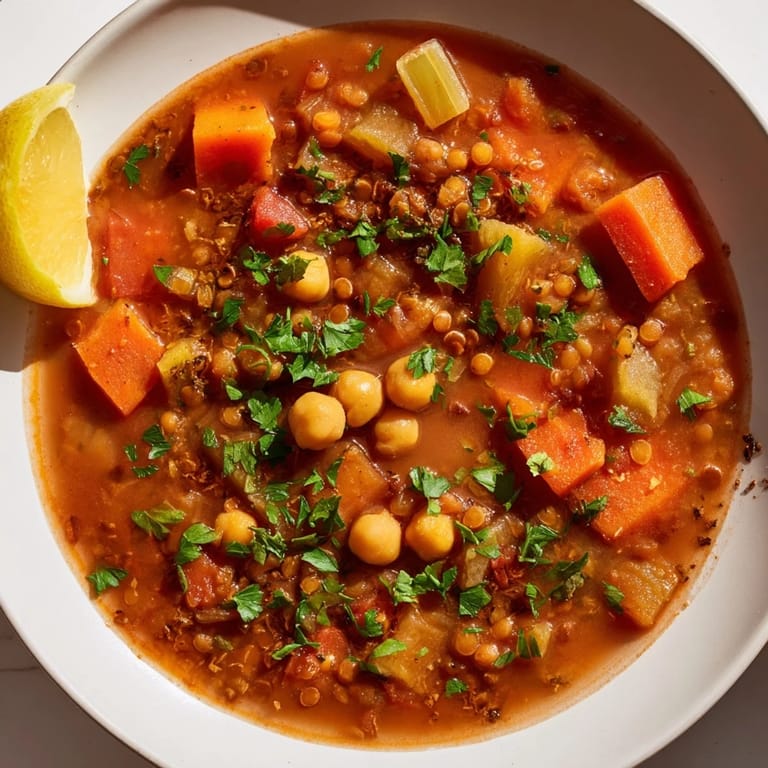
- Pour in the vegetable broth and bring the pot to a boil, then lower the heat and let it simmer uncovered for 45 to 50 minutes, stirring occasionally. The chickpeas and lentils should be completely tender, almost melting off your spoon, and the broth will have deepened to a rich amber.
- Finish with brightness:
- Stir in the chopped cilantro, parsley, and fresh lemon juice, then taste and adjust the salt and black pepper. The lemon is essential—it's the note that makes everything else sing.
- Optional heartiness:
- If you want a thicker, more substantial soup, stir in cooked vermicelli or rice at this point and let everything warm through for a few minutes.
 Pin
Pin One evening, my sister called me on the phone while I was stirring a pot of harira, and I could hear in her voice that she was having a hard day. I asked her to come over, and by the time she arrived, the soup was ready to pour. We sat across from each other at the kitchen table, and somewhere between the first spoonful and the last, she smiled—really smiled—and told me that's when she knew things would be okay. That's when harira stopped being a recipe and became a small act of love.
The Spice Story
The spices in harira work like a chorus, each one contributing a different note that only makes sense when they're all together. Cumin gives an earthy warmth, cinnamon adds a subtle sweetness that plays against the savory tomatoes, ginger brings brightness, and turmeric gives the soup its golden color and a gentle earthiness. None of them should dominate; if you taste one spice more than the others, you've used too much. The balance is everything.
Why This Soup Keeps Getting Better
Harira is one of those rare soups that actually tastes better the next day, or even three days later. The spices continue to infuse the broth, the legumes soften further, and the flavors deepen and marry together into something more complex than what you had fresh from the pot. Store it in the refrigerator for up to four days, or freeze portions for up to three months. When you reheat it, you might need to add a splash of broth or water since the soup thickens as it sits, but that's a small price for having this comfort waiting for you.
Serving and Variations
Harira shines on its own in a deep bowl, but it also loves company. Serve it with warm bread for tearing and dipping, or add cooked vermicelli or rice if you want something heartier. A drizzle of good olive oil and a handful of fresh herbs on top turn it into something special. Some people add a pinch of saffron for luxury, or a spoonful of harissa paste if they want more heat and depth. You can even add a handful of spinach or kale in the last few minutes of cooking—it wilts right in and adds nutrition without changing the essential character of the soup.
- Make this vegan by using vegetable broth and checking that your tomato paste and canned tomatoes have no animal products.
- For a quicker weeknight version, use canned chickpeas and skip the overnight soak entirely.
- Taste as you go and remember that seasoning is personal; what feels right to you is what matters.
 Pin
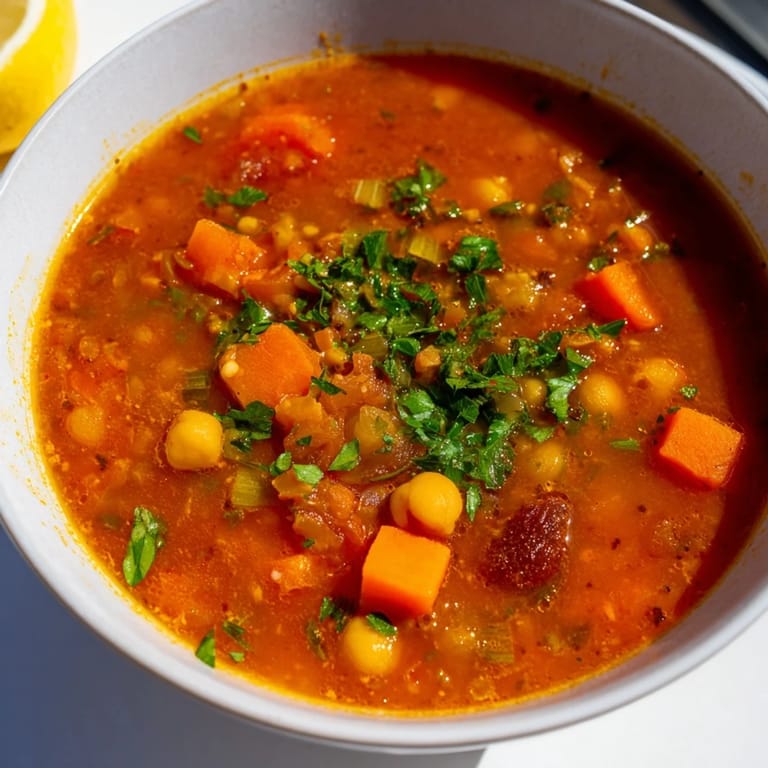
Pin There's something healing about a pot of harira simmering on the stove, filling your kitchen with warmth and spice on a cold day. It's the kind of soup that doesn't ask for much but gives everything back.
Recipe Q&A
- → What spices give Harira its signature flavor?
Cumin, cinnamon, turmeric, ginger, paprika, and a touch of cayenne pepper create the warm, aromatic profile of this soup.
- → Can I use canned legumes instead of dried?
Yes, canned chickpeas and lentils work well; just rinse and add them without soaking or pre-cooking.
- → How do dried apricots affect the soup's taste?
They add a subtle sweetness that balances the savory spices and tomato base, enriching the overall flavor.
- → What are good garnishes for Harira?
Fresh lemon wedges, extra cilantro or parsley, and optionally vermicelli or rice enhance texture and freshness.
- → Is this soup suitable for vegan diets?
Yes, using vegetable broth and ensuring all ingredients are plant-based makes it vegan-friendly.