 Pin
Pin There's something almost meditative about making hummus from scratch. I discovered this years ago when a friend from Damascus brought tahini paste to my kitchen and insisted we blend chickpeas together, explaining that store-bought versions could never capture that cloud-like texture that only happens when you use your hands to feel it thicken. That afternoon taught me that hummus isn't just food—it's an act of generosity, a creamy bridge that appears at every table in the Levant, ready to welcome whoever walks through the door.
I still remember the surprise on my roommate's face when she tasted this hummus for the first time—she kept asking what was in it, convinced I'd added cream or butter because it was so impossibly smooth. That moment made me realize hummus deserves respect; it's humble ingredients doing extraordinary work, and serving it to others becomes a small act of showing them you care about the details.
Ingredients
- Chickpeas: Use canned and drained, or cook dried ones until completely tender—the softer they are, the creamier your hummus becomes.
- Tahini: This sesame seed paste is the soul of hummus; stir it well before measuring because the oil separates.
- Lemon juice: Freshly squeezed makes a real difference, cutting through the richness with brightness that bottled juice can't achieve.
- Garlic: One small clove minced fine prevents harsh, overpowering bites that ruin the delicate balance.
- Cold water: Added gradually to reach that perfect spoonable consistency without thinning the flavor.
- Cumin: Ground cumin adds warmth and earthiness that ties all the flavors together.
- Sea salt: Fine salt dissolves evenly; taste as you go because hummus needs salt to sing.
- Olive oil: Extra virgin for drizzling on top, where its fruity notes can actually shine.
- Paprika or sumac: The paprika adds color and mild sweetness, while sumac brings a subtle tartness that's unmistakably Levantine.
- Fresh parsley: Chopped just before serving, it adds a peppery green note that wakes up every spoonful.
Tired of Takeout? 🥡
Get 10 meals you can make faster than delivery arrives. Seriously.
One email. No spam. Unsubscribe anytime.
Instructions
- Gather and measure:
- Have all your ingredients prepped and within reach; there's something calm about working without scrambling for things.
- Load the processor:
- Add chickpeas first, then tahini, lemon juice, garlic, water, cumin, and salt—this order helps everything incorporate smoothly.
- Blend until dreams:
- Start blending and let it run, stopping occasionally to scrape down the sides with a spatula. The transformation happens gradually, and patience is rewarded with an impossibly smooth texture that seems to defy logic.
- Taste and adjust:
- Add more water if needed, one tablespoon at a time, to reach a consistency that's spoonable but still holds its shape. Taste, then decide if it needs more salt or a squeeze of lemon to brighten it.
- Transfer with care:
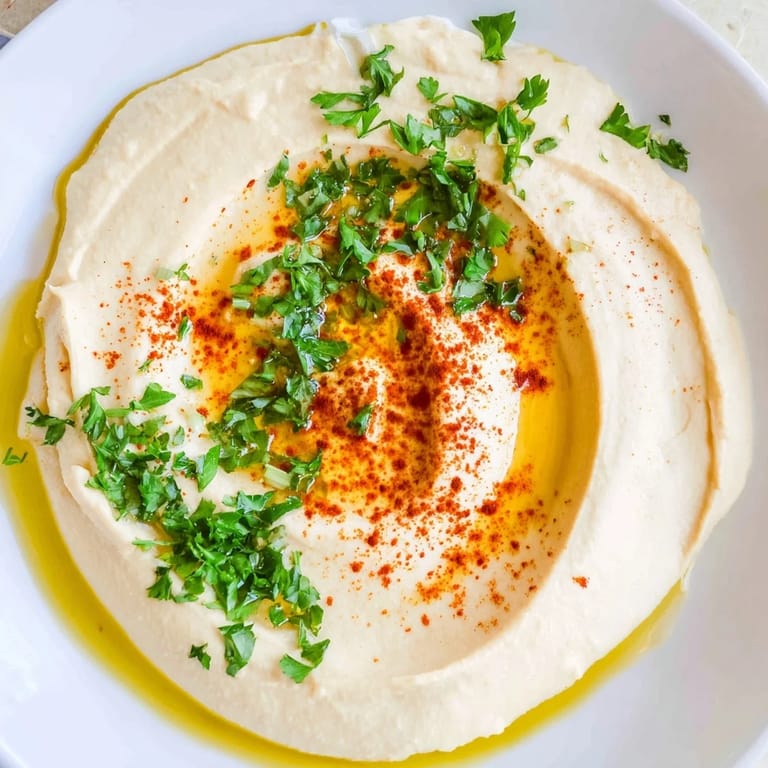
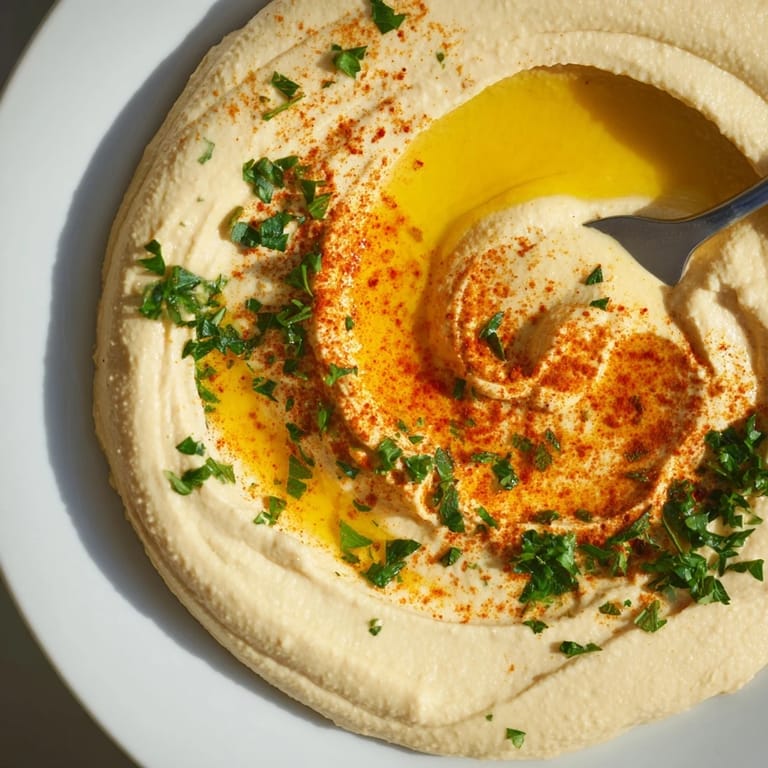
- Move the hummus to a shallow serving dish and use the back of a spoon to create a gentle swirl or well in the center—this small gesture makes it look intentional and beautiful.
- Finish with flourish:
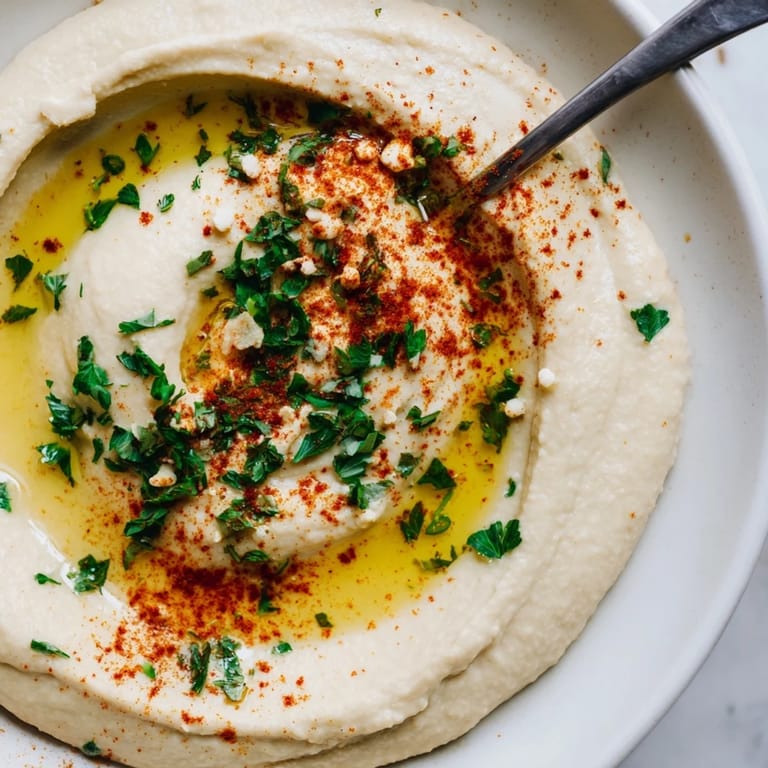
- Drizzle olive oil into that well, sprinkle paprika or sumac across the surface, and scatter fresh parsley so it's scattered everywhere. Serve immediately while it's still cool and creamy.
 Pin
Pin There was a moment at a small family gathering when someone's child, who normally refused anything unfamiliar, asked for more hummus with pita. The parents looked amazed, and I realized this simple plate had quietly done its job—it welcomed someone new to the table without judgment, just creamy, gentle flavor.
The Secret of Silkiness
The magic happens in the processor when tahini and lemon juice meet—they're actually fighting against each other chemically, and the acid from the lemon is breaking down the tahini into something lighter and airier than either could be alone. This is why store-bought hummus often feels heavy; most commercial operations rush this step. When you give it time and patience, the emulsion becomes almost weightless, almost alive in your mouth.
Serving and Pairing
I've learned that hummus is never meant to be eaten alone; it's an invitation to eat together. Warm pita bread torn into pieces becomes the vehicle, but fresh vegetables—crisp cucumbers, carrot sticks, radishes—add brightness and texture that cuts through the richness perfectly. At a mezze table, hummus is often the first thing people reach for, the anchoring flavor that sets the tone for the whole meal.
Storage and Making It Ahead
I keep hummus in an airtight container in the refrigerator, where it lasts about four days and actually deepens in flavor as it sits—the flavors integrate and the garlic becomes more mellow. Before serving leftovers, stir it gently and add a small splash of water if it's thickened, along with fresh olive oil and parsley to make it taste like just-made again.
- You can make this up to three days ahead, which makes it perfect for gatherings or meal prep.
- Let it come to room temperature for fifteen minutes before serving so the flavors open up.
- Freeze it in ice cube trays if you want to extend its life, though the texture changes slightly after thawing.
 Pin
Pin Hummus is one of those recipes that teaches you something new every time you make it, especially when someone you care about tastes it and suddenly understands why you keep coming back to the kitchen to make it again. This plate is simple enough for any day, generous enough for any table.
Recipe Q&A
- → What ingredients give this hummus its creamy texture?
The creaminess comes from pureed chickpeas combined with tahini, lemon juice, and a bit of cold water, blended until silky smooth.
- → Can I customize the flavor of this hummus?
Yes, adjusting salt, lemon juice, or adding a pinch of cayenne can enhance the flavor to your preference.
- → What garnishes are recommended for serving?
Drizzle extra virgin olive oil, sprinkle sweet paprika or sumac, and garnish with fresh chopped parsley for a vibrant finish.
- → How long does the spread keep fresh?
Store in an airtight container refrigerated for up to four days to maintain freshness and flavor.
- → Is this spread suitable for special diets?
It's naturally vegan and gluten-free, but be mindful of sesame sensitivity due to tahini.
- → What tools are needed to prepare this dish?
A food processor or high-powered blender is ideal for achieving the smooth texture required.