 Pin
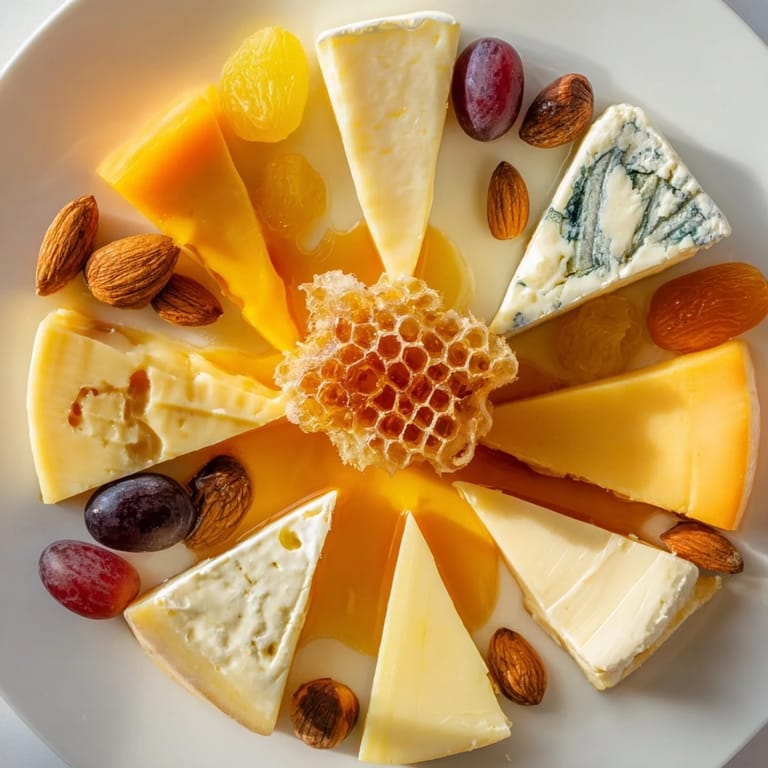
Pin The first time I assembled a cheese board that actually made people pause before eating it, I realized I'd been thinking about them all wrong. We weren't just arranging food—we were creating something people wanted to photograph, to admire, to remember. When a friend suggested cutting everything into hexagons and building outward from a honeycomb centerpiece, something clicked. Suddenly, all those beautiful cheeses and crackers weren't just accompaniments; they were the design itself. This board has become my answer to every elegant gathering, every moment when ordinary entertaining needed to feel extraordinary.
I made this for my sister's gallery opening, and the whole evening seemed to revolve around people circling back to the board between conversations. Someone commented that it looked like edible architecture, and suddenly I understood why this arrangement had quietly become my favorite way to entertain. It transformed a regular appetizer into something guests actually remembered talking about.
Ingredients
- Manchego cheese: This Spanish sheep's milk cheese brings a nutty, slightly salty note that anchors the board and cuts through richer cheeses beautifully.
- Aged cheddar: Sharp and crystalline, it adds that familiar comfort while contrasting wonderfully with softer options.
- Gruyère: Its subtle sweetness and melting quality make it the bridge cheese that works with nearly everything.
- Brie: The creamy, elegant choice that people often reach for first—make sure yours is ripe but still holds shape when cut.
- Blue cheese: A small amount goes a long way, adding pungency and visual interest with its veining.
- Goat cheese log: Slice this into clean hexagons for a bright, tangy contrast that feels lighter than the aged varieties.
- Whole wheat crackers: The substantial base of your pattern, holding up to cheese without crumbling or stealing the show.
- Seeded crackers: These add texture and visual variety, breaking up the pattern with their specked appearance.
- Edible honeycomb: The star of the centerpiece—its real beeswax structure is what transforms this from a cheese board into a focal point.
- Runny honey: Those golden drizzles aren't just decoration; they tie the whole theme together and add a subtle sweetness.
- Marcona almonds: Buttery and slightly sweet, they fill gaps while adding richness and crunch where needed.
- Dried apricots: Their warm color and slight chewiness balance the sharpness of aged cheeses perfectly.
- Fresh grapes: These provide juiciness and serve as little palate cleansers between different cheese flavors.
- Edible flowers or microgreens: Optional, but they make the board feel even more intentional and garden-fresh.
Tired of Takeout? 🥡
Get 10 meals you can make faster than delivery arrives. Seriously.
One email. No spam. Unsubscribe anytime.
Instructions
- Chill and cut your cheeses:
- Pop the harder cheeses and especially those softer ones like brie and goat cheese into the fridge for 15 minutes before you start cutting—cold cheese holds edges cleanly and won't tear or smudge. Using a sharp metal hexagon cutter, press straight down with a gentle twist, and you'll get perfect shapes without the frustration.
- Transform those crackers:
- Lay your crackers out and use the same cutter to trim them into hexagons, wiping the cutter between cuts so crumbs don't accumulate. Some will inevitably break, but that's why you started with plenty—just set aside the perfect ones for display.
- Create your honeycomb heart:
- Place that beautiful honeycomb piece right at the center of your board, making sure it sits flat and secure. This is your anchor point, the reason everything else radiates outward.
- Build your cheese rings:
- Start arranging cheese hexagons in a circular pattern around the honeycomb, alternating between cheese types to create a visual rhythm—this way every slice of color and texture flows naturally into the next. Think of it like a color wheel where each type of cheese gets its moment.
- Add your cracker rays:
- Layer hexagon-cut crackers into concentric circles or radiating rays around the cheese, filling the space between and creating that beehive geometry. Step back occasionally to see how the pattern is developing and adjust as you go.
- Fill with treasures:
- Scatter almonds, apricots, and grapes into the remaining gaps, using them to add warmth and balance to any areas that feel too heavy with cheese or crackers. These little additions catch light and break up the geometry in a gentle way.
- Crown with honey:
- Drizzle thin streams of honey around the honeycomb and across some of the cheeses for that glossy, just-made-from-nature glow. Don't overdo it—just enough to catch the light and reinforce the theme.
- Final flourish:
- If you're using edible flowers or microgreens, scatter them across the top for a fresh, garden-to-table feeling that makes the whole thing feel even more intentional and alive.
 Pin
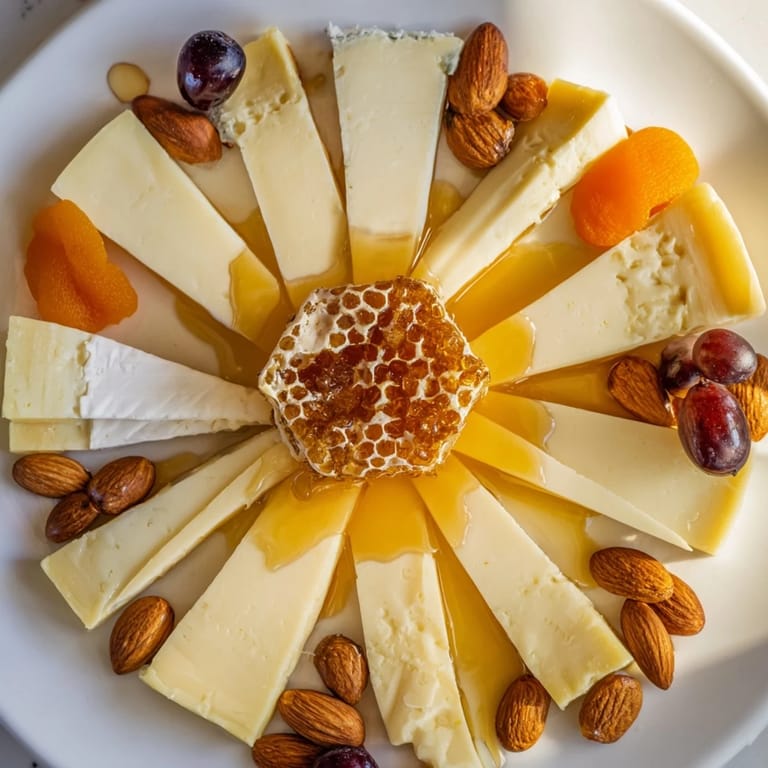
Pin There was a moment during that gallery opening when a guest stood in front of the board for what felt like a full minute, just looking at it, before carefully selecting a slice of manchego with a cracker. It wasn't rushed or casual; it felt intentional and almost respectful, like they understood this wasn't just food but an arrangement that someone had thought about. That's when I knew this board had become more than entertainment—it had become a way to show people you care about how you present moments to them.
The Geometry of Entertaining
There's something deeply satisfying about turning a cheese board into a puzzle. Once you commit to the hexagon shape, suddenly every ingredient has a place, and the randomness of entertaining becomes manageable. The pattern gives you a framework so you're not just throwing things on a board—you're building something with intention. I started thinking about cheese boards differently after this, realizing that structure doesn't limit creativity; it actually clarifies it.
Choosing Your Cheeses Wisely
The magic of this board lies in the contrast between textures and ages. A young, creamy brie plays beautifully against an aged, crystalline cheddar, while that funky blue cheese reminds people that bold flavors belong at any table. When you're cutting cheeses into identical hexagons, those differences in color, veining, and texture become even more apparent—which is exactly the point. I learned early on that this isn't a place for safe choices; it's a place for interesting ones.
Timing and Temperature
The hardest lesson I learned was patience. My first few boards were assembled an hour or two before guests arrived, and by the time people gathered around, things had softened in ways that blurred my beautiful geometry. Now I assemble this as late as reasonably possible, sometimes even while people are settling in, because those first 30 minutes are when everything looks absolutely perfect. The cheeses maintain their shape, the crackers haven't absorbed any humidity, and every edge stays crisp.
- Chill your cheeses for 15 minutes before cutting so every hexagon stays sharp-edged and true.
- Build your board within 30 minutes of serving for maximum visual impact and texture integrity.
- Keep the board in a cool spot, not directly under lights, so cheeses don't start softening before anyone's even reached for one.
 Pin
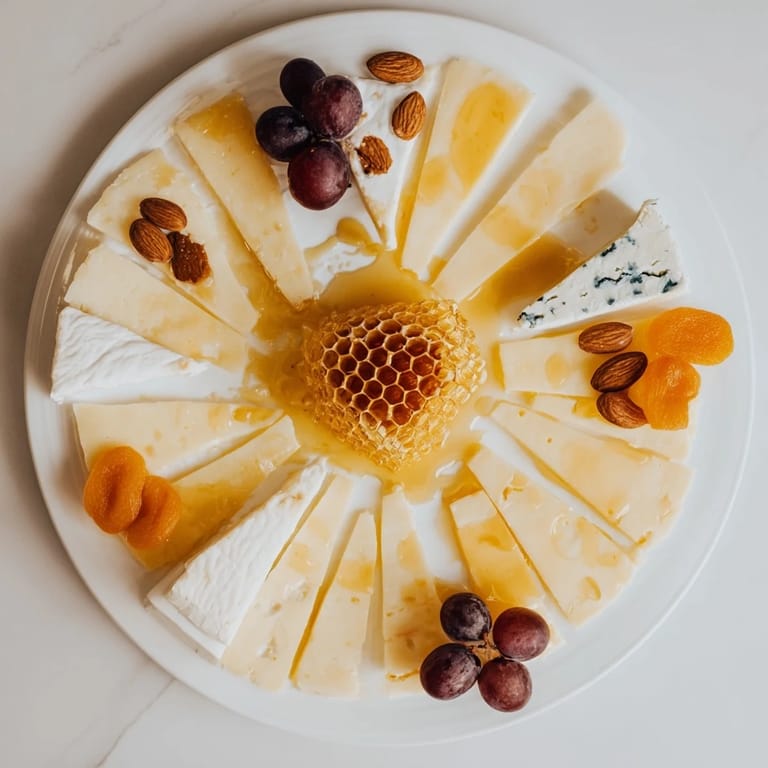
Pin This board transformed the way I think about hosting, teaching me that beautiful entertaining isn't about fussy techniques or complicated recipes—it's about thoughtfulness and intention. Every time I pull out that hexagon cutter, I'm reminded that the simplest ingredients, arranged with care, become something people actually remember.
Recipe Q&A
- → How do I cut cheeses and crackers into hexagons?
Use a food-safe hexagon-shaped cutter around 2–3 inches wide. Chill softer cheeses slightly before cutting for cleaner edges, and carefully trim crackers, selecting unbroken pieces for display.
- → Can I substitute the types of cheese used?
Yes, you can select cheeses based on seasonality and preference, ensuring a mix of textures and flavors to maintain visual and taste balance.
- → What is the best way to present the honeycomb centerpiece?
Place the small honeycomb piece at the center of your serving board to serve as a striking focal point, then arrange cheeses and crackers radiating out from it.
- → Are there any pairing suggestions for this board?
Pair with crisp white wines like Sauvignon Blanc or a light sparkling wine to complement the variety of cheeses and honey notes.
- → How can I adapt this board for gluten-free needs?
Replace the crackers with gluten-free options to accommodate dietary restrictions without compromising the presentation.
- → What garnishes enhance the board’s appearance?
Fresh edible flowers or microgreens add a delicate, colorful touch, enhancing the elegant and natural aesthetic of the board.