 Pin
Pin There's something about standing over a steaming pot on a humid afternoon, watching noodles soften in roiling water, knowing that in twenty minutes you'll have something cool and silky waiting for you. That's when I first made cold sesame noodles—not from a recipe, but from a craving that arrived the moment the heat made my kitchen feel unbearable. My neighbor had left a jar of tahini on my doorstep weeks earlier, and I'd been wondering what to do with it. The answer turned out to be this: a dish that tastes like comfort but feels like relief.
I made this for my sister's surprise birthday picnic in July, when everyone was too hot to think about eating. I brought it in a glass container, and by the time we sat under the oak tree, condensation was dripping down the sides. Someone tasted it and said, "This is what I didn't know I needed," and suddenly the whole picnic felt less about the heat and more about how cold noodles could make everyone smile at the same time.
Ingredients
- Wheat noodles or spaghetti (350 g): Any sturdy noodle works here—I learned that thinner pasta tends to clump when cold, so stick with something with a bit of body.
- Sesame oil (1 tbsp for noodles, 1 tbsp for sauce): The toasted kind is essential; it's what makes this taste like itself and not just like peanut noodles.
- Tahini or Chinese sesame paste (4 tbsp): This is the soul of the sauce—creamy, nutty, and worth buying from somewhere that rotates stock.
- Smooth peanut butter (2 tbsp): It adds richness and helps the tahini stay silky when you add water.
- Low-sodium soy sauce (3 tbsp): The saltiness needs to be measured carefully; low-sodium gives you room to adjust.
- Rice vinegar (2 tbsp): This bright note keeps everything from feeling too heavy, even when it's the middle of summer.
- Honey or maple syrup (1 tbsp): A tiny bit of sweetness balances the salt and sour without making it dessert.
- Garlic and ginger (2 cloves and 1 tbsp): Grate them fresh—the heat and spice will wake up your whole mouth in the best way.
- Chili oil (1–2 tsp): Optional, but it's where the noodles get personality; I always add it.
- Cold water (3–5 tbsp): This is your adjustment tool—add it slowly until the sauce flows like silk.
- Cucumber (1 medium, julienned): The crisp texture is essential; don't skip it for speed.
- Carrots (2 medium, julienned): They add sweetness and crunch that makes every bite feel intentional.
- Spring onions (2, thinly sliced): A last-second addition that keeps the dish bright.
- Toasted sesame seeds (2 tbsp): Sprinkle them on just before serving so they don't soften.
- Fresh cilantro (1 handful): Some people skip it; some of us can't imagine doing so.
- Roasted peanuts and lime wedges (optional): The peanuts add texture; the lime is your final adjustment for brightness.
Tired of Takeout? 🥡
Get 10 meals you can make faster than delivery arrives. Seriously.
One email. No spam. Unsubscribe anytime.
Instructions
- Cook and cool the noodles:
- Bring a pot of water to a rolling boil and add your noodles. Stir them once or twice so they don't stick to each other. When they're tender but not mushy (taste one to be sure), drain them into a colander and rinse under cold running water for a full minute, stirring gently with your fingers. This stops the cooking and rinses away the starch that would make them gluey.
- Toss with sesame oil:
- While the noodles are still slightly warm, drizzle the tablespoon of sesame oil over them and toss gently but thoroughly. This small step is what keeps them from clumping into a single cold mass later.
- Make the sauce:
- In a medium bowl, whisk the tahini, peanut butter, soy sauce, rice vinegar, honey, and toasted sesame oil together until mostly combined. It'll be thick at first—that's right. Now add your grated garlic and ginger, and the chili oil if you're using it, whisking until smooth.
- Adjust the sauce consistency:
- Add cold water one tablespoon at a time, whisking after each addition. You're aiming for something that coats a spoon but still flows—thinner than peanut butter but thicker than cream. This is where you taste and adjust.
- Combine and coat:
- Transfer your cooled noodles to a large bowl. Pour the sauce over them and toss with tongs or two forks, making sure every strand gets coated. This takes longer than you'd think, but it's worth doing right.
- Build your bowls:
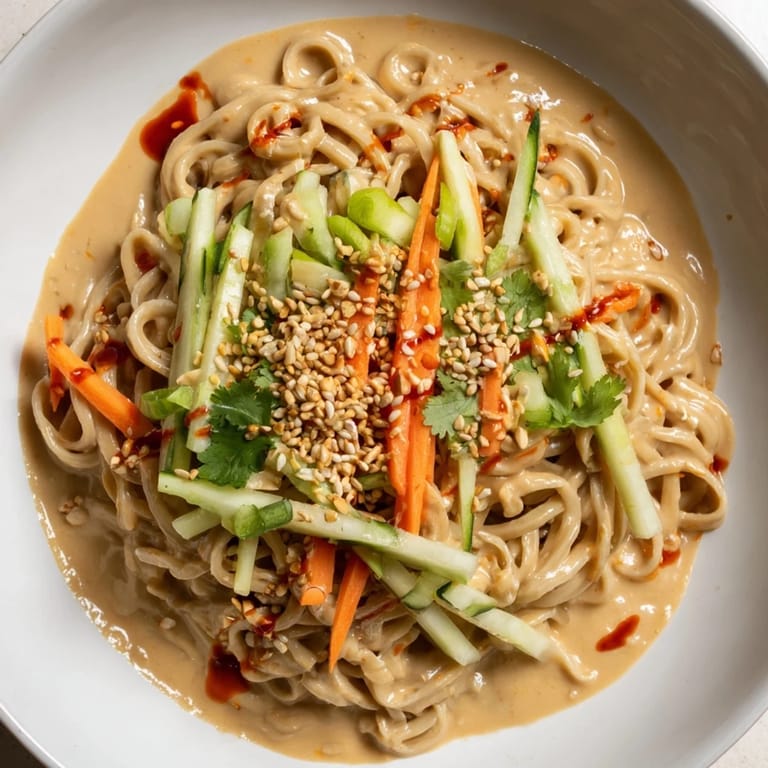
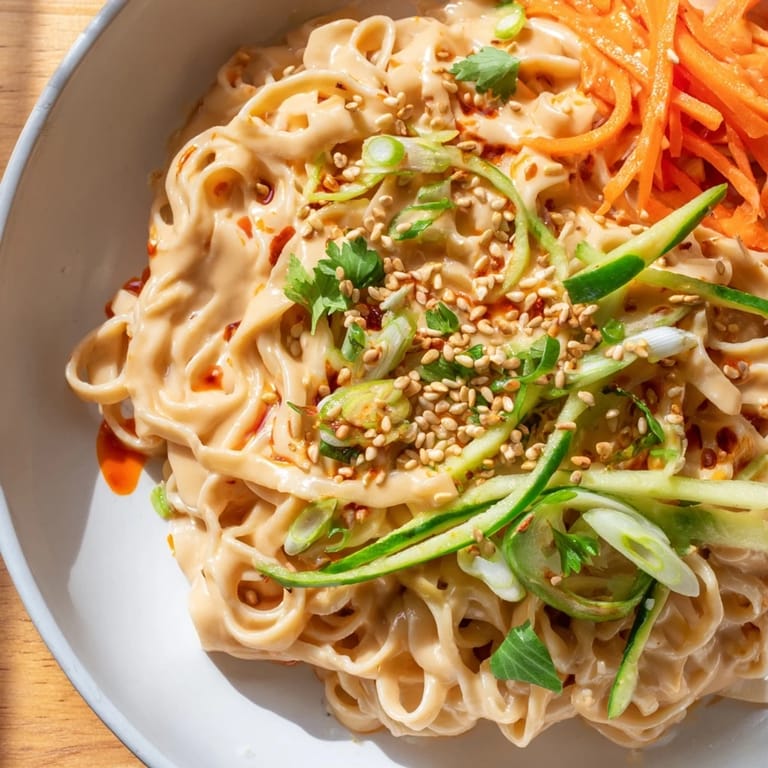
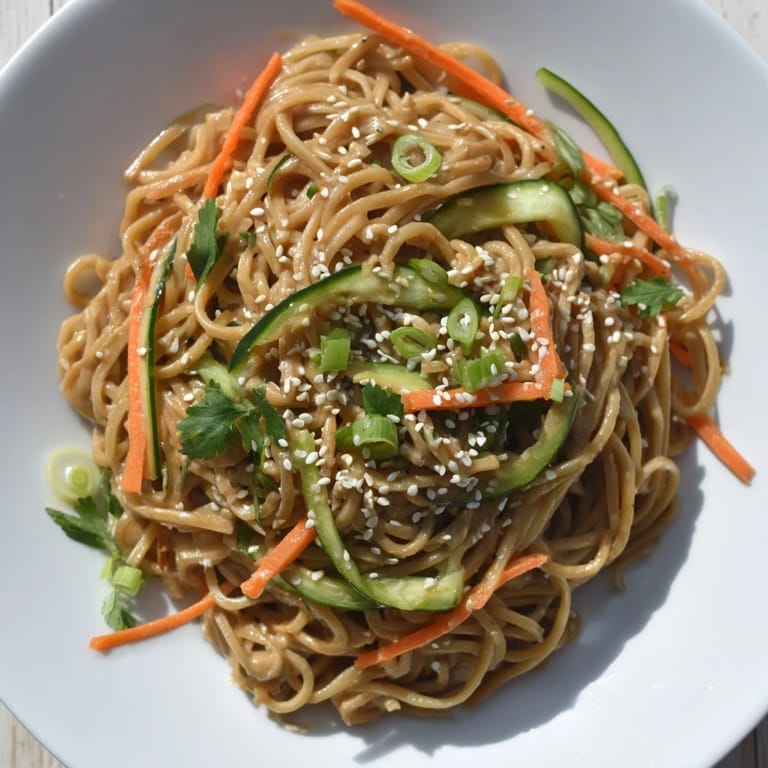
- Divide the noodles among serving bowls and arrange your vegetables on top in little piles—cucumber, carrots, spring onions. The presentation matters here because it makes people want to eat it.
- Finish and chill:
- Scatter sesame seeds and cilantro over the top, add peanuts if you're using them, and set a lime wedge on the rim. Refrigerate for at least ten minutes before serving, but longer is fine too.
 Pin
Pin A friend who usually sticks to plain pasta salad asked for the recipe, written down, so she could make it for her kids. That might be the greatest compliment a dish can get—when someone decides to make it their own. Now every time I see those cold noodles in someone else's kitchen, I think about how recipes move through the world, changing slightly in each person's hands, becoming part of their stories too.
The Sauce Is Everything
The magic here lives entirely in the sauce. Tahini and peanut butter together create a texture that neither one could achieve alone—it's creamier than peanut sauce and more grounded than pure tahini. The rice vinegar is what keeps it from being heavy, and the ginger adds a small burn that makes your mouth feel alive. I once made this with white vinegar instead of rice vinegar because I was lazy, and the whole dish tasted wrong, harsh instead of balanced. Since then I've never skipped a single ingredient, because each one is there for a reason.
Vegetables: The Supporting Players That Matter
The vegetables aren't decoration—they're the texture that makes this dish worth eating. Cucumber brings coolness and a delicate crunch. Carrots add sweetness and body. Spring onions cut through the richness of the sauce with a sharp bite. I've watched people eat these noodles and pick around the vegetables, and I've watched others eat the vegetables first, foreground and all. Either way, they change the experience completely, which is why I always use fresh ones and never add them too early.
Serving, Storage, and Variations
These noodles are best served cold or at room temperature, which is why they're perfect for making ahead. They keep for three or four days in the refrigerator in a covered container, though the vegetables will soften slightly over time. If you're adding protein, cooked shredded chicken, crispy tofu, or chilled shrimp all work beautifully. For a gluten-free version, use gluten-free noodles and tamari instead of soy sauce, and the dish works just as well. Sometimes I add a soft-boiled egg on top, letting the warm yolk drip into the cold sauce, which feels indulgent for a simple lunch.
- Add shredded cooked chicken, pressed tofu, or chilled shrimp if you want more protein in a single bowl.
- Make the sauce thinner if you prefer it more soupy, or thicker if you like it to cling to each noodle.
- Lime juice is your secret weapon for bringing the whole dish into focus right before serving.
 Pin
Pin This is the kind of recipe that asks nothing of you except for fifteen minutes and a willingness to taste as you go. It's the kind of food that makes summer bearable and makes people want seconds.
Recipe Q&A
- → What type of noodles work best for this dish?
Wheat noodles or spaghetti work well, but gluten-free options can be used for dietary needs.
- → How can the sauce consistency be adjusted?
Gradually add cold water while whisking to achieve a smooth, creamy, and pourable texture.
- → Can this dish be served warm?
It's traditionally served chilled for a refreshing taste, but can be eaten at room temperature if desired.
- → What are good protein additions to enhance this dish?
Shredded chicken, tofu, or shrimp complement the flavors and add protein.
- → What toppings add extra flavor and texture?
Toasted sesame seeds, fresh cilantro, crushed peanuts, and lime wedges enhance crunch and brightness.