 Pin
Pin There's something about the smell of cabbage hitting hot oil that instantly transports me to my grandmother's kitchen on a gray Sunday afternoon. She'd chop vegetables with this meditative rhythm, never rushing, while I'd sit at the counter asking a hundred questions about why soup was always better the next day. This cabbage soup became my go-to when I needed something honest and grounding—no fuss, no fancy techniques, just vegetables talking to each other in a pot.
I made this soup for my partner during one of those weeks when everything felt overwhelming, and I watched her face soften with the first spoonful. That's when I realized it wasn't about the ingredients at all—it was about sitting together with something warm and real, the kind of meal that doesn't demand anything from you except a moment to breathe.
Ingredients
- 1 small green cabbage (about 700 g), cored and chopped: This is your foundation—don't skip coring it, or you'll bite into something woody and bitter that nobody enjoys.
- 2 medium carrots, peeled and sliced: They break down slightly and add a subtle sweetness that balances the earthiness of the cabbage.
- 2 celery stalks, sliced: The unsung hero that gives the broth depth and a gentle aromatics foundation.
- 1 medium onion, diced: Cook it low and slow with the carrots and celery first—this is how you build flavor from the very beginning.
- 3 cloves garlic, minced: Add it after the softer vegetables or it'll turn bitter and acrid, which nobody wants.
- 1 red bell pepper, diced: The brightness here matters—it keeps the soup from tasting one-note or heavy.
- 400 g (1 can) diced tomatoes: Canned is perfect because you get consistent acidity and no waste; fresh tomatoes would dilute the soup with too much water.
- 1 small zucchini, diced (optional): I add this when I have it because it softens beautifully and absorbs all the flavors around it.
- 1.5 liters vegetable broth (low sodium preferred): Use low sodium so you can control the salt level yourself—trust me on this.
- 1 tablespoon olive oil: Good olive oil makes a difference here; it carries the flavor of everything you're cooking.
- 1 teaspoon dried thyme and 1 teaspoon dried oregano: These Mediterranean herbs are what make it feel intentional rather than just boiled vegetables.
- 1/2 teaspoon ground black pepper, 1/2 teaspoon salt, 1/4 teaspoon chili flakes (optional): Start conservative and taste as you go—you can always add more heat, but you can't take it back.
- Juice of 1/2 lemon (optional): A squeeze of brightness at the end lifts everything and makes it taste fresher than it has any right to.
- Fresh parsley, chopped, for garnish: This isn't decoration—it's your reminder that fresh herbs matter, even in something as humble as soup.
Tired of Takeout? 🥡
Get 10 meals you can make faster than delivery arrives. Seriously.
One email. No spam. Unsubscribe anytime.
Instructions
- Build your aromatics base:
- Heat the olive oil over medium heat and add the onion, carrots, and celery together. Let them soften for about 5 minutes—you're not looking for color, just for them to lose their raw edge and start releasing their sweetness.
- Wake up the garlic:
- Stir in the minced garlic and cook for just 1 minute until it becomes fragrant and golden. Any longer and it starts to taste acrid instead of mellow.
- Add the rest of the vegetables:
- Toss in the bell pepper, zucchini if you're using it, and the cabbage. Stir occasionally for 3 to 4 minutes—you want everything to soften slightly and get coated with the oil and aromatics.
- Pour in the liquid and season:
- Add the diced tomatoes and vegetable broth, then season with thyme, oregano, black pepper, salt, and chili flakes if you want a little warmth. Stir everything together so the seasonings distribute evenly.
- Simmer low and slow:
- Bring it to a boil first so you see it bubbling, then drop the heat to low, cover the pot, and let it simmer for 25 to 30 minutes. The vegetables will become tender and the flavors will marry together into something that tastes like it took much longer.
- Taste and adjust:
- After simmering, taste it carefully. Add more salt, pepper, or that squeeze of lemon juice if you want brightness. This is your moment to make it exactly right.
- Serve with intention:
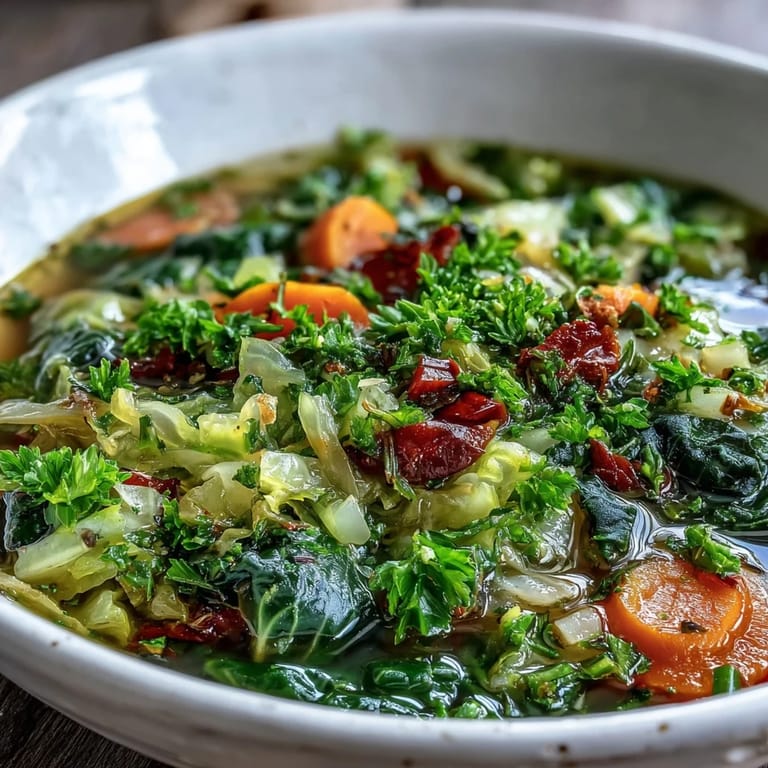
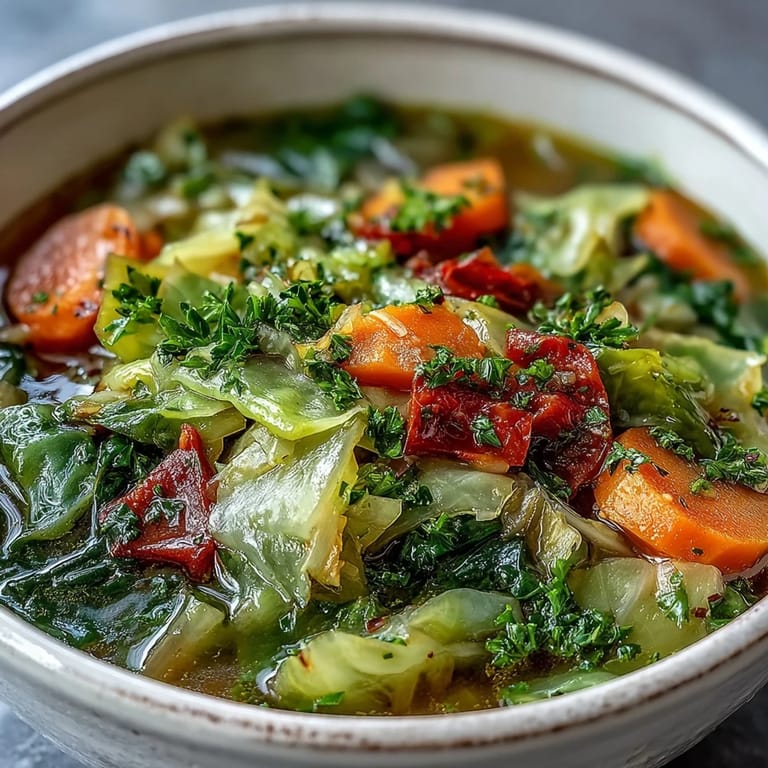
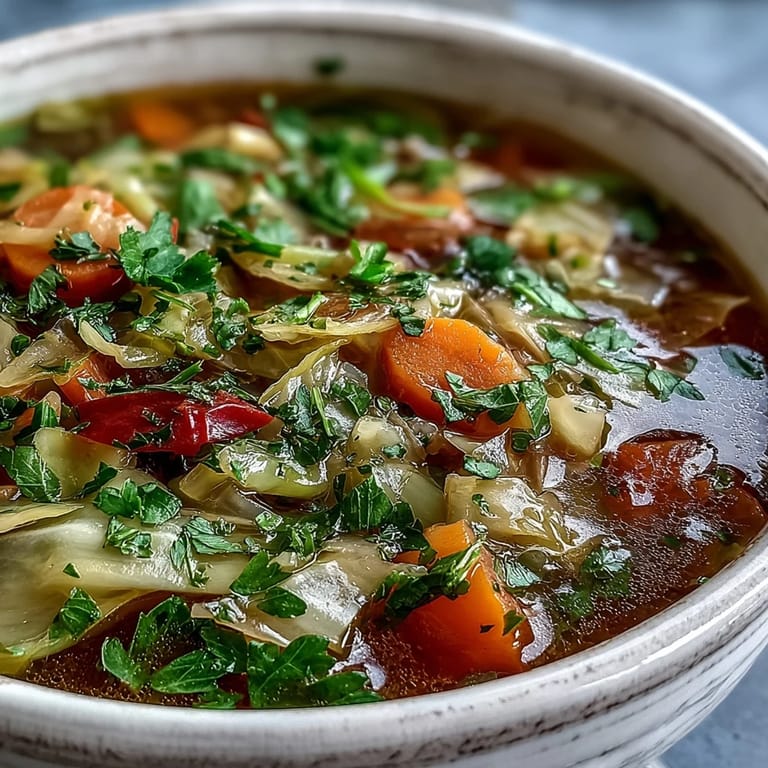
- Ladle it into bowls and finish with fresh parsley. The warmth will release the herb's oils, and you'll taste it in every spoonful.
 Pin
Pin This soup has quietly become my comfort language. When I'm tired or uncertain, I make it because I know exactly how it'll turn out, and there's something grounding about that reliability. It's the kind of dish that doesn't ask for applause—it just shows up and does its job.
Making It Your Own
The beauty of cabbage soup is that it's genuinely forgiving. I've made it with whatever vegetables were about to go soft in my crisper drawer, and it's never disappointed. One winter I added a can of white beans halfway through cooking, and it transformed into something more substantial without losing its light, restorative quality. Another time I roasted the vegetables first before adding the broth, which deepened the flavors considerably. The recipe is less a rigid formula and more a gentle framework you can adjust based on what you have on hand and how you're feeling.
Storage and Make-Ahead Magic
Honestly, this soup tastes better the next day. I always make extra because the flavors settle overnight, and everything becomes more cohesive and complex. It keeps refrigerated for up to 4 days without losing its integrity, and it freezes beautifully for up to 3 months—just leave a little headspace in your container for expansion. When you're ready to eat it, thaw it overnight in the fridge and reheat gently over medium heat, adding a splash of broth or water if it's thickened too much.
Serving Suggestions and Pairings
This soup is perfect on its own when you want something light, but it transforms into a full meal when you serve it with crusty whole-grain bread or a simple green salad alongside. I've also ladled it over quinoa or rice for nights when I wanted more substance, and the broth creates this delicious sauce that makes everything taste connected. A sprinkle of nutritional yeast or a drizzle of tahini would add creaminess if you wanted to shift the texture without compromising the vegan quality.
- Pair it with whole-grain bread to soak up every bit of broth and flavor.
- Serve it cold on warm days—it becomes this fresh, bright gazpacho-style dish.
- Top each bowl with a handful of fresh herbs, croutons, or a squeeze of fresh lemon juice right before eating.
 Pin
Pin Make this soup when you need something honest and restorative. It's the kind of meal that proves you don't need complicated techniques or rare ingredients to create something genuinely nourishing.
Recipe Q&A
- → How long does this keep in the refrigerator?
Leftovers stay fresh for up to 4 days when stored properly in an airtight container. The flavors actually deepen and improve overnight, making it excellent for meal prep.
- → Can I freeze this soup?
Yes, it freezes beautifully for up to 3 months. Let it cool completely before transferring to freezer-safe containers. Thaw overnight in the refrigerator before reheating.
- → What can I add for more protein?
White beans, chickpeas, or lentils work wonderfully. Add them during the last 15 minutes of cooking so they heat through without becoming mushy. A cup of cooked beans adds about 15 grams of protein.
- → Is this suitable for a detox or cleanse?
Absolutely. This light, nutrient-dense soup is naturally low-calorie and packed with fiber and vitamins. The gentle ingredients make it perfect for a body reset or when you're seeking lighter meals.
- → Can I use different vegetables?
Certainly. Spinach or kale can be added in the last 5 minutes. You can also swap the zucchini for yellow squash, add green beans, or include other root vegetables like parsnips or turnips.
- → How do I make it more filling?
Serve with whole-grain bread, add a protein source like beans or chickpeas, or stir in some cooked rice or quinoa during the last 10 minutes of simmering.