 Pin
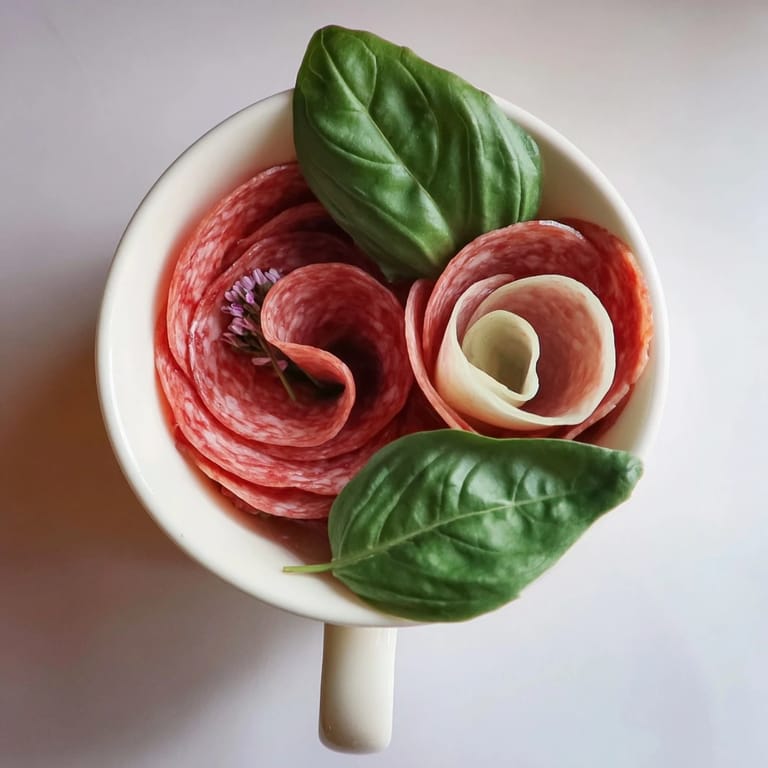
Pin I stumbled upon the idea for these meat roses while rearranging my grandmother's china cabinet and imagining what she might serve at one of her legendary tea parties. The Victorian aesthetic has always fascinated me, but I realized it didn't have to mean fussy or complicated. One afternoon, I grabbed some salami from the deli counter and started experimenting with folding techniques, discovering that the spiral method created petals that actually resembled a blooming rose. When I finally arranged them in her porcelain teacups and stepped back, I felt like I'd cracked some delicious code between elegance and ease.
My sister brought these to a baby shower last spring, and I watched three different people ask for the recipe before she'd even sat down. There's something about serving savory appetizers in teacups that shifts the whole mood of a gathering, like you're inviting people into a more thoughtful kind of fun. The conversation shifted too, somehow slower and more generous, everyone admiring each rose before eating it.
Ingredients
- Salami, 18 large thin slices: The foundation of your roses; request the deli counter slice them paper-thin so they fold without cracking, and choose a variety with good color contrast if you can.
- Pepperoni, 18 large thin slices: The deeper red creates a beautiful second color story, and its slightly spicier edge balances the milder salami perfectly.
- Porcelain teacups, 6 small: These hold the roses upright and instantly transform the dish into something that feels special and intentional.
- Fresh basil or baby arugula (optional): A thin layer underneath the rose adds a fresh green note and prevents the meat from sliding around inside the cup.
- Edible flowers like pansies or violets (optional): Tucked into the petals, they complete the garden aesthetic and give you something unexpected to discover while eating.
- Crackers, cheeses, grapes (optional accompaniments): Build a small board around your teacups to give guests options and create a full, generous tableau.
Tired of Takeout? 🥡
Get 10 meals you can make faster than delivery arrives. Seriously.
One email. No spam. Unsubscribe anytime.
Instructions
- Lay out your first salami sequence:
- Take 6 salami slices and arrange them in a slightly overlapping line, each one covering about a third of the last, like shingles on a roof. The slight overlap is what gives you control when rolling.
- Roll into a spiral:
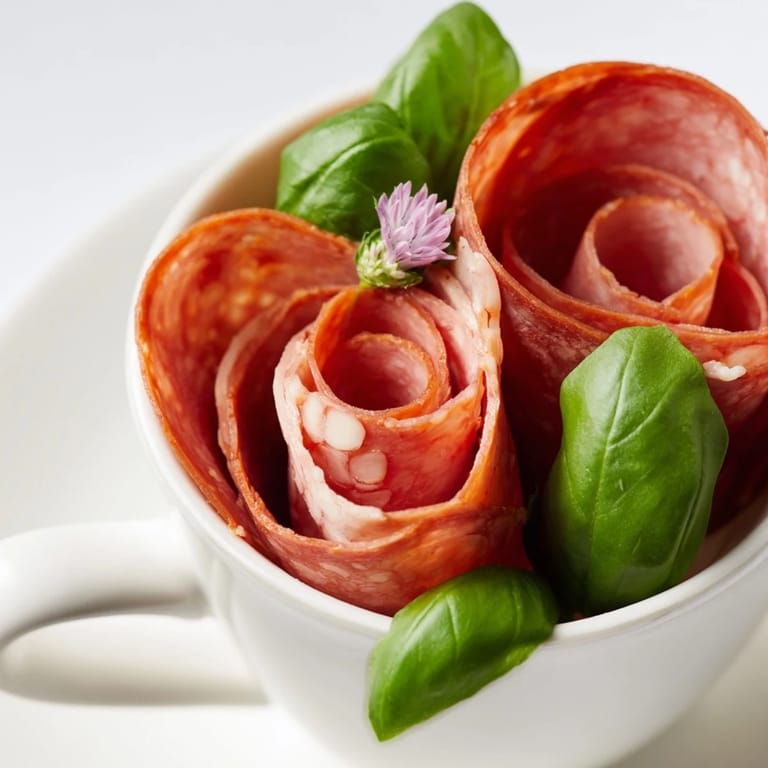
- Starting at one end, gently and slowly roll the entire line into a tight spiral, keeping even pressure so the spiral stays compact. Once rolled, stand it upright on your work surface and you'll see the shape of a rose begin to emerge.
- Tease the petals open:
- This is where patience matters; gently pull each outer layer just slightly outward to create the appearance of unfurling petals. You're not trying to flatten them, just loosen them enough that the rose looks organic and full.
- Repeat with pepperoni:
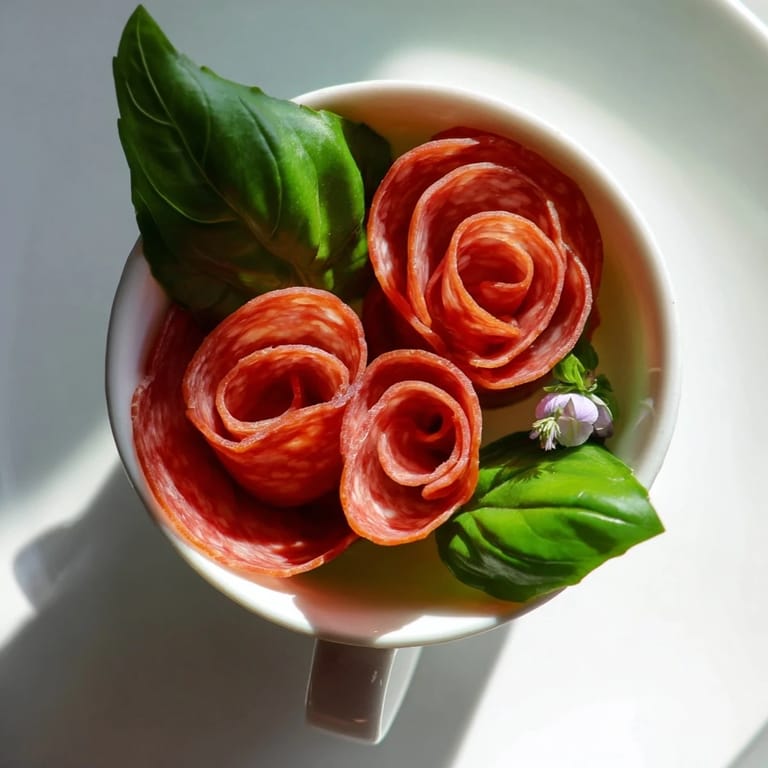
- Use the same technique with your pepperoni slices to create a second variety, then make one more set of each so you end up with three salami roses and three pepperoni roses.
- Prepare your teacups:
- If using it, line each cup with a single basil leaf or a small bunch of arugula leaves to create a soft base and add a pop of color.
- Nestle each rose into a cup:
- Carefully transfer each rose into its teacup, adjusting the petals from above and around the sides to ensure they look full and natural, not compressed. Don't worry about perfection; slight asymmetry actually looks more like a real flower.
- Add the finishing flourish:
- Tuck a small edible flower gently into the side of each rose if you're using them, choosing colors that complement the deep reds and pinks of the cured meats.
- Arrange on a serving board:
- Surround your teacups with crackers, sliced cheese, and fresh grapes or berries to create a complete charcuterie moment that invites people to graze and linger.
 Pin
Pin I made these for my partner one quiet Tuesday night, no special occasion, just because the light was coming through the kitchen window in a particular way and I wanted to make something beautiful for no reason at all. Watching him pause before eating one, actually looking at it first, reminded me that food is sometimes about the moment you create around it, not just the taste on your tongue.
The Art of the Fold
Rolling these roses is part meditation, part technique, and entirely forgiving if you approach it with patience rather than precision. I've found that the speed matters more than perfection; rushing creates tension in your hands that transfers to the meat and causes tearing. When you slow down and let your fingers do the work, something shifts—suddenly you're not just folding deli meat, you're coaxing it into something that makes people smile. The repetition becomes meditative, and by the time you're finishing your third rose, your hands have learned exactly how much pressure to apply.
Building Your Board
The real magic happens when you think of these roses as the centerpiece of a larger story rather than the whole narrative. Placing them among softer cheeses, bright grapes, and delicate crackers creates contrast that makes each element shine more brightly. I've learned to arrange everything at different heights and in small clusters rather than in neat rows; it signals abundance and invites people to touch and choose, which changes the whole energy of the gathering. The teacups themselves become part of the design language, suggesting a kind of civilized leisure that makes everyone at the table feel like they're part of something more intentional.
Flavor Pairings and Variations
Beyond salami and pepperoni, you can experiment with prosciutto for a more delicate rose or coppa for something with deeper, spicier notes. A light brush of good olive oil mixed with cracked black pepper before rolling adds dimension without overwhelming the meat itself. The green of fresh basil and arugula isn't just visual; it provides a peppery freshness that brightens the richness of the cured meats and keeps your palate interested through multiple bites.
- Brush meat lightly with olive oil mixed with black pepper before rolling for added depth of flavor.
- Try prosciutto or coppa for variety, adjusting your expectations slightly since thinner meats roll more delicately.
- Make these up to two hours ahead and refrigerate; serving them slightly chilled keeps the meat firm and the presentation crisp.
 Pin
Pin These roses remind me that elegant food doesn't require hours or fancy equipment, just a little imagination and willingness to fold something ordinary into something unexpected. Serve them cold, watch people's faces light up, and enjoy knowing you've created a moment they'll remember.
Recipe Q&A
- → How do you create the rose shapes from salami and pepperoni?
Arrange slices overlapping in a line, then roll them tightly and stand upright. Gently loosen the edges to mimic rose petals.
- → Can I use other types of cured meats?
Yes, prosciutto, coppa, or other thinly sliced cured meats work well for creating similar rose shapes.
- → What garnishes complement the tea rose presentation?
Fresh basil leaves or baby arugula line the teacups, and edible flowers like pansies or violets can add color and charm.
- → Is cooking required for this appetizer?
No cooking is needed; it's assembled cold for quick and easy preparation.
- → How should I serve the Victorian tea roses?
Place the meat roses inside porcelain teacups and arrange them on a serving board with crackers, cheeses, and fresh fruits for a complete presentation.