 Pin
Pin I discovered this salad on a Tuesday afternoon when I was staring at my pantry, realizing I'd grabbed two cans of tuna at the grocery store by mistake. My roommate had just started meal prepping, and I thought, why not combine her chickpea obsession with my random tuna surplus? Twenty minutes later, we were both eating straight from the bowl, and she immediately asked for the recipe. That's when I knew I'd stumbled onto something special.
I made this for a potluck last summer, and I watched people go back for thirds, which never happens with salads. Someone asked if it was a restaurant recipe, and I felt oddly proud admitting I'd kind of invented it on a lazy afternoon. The best part? I'd made it that morning, thrown it in a container, and it traveled perfectly in my bag.
Ingredients
- Chickpeas (1 can, 15 oz): Rinse these under cold water until the water runs clear, which prevents that weird foam and makes them taste fresher.
- Tuna (2 cans, 5 oz each): Drain thoroughly and break it apart with a fork as you add it, so you get nice flaky pieces instead of big chunks.
- Cherry tomatoes (1 cup): Halve them just before assembly so they stay juicy and don't release all their liquid into the salad prematurely.
- Cucumber (1 small): Dice it small to match the chickpea size, and don't peel it unless your cucumber feels waxy to the touch.
- Red onion (1/4, finely chopped): The bite is part of the magic here, so don't skip it, but chop it fine so it distributes evenly.
- Fresh parsley (1/4 cup): Tear it by hand rather than chopping with a knife, which keeps it from bruising and turning dark.
- Kalamata olives (1/4 cup, optional): These add a salty, briny note that makes everything taste like you spent more effort than you actually did.
- Extra virgin olive oil (3 tbsp): Use the good stuff here because there's nowhere to hide, and it makes a real difference in the final taste.
- Fresh lemon juice (2 tbsp): Always squeeze it fresh, never use the bottled kind, which tastes like regret and chemicals.
- Dijon mustard (1 tsp): This acts like a tiny emulsifier, helping the oil and lemon juice stay friends instead of separating.
- Garlic (1 clove, minced): Use a microplane if you have one, so it distributes throughout the dressing like a whisper instead of a shout.
- Salt and pepper: Taste as you go, because canned tuna already carries some salt and different brands vary wildly.
Tired of Takeout? 🥡
Get 10 meals you can make faster than delivery arrives. Seriously.
One email. No spam. Unsubscribe anytime.
Instructions
- Prep your proteins:
- Drain your chickpeas and tuna separately, then give the chickpeas a gentle rinse under cold running water. Flake the tuna apart with a fork into bite-sized pieces, breaking up any stubborn clumps, so you get a texture that feels substantial when you eat it.
- Chop everything into similar sizes:
- There's a rhythm to chopping that makes the whole process feel less like work. Cut your tomatoes, cucumber, onion, and parsley into pieces that are roughly the same size so every forkful feels balanced and intentional.
- Build the salad base:
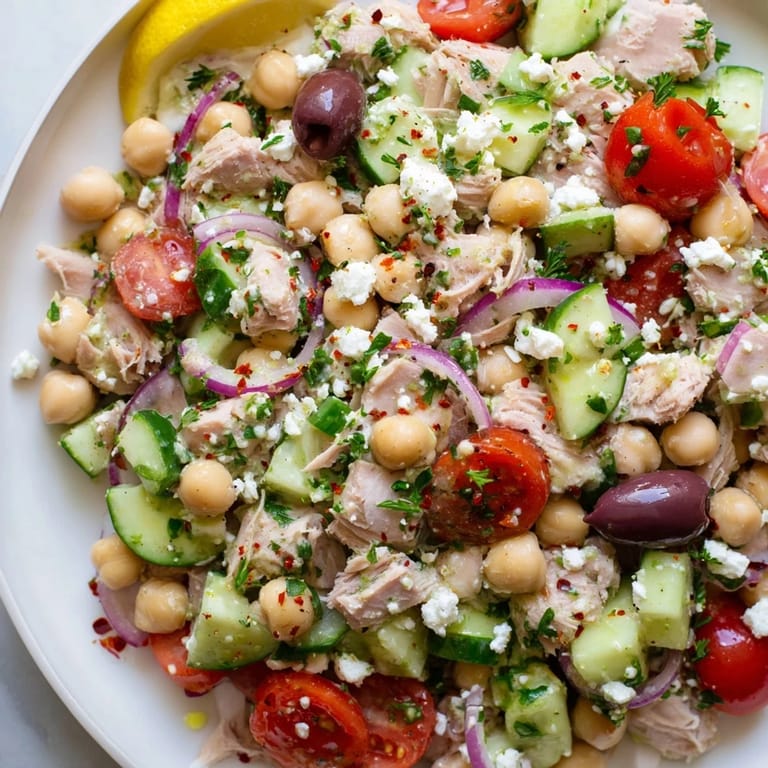
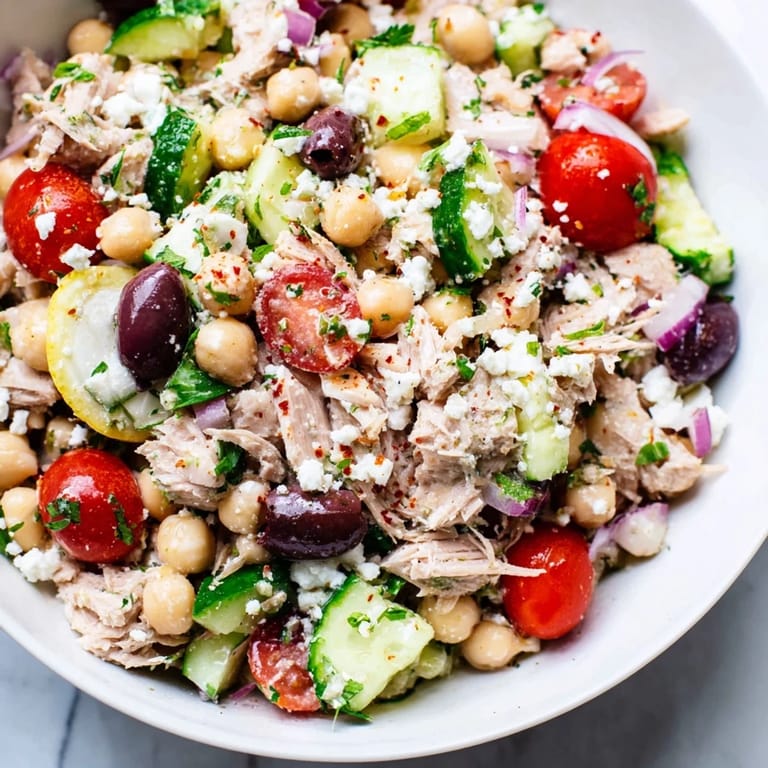
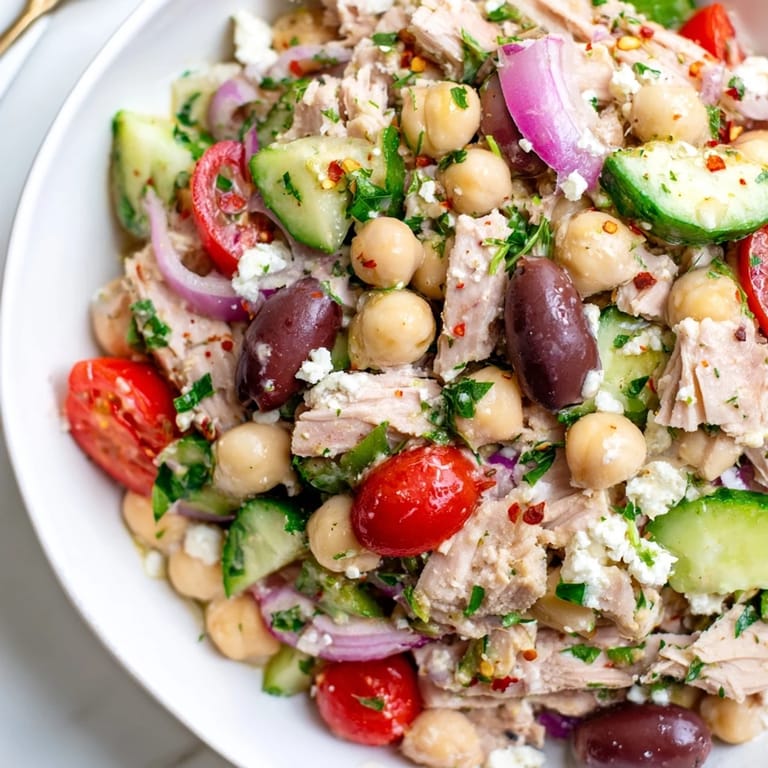
- Toss the chickpeas, tuna, tomatoes, cucumber, onion, parsley, and olives together in a large bowl, and take a second to admire how colorful it looks before you do anything else. This step takes about two minutes and makes you feel like you're actually cooking something.
- Make the dressing:
- In a small bowl, whisk the olive oil and lemon juice together first, then add the mustard and minced garlic, watching as it gradually emulsifies into something creamy and golden. Season with salt and pepper, then taste it on a piece of cucumber to make sure you'd actually want to eat it.
- Bring it all together:
- Pour the dressing over the salad and toss everything gently so nothing gets bruised, making sure every ingredient gets coated. If you're eating it right away, top with feta and red pepper flakes and serve immediately, or cover it and let it sit in the fridge for a few hours.
 Pin
Pin This salad became my answer to the 3 p.m. slump when my energy tanked and I needed something that felt like real food, not some sad desk lunch. It's the kind of thing you can eat at your desk without feeling guilty, and it actually makes you feel better instead of heavier.
Why This Salad Works as a Meal
Most salads leave me hungry an hour later, but this one doesn't, because the combination of tuna and chickpeas creates this perfect protein situation that keeps you satisfied. The healthy fats from olive oil and any cheese you add make your body feel like it actually got fed, not just grazed. It's the kind of salad that can stand alone as a complete lunch or dinner instead of being a side dish that nobody really wants.
Make It Your Own
The beauty of this salad is that it's flexible without losing its identity, so you can adjust based on what's in your fridge or what you're craving that day. I've made it with white beans instead of chickpeas, roasted red peppers instead of fresh tomatoes, and even added feta one week when I was feeling fancy. Every version tastes good because the core combination of tuna, lemon, and olive oil is solid enough to carry whatever else you throw at it.
Storage and Serving Ideas
This salad actually improves after a day in the fridge, as the flavors meld and deepen, and the whole thing becomes more cohesive and delicious. You can also pack the ingredients separately and assemble it at lunch if you want maximum crunch and freshness. It works stuffed into a pita, piled on lettuce, or eaten straight from a container with a spoon if nobody's watching.
- Cover it tightly and it keeps for up to two days, though the vegetables will soften slightly after that point.
- Double the recipe and you've got meals sorted for the week, which is the real victory here.
- Serve it cold or at room temperature, depending on your mood and the weather outside.
 Pin
Pin This is the kind of salad that saves you on days when cooking feels impossible but you still want to eat something that feels intentional and nourishing. It's honest food that doesn't pretend to be fancier than it is, and somehow that's exactly what makes it so good.
Recipe Q&A
- → Can I prepare this dish ahead of time?
Yes, it can be refrigerated for up to 2 days, allowing the flavors to meld beautifully.
- → Is this bowl suitable for gluten-free diets?
Absolutely, all ingredients are naturally gluten-free, but double-check canned goods and condiments.
- → Can feta cheese be substituted or omitted?
Yes, you can replace feta with goat cheese or leave it out for a dairy-free option.
- → What are good additions to enhance crunch?
Diced bell pepper or celery provide a pleasant crunch if added to the mix.
- → How is the dressing prepared and used?
The dressing combines olive oil, lemon juice, Dijon mustard, garlic, salt, and pepper, whisked until emulsified and tossed with ingredients.