 Pin
Pin There's something about the aroma of cumin and cinnamon hitting hot oil that instantly transports me to a sun-drenched kitchen I once borrowed in Marrakech. A friend's mother was making kefta for lunch, and I stood mesmerized as she shaped each meatball by hand, her movements so practiced they looked effortless. That day, I learned that North African cooking isn't about rushing—it's about letting spices whisper their stories into every bite. This recipe captures that exact magic, and now whenever I make it, I'm back in that moment.
I made this for my partner on a random Tuesday evening when I wanted to prove that weeknight dinners could feel special. The moment those meatballs hit the simmering sauce and the whole kitchen filled with that toasted-spice perfume, I watched their face light up. It wasn't fancy or complicated, but it tasted like care, and that's when I knew this recipe had earned a permanent spot in our rotation.
Ingredients
- Ground beef or lamb: Lamb gives you a deeper, more authentic flavor, but beef is equally delicious and easier on the wallet—choose based on what feels right for your kitchen and budget.
- Grated onion: Don't skip the grating; it dissolves into the meat and keeps the meatballs impossibly juicy while adding subtle sweetness.
- Fresh parsley and cilantro: These herbs are non-negotiable—they brighten everything and make the kefta taste alive rather than just spiced.
- Cumin, coriander, cinnamon: This trio is the heartbeat of the dish; together they create warmth without heat, complexity without confusion.
- Couscous: Look for the regular (not instant) variety if you want the best texture, though instant works in a pinch.
- Vegetable broth: Use whatever you have on hand, but avoid anything too salty since you'll be reducing the sauce and seasoning to taste.
Tired of Takeout? 🥡
Get 10 meals you can make faster than delivery arrives. Seriously.
One email. No spam. Unsubscribe anytime.
Instructions
- Make your meatballs with your hands:
- Combine all the kefta ingredients in a bowl and mix with your hands until just combined—don't overwork it or the meatballs will become dense and tough. Shape into walnut-sized balls and set aside on a plate.
- Build the flavor base:
- Heat olive oil in a large pot, then sauté the sliced onion until it's soft and golden, about 5 minutes. This isn't just about cooking the onion; you're creating a sweet, caramelized foundation for everything that follows.
- Bloom the vegetables:
- Add carrots, bell pepper, and zucchini, stirring occasionally for 4 to 5 minutes until they start to soften at the edges. You want them to release their natural moisture and start melding together.
- Toast the spices:
- Once you add the tomatoes and garlic, immediately sprinkle in your cumin, coriander, turmeric, cinnamon, paprika, and cayenne. Stir constantly for about a minute so the spices toast and wake up in the heat—this transforms them from raw to aromatic.
- Bring it to a simmer:
- Pour in the broth, season with salt and pepper, then bring everything to a gentle simmer. This is where patience pays off; a rolling boil will break apart your delicate meatballs.
- Add the meatballs gently:
- Lower the meatballs into the simmering sauce one by one, then cover and let them cook for 25 minutes, stirring very gently halfway through. You'll know they're done when they feel firm to the touch and the vegetables are completely tender.
- Prepare the couscous while everything simmers:
- Place couscous in a bowl with salt and olive oil, pour boiling water over it, cover tightly, and let it steam for 5 minutes. The steam does all the work here—resist the urge to stir or peek, just let it rest.
- Fluff and serve:
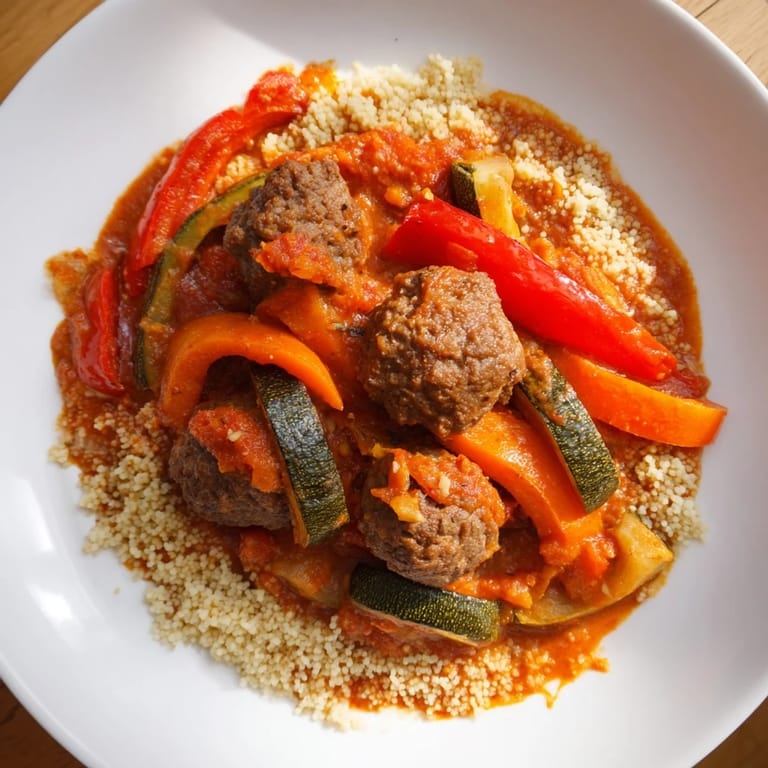
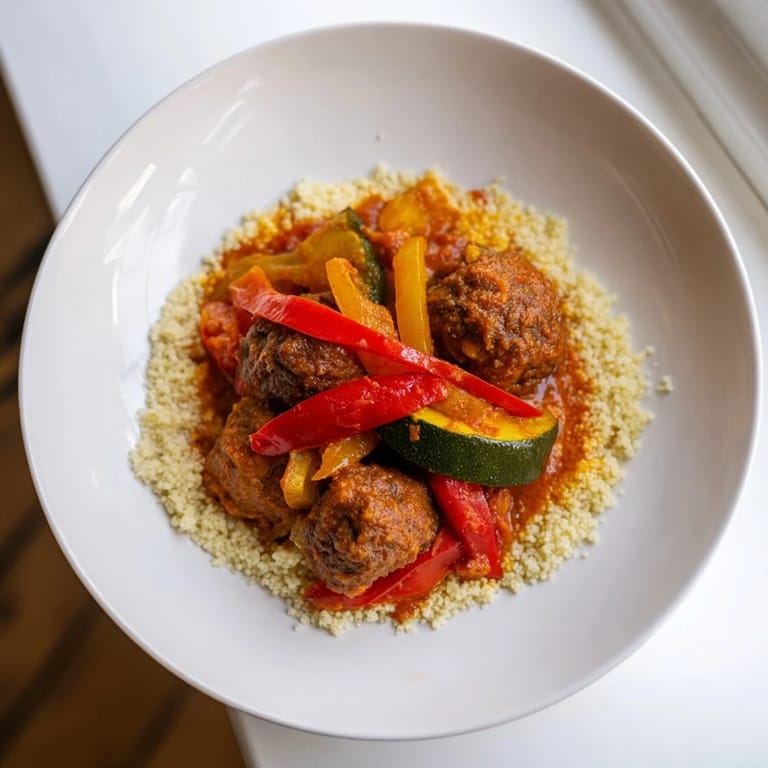
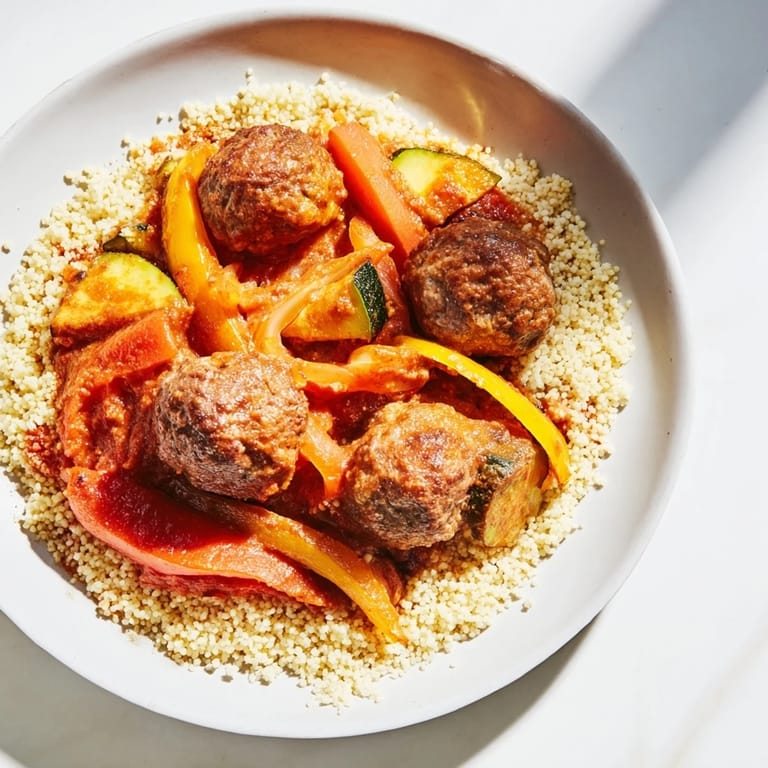
- After 5 minutes, break up any clumps with a fork and mound the couscous on a platter. Crown it generously with the kefta and vegetables, then scatter fresh cilantro or parsley on top like confetti.
 Pin
Pin The first time someone asked me to make this for a dinner party, I was nervous until I saw how people ate it—quietly, gratefully, going back for seconds without asking. That's when I understood that food this honest doesn't need to be complicated to be memorable.
The Magic of Spice Layering
What makes this dish sing isn't a single dominant spice but the way they work together. Cumin adds earthiness, coriander brings subtle citrus notes, cinnamon adds warmth, and paprika gives color and mild sweetness. When you toast them in the pan for just a minute, they transform from separate flavors into one cohesive, aromatic whole. The cayenne is there if you want heat, but it's optional—this dish is about comfort and depth, not fire.
Variations That Work Beautifully
Once you understand the base, you can riff on it endlessly. Swap the lamb for ground chicken or beef depending on what's in your fridge. Add chickpeas for extra protein and a nutty texture that plays wonderfully with the spices. A pinch of saffron stirred into the broth will make it taste even more authentic and luxurious. Some cooks add a handful of dried apricots or prunes for a touch of sweetness that's both surprising and traditional.
Serving and Storage Secrets
This dish tastes even better the next day after the flavors have had time to deepen and meld. Reheat it gently on the stovetop with a splash of broth to keep everything moist. You can also assemble it all ahead—make the meatballs in the morning, cook the sauce, and assemble just before serving for a stress-free dinner.
- Leftovers store beautifully in the fridge for up to 3 days and freeze even better for up to a month.
- Fresh cilantro is your secret weapon; add it right before eating for brightness that ties everything together.
- Serve with harissa on the side for guests who want more heat and complexity.
 Pin
Pin There's comfort in a recipe that tastes like it comes from somewhere real, somewhere with history and heart. This North African couscous with kefta is that kind of dish—it feeds both hunger and the desire for something that feels true.
Recipe Q&A
- → What type of meat is best for kefta?
Ground beef or lamb are traditional options that provide rich flavor and tender texture for kefta meatballs.
- → How do you fluff couscous properly?
After soaking couscous in boiling water with olive oil and salt, fluff it gently with a fork to separate the grains and prevent clumping.
- → Can the spice level be adjusted?
Yes, reduce or omit cayenne pepper to lower heat or add it for extra spice according to taste preferences.
- → What’s the best way to cook the vegetables for the sauce?
Sauté the onion until golden, then gently cook carrots, zucchini, and bell pepper before simmering them with tomatoes and spices for deep, blended flavors.
- → Can other grains replace couscous?
Yes, alternatives like quinoa or bulgur can be used but may alter texture and traditional flavor balance.
- → Is this dish suitable for meal prepping?
Absolutely, kefta and vegetable sauce reheat well, and couscous can be refreshed quickly, making it convenient for advance preparation.