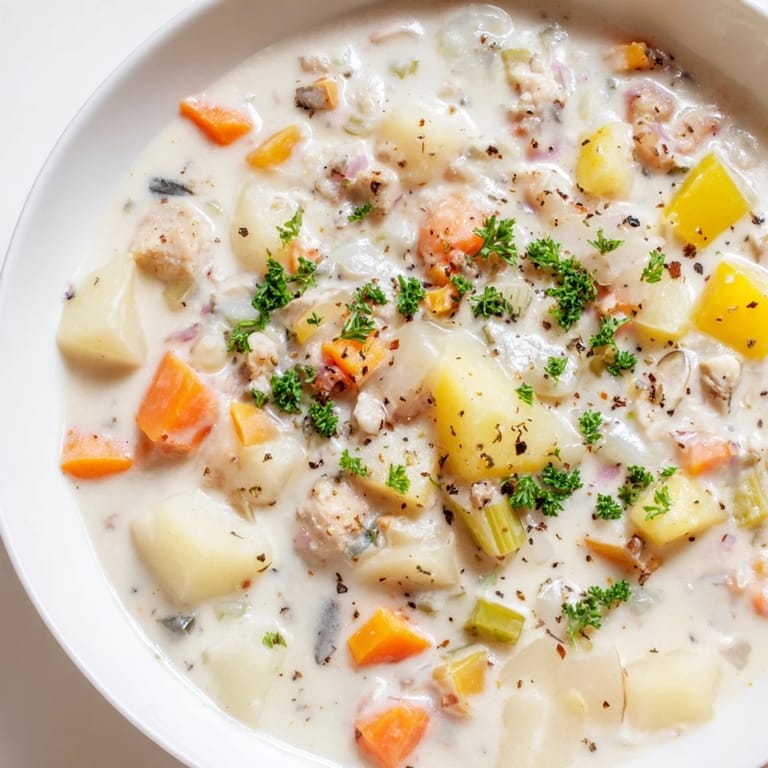
 Pin
Pin The first time I made New England clam chowder, I wasn't even trying to make it traditionally. I'd bought these beautiful littleneck clams at the farmer's market on a crisp October morning, and the fishmonger mentioned they'd be perfect steamed. Standing in my kitchen with a pot of water coming to a boil, listening to the clams pop open one by one, I realized I had the beginning of something special. By the time the cream went in, my whole apartment smelled like the Atlantic coast, and I understood why this soup has been passed down through New England kitchens for generations.
I made this for my neighbor one winter evening when she brought over wine and I wanted to show her what five dollars' worth of clams could become. She sat at my kitchen counter, watching the vegetables soften in bacon fat, and asked why she'd never thought to cook clams at home. That's the thing about this chowder—it feels fancy enough to impress, but honest enough to share without fuss.
Ingredients
- Fresh littleneck clams (2 lbs): These are your foundation—they should smell like ocean air and be tightly closed or snap shut when tapped, a sign they're alive and ready to steam.
- Bottled or reserved clam juice (1 cup): If you're steaming your own clams, save that precious liquid; it's briny gold that store-bought versions can only approximate.
- Russet potatoes (2 medium): They break down slightly as they cook, adding body to the soup without needing any thickening tricks.
- Yellow onion, celery, carrot (1 each): This classic trio creates the aromatic base that makes people walk into your kitchen asking what you're making.
- Garlic (2 cloves): Mince it fine so it melts into the bacon fat rather than sitting as obvious chunks.
- Heavy cream and whole milk (1½ cups and 1 cup): The cream makes it luxurious; the milk keeps it from tasting like pure richness and nothing else.
- Unsalted butter and diced bacon (2 tbsp and 2 slices): The bacon renders its fat to sauté vegetables with flavor already built in.
- All-purpose flour (2 tbsp): This roux thickens the soup gently, absorbing into the broth rather than making it starchy or heavy.
- Bay leaf and dried thyme (1 and ½ tsp): These herbs anchor the broth in something deeper than just salt and cream.
- Fresh parsley (2 tbsp): Save it for garnish—that bright green on top reminds you this soup is still alive, even though it's warm and comforting.
Tired of Takeout? 🥡
Get 10 meals you can make faster than delivery arrives. Seriously.
One email. No spam. Unsubscribe anytime.
Instructions
- Steam the clams open:
- Rinse your clams under cold water, scrubbing away any sand caught in the shells. In a large pot with a lid, bring 2 cups of water to a boil, add the clams, cover, and steam for 5–7 minutes—you'll hear them opening, a soft pop-pop sound. Discard any that stubbornly stay closed; they weren't alive to begin with.
- Free the clam meat:
- Once the clams are cool enough to handle, pry them open and pull out the meat, chopping it into rough, tender pieces. Strain that steaming liquid through cheesecloth or a fine sieve to catch any sand, then set it aside—this is where the real flavor lives.
- Render the bacon:
- In your Dutch oven or heavy pot, cook the diced bacon over medium heat until it's crisp and the fat is rendered into the bottom. Scoop it out with a slotted spoon and set it on paper towels, but leave that bacon fat behind—it's doing the heavy lifting from here on out.
- Build the aromatics:
- Add butter to that bacon fat, then toss in your finely chopped onion, celery, carrot, and garlic. Stir often as they soften over the next 5 minutes—they should smell sweet and almost caramelized.
- Make a simple roux:
- Sprinkle flour over the softened vegetables and stir constantly for about a minute, just long enough for it to toast slightly and lose any raw flour taste. This is your soup's backbone.
- Add the broths:
- Slowly pour in your reserved clam cooking liquid and bottled clam juice, stirring to keep the roux smooth. Scrape up any browned bits from the pot bottom—they're pure flavor.
- Cook the potatoes:
- Stir in your diced potatoes, bay leaf, and thyme, then bring everything to a gentle simmer. Let it bubble quietly for 10–12 minutes until the potatoes are tender enough to break with a wooden spoon.
- Bring it together with cream:
- Reduce your heat to low and stir in the chopped clams, crispy bacon, cream, and milk. Let this simmer gently for another 5–10 minutes, stirring now and then—the soup should look silky and smell incredible, but never actually boil.
- Season and serve:
- Taste it and add salt and black pepper to your liking, then remove the bay leaf. Ladle into bowls, scatter fresh parsley on top, and set oyster crackers on the side if you're feeling proper about it.
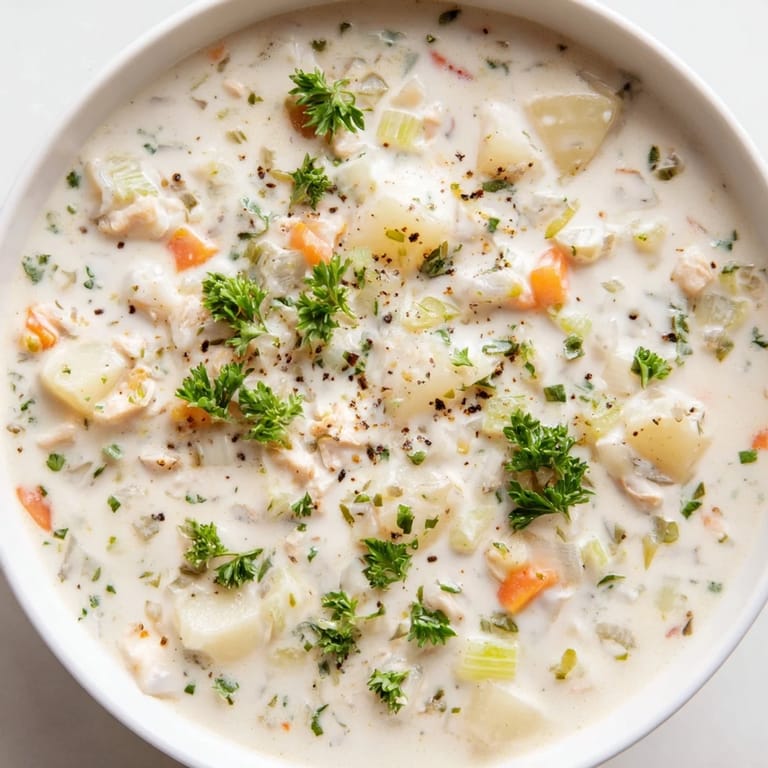 Pin
Pin I learned to make this soup properly from a woman at the fish counter who asked me once if I was cooking the clams wrong. She explained how the meat gets tough if you cook it twice, and suddenly everything clicked—steam the clams just enough to open them, then let the final gentle simmer finish the job. That single piece of advice changed how I approach this entire dish.
Getting the Clam Flavor Right
The secret to a chowder that tastes like the ocean isn't in the cream—it's in respecting the clams themselves. Fresh clams have a briny, mineral taste that disappears fast if you're not careful. Steaming them first and saving every drop of that liquid means you're capturing the sea before anything else happens to it.
Why Thickening Matters Here
A roux made from bacon fat and flour might sound old-fashioned, but it's elegant in how quietly it works. The soup stays light enough to actually taste like clams and cream, not like flour soup that happens to have clams in it. If you're worried about the roux breaking, just remember you're cooking vegetables first—their moisture and starch make a safer environment for the flour to thicken into.
Making This Soup Your Own
New England clam chowder is traditional, but that doesn't mean it can't flex a little. Some people swear by a dash of hot sauce or smoked paprika for depth, and honestly, they're not wrong. I've seen lighter versions made with half-and-half instead of cream and milk, and they're lovely if you want the comfort without the heaviness.
- If you prefer a thicker chowder, mash a few of the cooked potatoes against the pot's side before adding cream.
- A squeeze of fresh lemon juice at the end brightens everything right before serving.
- Oyster crackers on the side are traditional, but crusty bread works just as well.
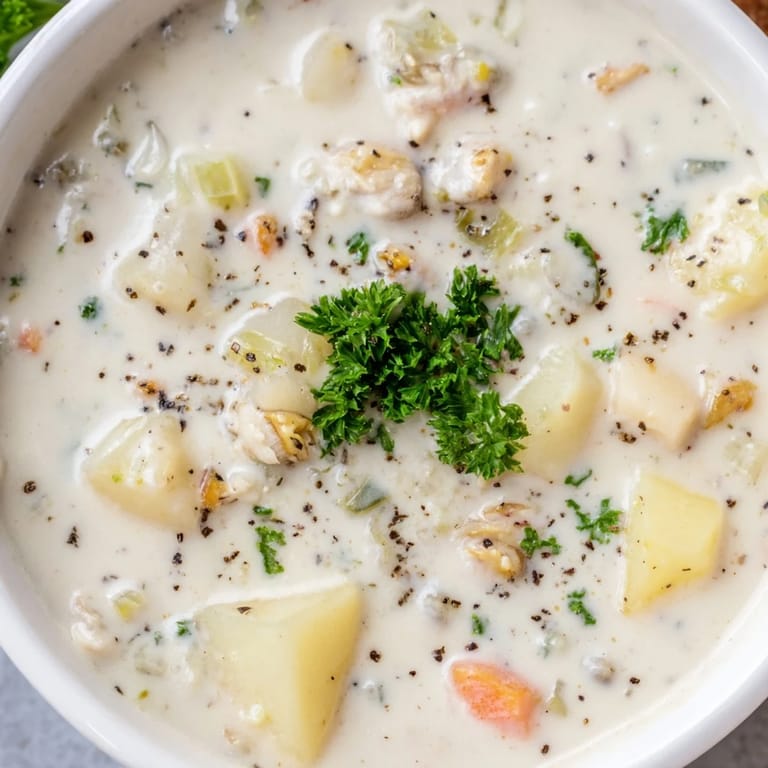 Pin
Pin This chowder is what happens when you take time with simple ingredients and let them become something warm and generous. Serve it on a cool evening with good bread, good company, and nothing to do but enjoy it.
Recipe Q&A
- → How should I prepare the clams for cooking?
Rinse and scrub clams under cold water, then steam them in boiling water until shells open. Discard any unopened clams and reserve the cooking liquid for enhanced flavor.
- → Can I substitute the dairy ingredients?
Yes, half-and-half can replace cream and milk for a lighter texture without sacrificing creaminess.
- → What thickens the soup?
A mixture of flour and butter cooked into a roux before adding liquids helps to thicken the chowder perfectly.
- → What vegetables are included?
Onion, celery, carrot, and potatoes provide aromatic and hearty texture elements throughout the dish.
- → Which herbs enhance the flavor?
Bay leaf, dried thyme, and fresh parsley add earthy and fresh notes to balance the seafood richness.