 Pin
Pin There's something deeply satisfying about opening your fridge on a random Tuesday and realizing you can build an entire meal from the bits and pieces lingering in the back. That's exactly how this chicken pasta came to be—not from a craving, but from a mild panic about grocery day being two days away. I started pulling out containers and jars, each ingredient a small puzzle piece, and suddenly understood why my grandmother used to say the best meals come from necessity, not planning.
I made this for my sister last month when she stopped by unannounced after work, looking absolutely exhausted. By the time the pasta hit the pan, she'd already set the table and poured wine. When we sat down to eat, she took one bite and said it tasted like I'd been planning this meal all day. That's when I knew this recipe had something special—it could turn scattered ingredients and a hurried evening into something that felt intentional and warm.
Ingredients
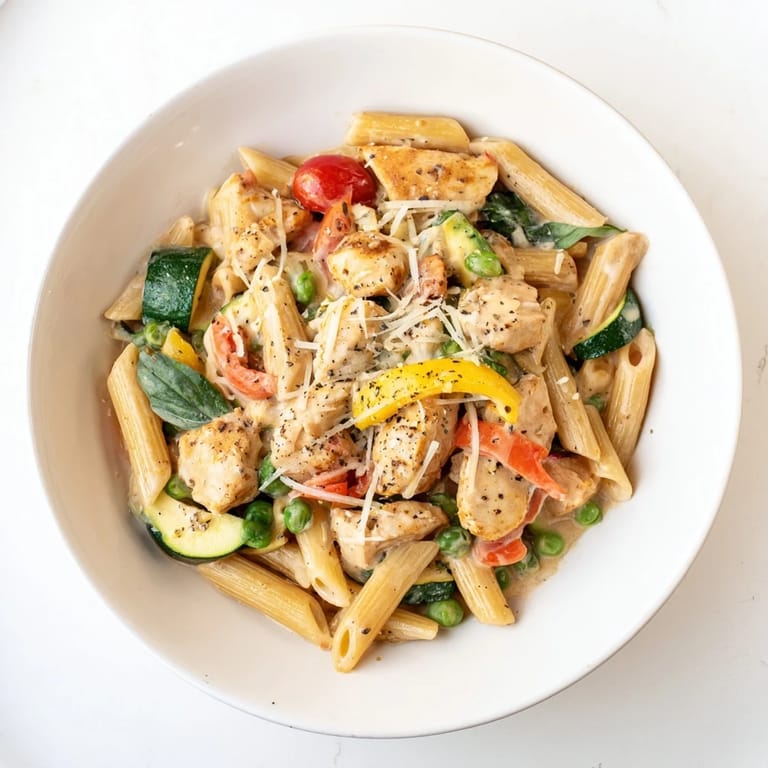
- Chicken breast: Diced or shredded, it anchors the dish and cooks quickly, though any cooked protein works beautifully here.
- Dried pasta: Penne or fusilli hold the sauce better than thin noodles, and I always cook it one minute under the package time.
- Cherry tomatoes: They add bursts of sweetness and release their juice into the sauce as they cook, creating pockets of flavor.
- Frozen peas: No thawing needed, and they stay bright and slightly crisp, not mushy like fresh ones sometimes become.
- Bell pepper: Any color works, but it's the aromatic base that softens and becomes almost translucent in the heat.
- Zucchini: Thin slices so it softens without falling apart, adding gentle sweetness and texture without overpowering.
- Spinach: Wilts in seconds and adds earthiness that balances the cream beautifully.
- Olive oil: Use it generously in the first step to build that golden, flavorful foundation for the chicken.
- Garlic: Minced fine so it doesn't overpower, just enough to make you smell it cooking from the other room.
- Dried Italian herbs: One teaspoon is the sweet spot—more and it tastes medicinal, less and you miss the depth.
- Canned diced tomatoes: Shelf-stable insurance that saves you when fresh tomatoes aren't at their best, and they break down into the sauce seamlessly.
- Heavy cream: It mellows the acidity and creates that silky coating that makes every strand of pasta sing.
- Parmesan and mozzarella: Parmesan adds tang and saltiness, mozzarella contributes stretch and mild sweetness, and together they're greater than the sum of their parts.
- Fresh basil: Added at the very end, it cuts through the richness with its peppery, bright bite.
- Lemon zest: That final scatter of brightness that makes people pause and say 'what is that flavor' without being able to name it.
Tired of Takeout? 🥡
Get 10 meals you can make faster than delivery arrives. Seriously.
One email. No spam. Unsubscribe anytime.
Instructions
- Get your pasta water ready:
- Fill a large pot with salted water that tastes like the sea and bring it to a rolling boil. This isn't just water—it's seasoning that you'll use later.
- Cook the pasta:
- Add pasta and stir immediately so it doesn't stick to itself. Cook one minute under the package time so it has a slight resistance when you bite it, then drain and save that starchy water like liquid gold.
- Build your chicken base:
- Heat olive oil in a large skillet over medium-high heat until it shimmers slightly, then add the diced chicken. Let it sit for a minute or two before stirring—this creates those golden edges that make it taste intentional.
- Season and sear:
- Sprinkle salt and pepper on the chicken and let it cook undisturbed for about five minutes total, stirring only once halfway through. You're looking for light golden color and an internal temperature that's no longer pink.
- Create your flavor base:
- Remove the cooked chicken to a plate, then add minced garlic and diced bell pepper to the same skillet without washing it. That browned bit on the bottom is flavor waiting to happen—let it soften for two minutes until the garlic becomes fragrant but not brown.
- Layer in the vegetables:
- Add cherry tomatoes, zucchini slices, and dried Italian herbs, stirring gently so everything's coated in oil. The tomatoes will start releasing their juice after a few minutes, creating the beginning of your sauce.
- Bring it all together:
- Stir in the canned tomatoes, frozen peas, and spinach, then let it simmer for three to four minutes while you watch the spinach collapse into vibrant green threads. The peas will pop slightly and release their sweetness.
- Make it creamy:
- Lower the heat to medium, return the chicken to the skillet, then pour in the heavy cream slowly while stirring. Add half of the Parmesan and mozzarella, stirring until the cheeses melt into silky ropes of richness.
- Marry pasta with sauce:
- Add the drained pasta to the skillet and toss everything together gently but thoroughly. If it looks too thick, splash in some of that reserved pasta water a little at a time until it reaches that perfect creamy consistency that clings to the noodles without pooling at the bottom.
- Taste and adjust:
- This is where your cooking intuition takes over—does it need more salt, more lemon brightness, more pepper? Trust your palate because you know this dish now.
- Finish and serve:
- Scatter remaining cheese, torn fresh basil leaves, cracked black pepper, and lemon zest over the top. Serve it hot and watch people eat without talking much, which is the highest compliment any cook can receive.
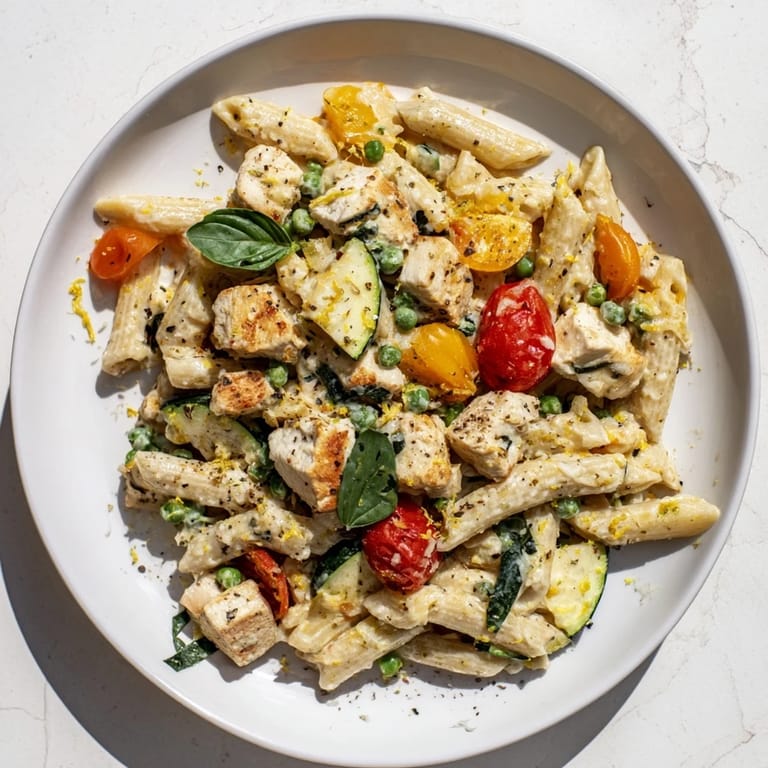 Pin
Pin The moment that really changed how I think about this dish came when my neighbor, who's notoriously difficult to impress with food, asked for the recipe in genuine surprise. She'd expected it to be complicated because it tasted too good to be simple. That's when I realized that complexity in cooking isn't about technique or time—it's about respecting your ingredients and trusting the basic formula to work.
Why This Recipe Is Your Secret Weapon
The 5-4-3-2-1 structure isn't just a cute way to remember ingredients—it's a formula that balances flavor, texture, and moisture in a way that feels almost mathematical until you taste it. Five vegetables prevent any single flavor from dominating, four pantry staples create depth, three cheeses and dairy components add richness without making it feel heavy, and the final touches of basil, pepper, and lemon zest wake everything up at the last second. I've used this formula with shrimp, with sausage, with just extra vegetables, and it works every single time because the proportions are right.
Swaps and Substitutions That Actually Work
The beauty of this dish is that it's built on a scaffolding strong enough to support almost any protein you have in the house. Sausage works wonderfully if you brown it in that same initial pan and let it render its fat into the oil; shrimp cooks in less than two minutes and adds a briny sweetness; chickpeas make it completely vegetarian and substantial. For the vegetables, I've used roasted red peppers, mushrooms, sun-dried tomatoes, broccoli, even leftover roasted sweet potato—anything that won't turn to mush or release too much water. With cheese, I've swapped in cheddar for a sharper edge, ricotta for creaminess, feta for tang, even a combination of whatever needs finishing in my cheese drawer.
The Lighter Versions and Pairings
When I'm eating this in summer or after a heavy day, I swap the heavy cream for half-and-half or even whole milk with a tablespoon of cornstarch mixed in, which creates a lighter sauce that still coats beautifully. Sometimes I skip the cream entirely and let the pasta water, canned tomato juice, and melted cheese create a more tomato-forward sauce that feels fresher somehow. This dish pairs surprisingly well with crisp white wines—Pinot Grigio is the obvious choice, but Vermentino or even a dry Riesling brings out different notes in the lemon zest and fresh basil. If you want beer, a light lager or wheat beer won't fight with the cream, and honestly, cold sparkling water with fresh lemon is my favorite pairing on weeknights when wine feels like one thing too many.
- For a deeper wine pairing, try a light Chianti that echoes the tomato base.
- A green salad with sharp vinaigrette on the side cuts through the richness and feels like balance on a plate.
- If you're serving this to people who avoid dairy, use olive oil instead of cream and a squeeze more lemon juice—it's still delicious, just different.
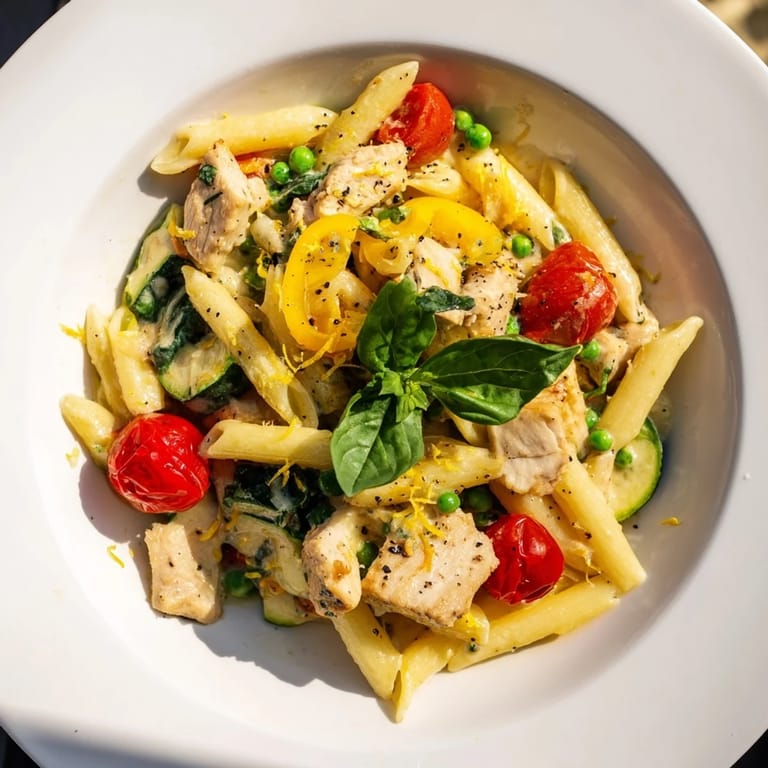 Pin
Pin This is the dish that taught me that cooking doesn't require perfect ingredients or endless time, just attention and a willingness to work with what you have. Every time I make it, something different goes into the pot, and yet it always lands in that sweet spot between comfortable and surprising.
Recipe Q&A
- → Can I substitute the chicken with other proteins?
Yes, you can replace chicken with cooked sausage, shrimp, or plant-based options like chickpeas for a vegetarian twist.
- → What types of pasta work best for this dish?
Short dried pastas such as penne or fusilli hold sauce well and complement the mix of vegetables and chicken.
- → How can I make the sauce creamier or lighter?
Use heavy cream for richness or substitute half-and-half for a lighter, less fatty sauce.
- → Are there suitable cheese alternatives if I don't have Parmesan or mozzarella?
Cheddar, feta, or similar melting cheeses can be used to add flavor and creaminess.
- → How should I adjust seasoning during cooking?
Taste the dish towards the end and add salt, pepper, or herbs as needed to balance flavors.
- → What tools do I need to prepare this dish?
A large pot for boiling pasta, a skillet for sautéing ingredients, and basic tools like a knife, cutting board, and grater.