 Pin
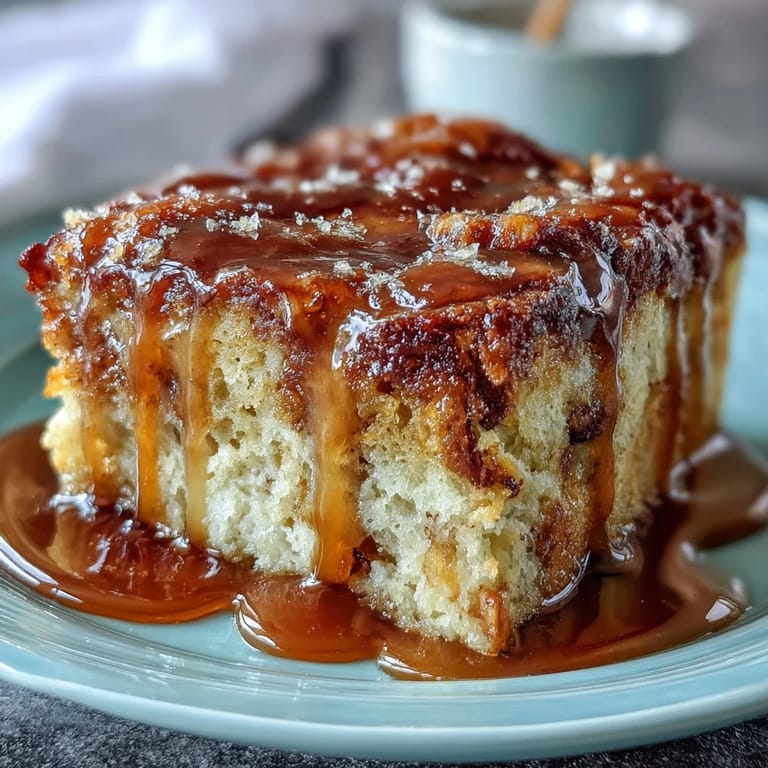
Pin There's something about spring that makes you want to bake something floral and unexpected. I stumbled upon dandelion honey at a farmers market last April, drawn to its golden color and the vendor's promise that it tasted like sunshine trapped in a jar. That evening, I stood in my kitchen wondering what on earth to do with it, and somehow this cake emerged—a tender crumb infused with that delicate, almost mysterious floral note, brightened by lemon. The first slice convinced me it wasn't just lucky; it was exactly what I'd been craving without knowing it.
I baked this for my mother's book club gathering on a Saturday afternoon when rain kept everyone indoors longer than expected. Someone remarked that the cake tasted like a garden in spring, and suddenly the whole room felt less gloomy. My mum still mentions that day, not because of anything fancy I did, but because of how the cake seemed to shift the mood in the room—proof that sometimes the simplest things matter most.
Ingredients
- All-purpose flour (2 cups): Don't skip sifting or whisking it with the leavening agents; you want an even crumb without dense pockets.
- Baking powder and baking soda (1 1/2 tsp and 1/2 tsp): These two work together to give you rise and tenderness—use fresh ones from containers less than six months old.
- Fine sea salt (1/2 tsp): It brightens the honey and lemon flavors in ways that regular table salt can't quite manage.
- Unsalted butter (1/2 cup): Room temperature is non-negotiable; cold butter won't cream properly and you'll end up with a dense cake.
- Dandelion honey (1/2 cup): This is where the magic lives—if you can't find it, regular honey works, but the floral complexity will be lost.
- Granulated sugar (1/2 cup): The honey and sugar together create moisture and structure; don't reduce either without expecting a different result.
- Eggs (3 large, room temperature): Cold eggs won't incorporate smoothly, leaving you with a gritty texture instead of silky batter.
- Vanilla extract (1 tsp): Pure vanilla matters here; the imitation stuff tastes harsh against the delicate honey.
- Whole milk (1/2 cup, room temperature): Alternating with flour is the secret to keeping this cake tender without overworking the gluten.
- Lemon zest and juice (2 tbsp each): Zest the lemons before juicing them, and use fresh squeezed juice—bottled tastes flat by comparison.
- Powdered sugar (1 cup, sifted): Sifting removes lumps that will never dissolve into the glaze no matter how much you stir.
- Dandelion honey for glaze (1 tbsp): This adds back that floral note to the finish, creating harmony from top to bottom.
Tired of Takeout? 🥡
Get 10 meals you can make faster than delivery arrives. Seriously.
One email. No spam. Unsubscribe anytime.
Instructions
- Prepare your stage:
- Preheat the oven to 350°F and grease your 9-inch cake pan thoroughly, or line it with parchment for foolproof release. Have all your ingredients at room temperature waiting on the counter—this small step prevents lumpy batter and ensures even mixing.
- Build the dry foundation:
- Whisk together flour, baking powder, baking soda, and salt in a medium bowl, breaking up any little clumps as you go. Set this aside and don't touch it until you're ready; the waiting is intentional, not lazy.
- Cream your butter mixture:
- In a large bowl, beat the butter, dandelion honey, and sugar together for about three minutes until it's pale and fluffy—you're actually incorporating air here, which gives the cake its tender crumb. Stop occasionally to scrape the bowl sides so nothing hides at the bottom untouched.
- Add eggs with patience:
- Drop in one egg at a time, waiting for each to incorporate before adding the next; this prevents a separated, curdled-looking mixture that bakes up tight. After all three eggs are in, stir in the vanilla extract, lemon zest, and fresh lemon juice until everything is bright and combined.
- Alternate and marry the batter:
- Add the dry mixture in three parts, alternating with milk and always starting and ending with flour—this technique keeps gluten from overdeveloping. Fold and stir gently with a spatula or wooden spoon just until no streaks of flour remain; overmixing is the enemy of tenderness.
- Transfer and level:
- Pour the batter into your prepared pan and smooth the top with an offset spatula so it bakes evenly. A small effort here prevents lumpy, uneven layers.
- Bake with trust:
- Slide into the preheated oven for 35 to 40 minutes until the top is light golden and a toothpick inserted into the center comes out clean. The kitchen will smell so good you'll understand why people say baking is prayer.
- Cool with intention:
- Let the cake sit in the pan for ten minutes—this allows carryover cooking to finish and structure to set so it doesn't fall apart when you turn it out. Then flip it gently onto a wire rack to cool completely, which takes about an hour.
- Whisk the glaze:
- In a small bowl, whisk the sifted powdered sugar with lemon juice, adding it gradually so you can control the consistency—you want it thick but pourable, not runny. Stir in the dandelion honey at the end, which brings back that floral sweetness and keeps the glaze from tasting one-note.
- Finish and rest:
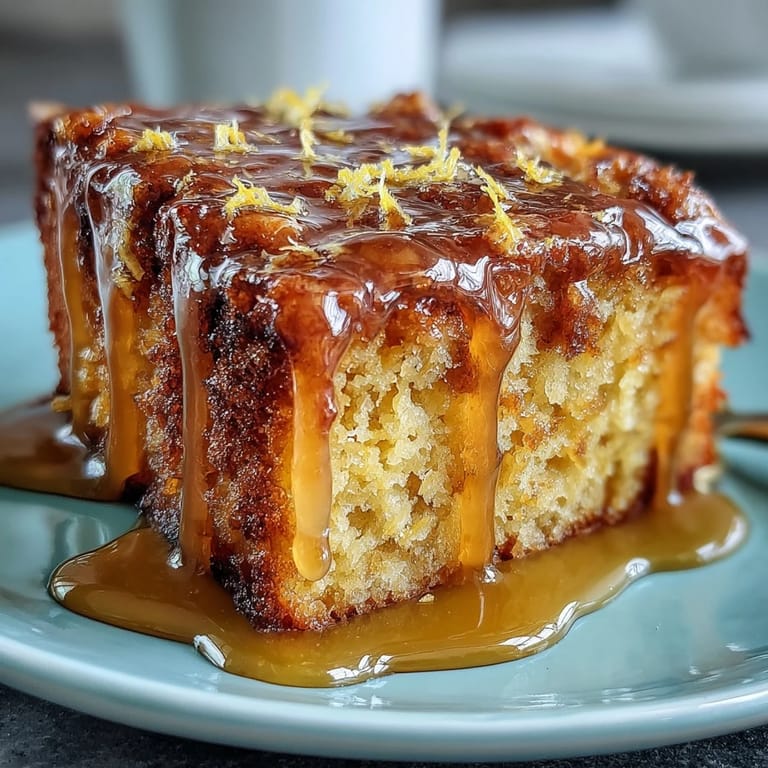
- Once the cake is completely cool, drizzle the glaze over the top in whatever pattern feels right, then let it set for ten to fifteen minutes. This small pause lets the glaze firm slightly so it doesn't run off the sides onto your plate.
 Pin
Pin My neighbor brought over homemade dandelion wine one evening, and we laughed about how her garden kept trying to escape through the fence. When I mentioned the cake, her eyes lit up in a way that made me realize sometimes food connects us to the wild, growing things we usually dismiss as weeds. She asked for the recipe immediately, and now every spring she bakes it and gifts slices to friends.
Finding Quality Dandelion Honey
Most grocery stores won't carry dandelion honey in their regular selection, so farmers markets and specialty food shops are your best bet. If you can't find it, reach out to local beekeepers—many are thrilled to talk about their honey and can tell you exactly which flowers their bees visited. Regular honey works in a pinch, but the cake will taste more conventionally sweet and lose that subtle, almost herbal complexity that makes people pause mid-bite.
The Magic of Room Temperature Ingredients
I once tried to rush this step by microwaving cold eggs for five seconds, which sounds efficient until your batter breaks and separates before you're even halfway through. Room temperature ingredients blend together smoothly, creating an emulsion that traps air and moisture equally, which is why the final cake feels cloud-like instead of dense. Taking five minutes to let butter, eggs, and milk sit on the counter before you start is the difference between a cake that's merely good and one that tastes like it came from a proper bakery.
Beyond the Basic Recipe
Once you've made this cake a few times and feel confident with the technique, you can start playing with additions that complement the existing flavors. The notes mention dandelion petals, and they're absolutely worth seeking out—they add visual floral touches and a subtle bitterness that keeps the cake from feeling too sweet. You can also brush the cooled cake with a light honey syrup before glazing for extra moisture, or add a whisper of cardamom to the dry ingredients if you want warmth without overpowering the delicate honey.
- If you find fresh dandelion petals, make sure they're from unsprayed plants and rinse them gently before chopping finely into the batter.
- A light white wine pairing—something floral like an Alsatian Riesling—transforms this from afternoon cake into an elegant dessert.
- Leftovers taste even better on day two when the flavors have had time to settle and deepen, so don't hesitate to bake it ahead.
 Pin
Pin This cake has become my go-to when spring finally arrives and I want to celebrate the season with something that tastes like flowers and sunshine. It's the kind of recipe that improves with repetition, rewarding you for paying attention and respecting the small details.
Recipe Q&A
- → How do I enhance the dandelion flavor?
Add 2 tablespoons of finely chopped unsprayed dandelion petals to the batter for a more pronounced floral note without overpowering sweetness.
- → What is the best way to achieve a smooth lemon glaze?
- → Can I substitute regular honey for dandelion honey?
Yes, regular honey works well, although dandelion honey provides a unique floral aroma that complements the lemon zest beautifully.
- → How do I prevent the cake from drying out?
Ensure not to overmix the batter and bake until a toothpick inserted comes out clean but moist. Cooling on a wire rack maintains texture.
- → What drinks pair well with this dessert?
Light herbal teas or floral white wines complement the cake's delicate honey and lemon flavors, enhancing the tasting experience.