 Pin
Pin There's something almost magical about the moment cream meets chocolate—that instant when heat transforms solid into silk. I discovered the true art of truffles not in a fancy patisserie, but in my own kitchen on a rainy afternoon, watching my grandmother's weathered hands roll ganache with the confidence of someone who'd done it a thousand times. She never measured, never fussed, just worked with the chocolate like it was an old friend. Now, every time I make these, I chase that same quiet confidence she had, and somehow the truffles always taste better when I stop overthinking and start feeling.
I made these for a dinner party once where everyone arrived stressed from work, barely talking. Then one person bit into a truffle, and suddenly the whole table softened—someone laughed, someone asked for the recipe, and the energy shifted entirely. Turns out chocolate does more than taste good; it creates a moment where people remember to slow down.
Ingredients
- Dark chocolate (200 g, 60–70% cocoa): This is where flavor lives—don't skimp on quality because the chocolate becomes the star, and waxy chocolate will ruin the whole experience.
- Heavy cream (120 ml): Use the good stuff with actual fat content; ultra-pasteurized cream sometimes refuses to emulsify properly, which I learned the frustrating way.
- Unsalted butter (30 g): The softened butter adds richness and helps the ganache set with that perfect snap.
- Pure vanilla extract (1 tsp, optional): A tiny drop of vanilla rounds out the chocolate without announcing itself.
- Cocoa powder, nuts, coconut, or powdered sugar for coating: These are your canvas—mix and match or use them all to create an assortment that looks like you've been training as a chocolatier for years.
Tired of Takeout? 🥡
Get 10 meals you can make faster than delivery arrives. Seriously.
One email. No spam. Unsubscribe anytime.
Instructions
- Prepare your chocolate stage:
- Chop your dark chocolate into pieces roughly the size of pea gravel and place them in a heatproof bowl—this speeds up melting and prevents scorching.
- Heat the cream gently:
- Pour cream into a small saucepan and watch it carefully over medium heat until tiny bubbles form around the edges and wisps of steam rise. The moment it starts simmering is when you pour, not a second longer.
- Create the ganache magic:
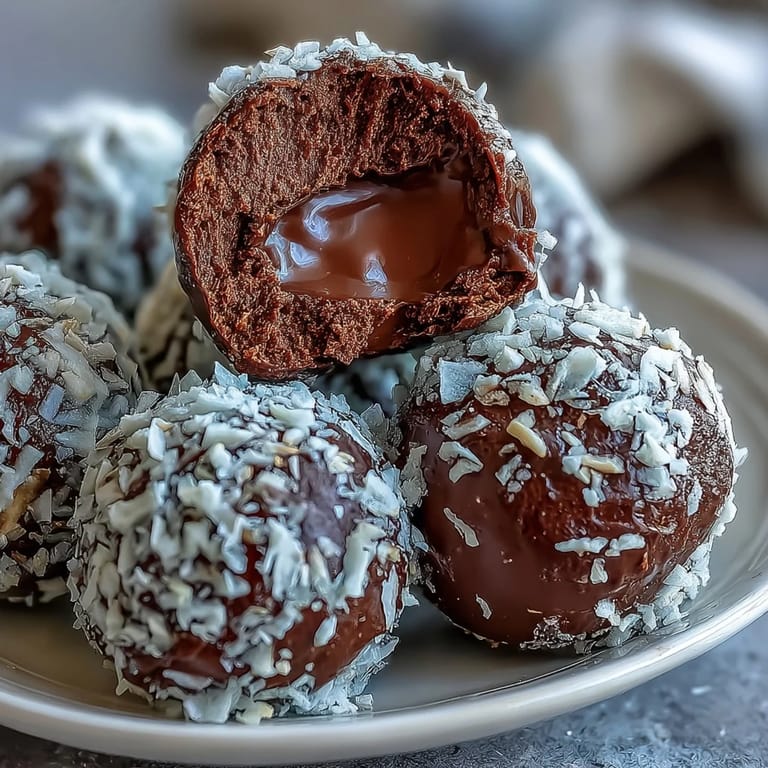
- Pour that hot cream over the chopped chocolate, let it sit untouched for exactly two minutes (this is not the time to stir frantically), then stir slowly and deliberately until the chocolate disappears into smooth, glossy ganache. You'll feel the texture change under your spoon.
- Add butter and vanilla:
- Fold in the softened butter and vanilla, stirring until the ganache looks like liquid satin. This step takes less than a minute but transforms the texture entirely.
- Chill with patience:
- Cover the bowl and refrigerate for at least two hours—this is when the ganache sets firm enough to roll without collapsing into a sticky mess. If you're impatient like me, you'll try after ninety minutes and regret it.
- Roll with speed and intention:
- Line a baking sheet with parchment and use a melon baller or teaspoon to scoop ganache, working quickly to roll each piece between your warm palms into a rough sphere. Cold hands help enormously here.
- Coat with personality:
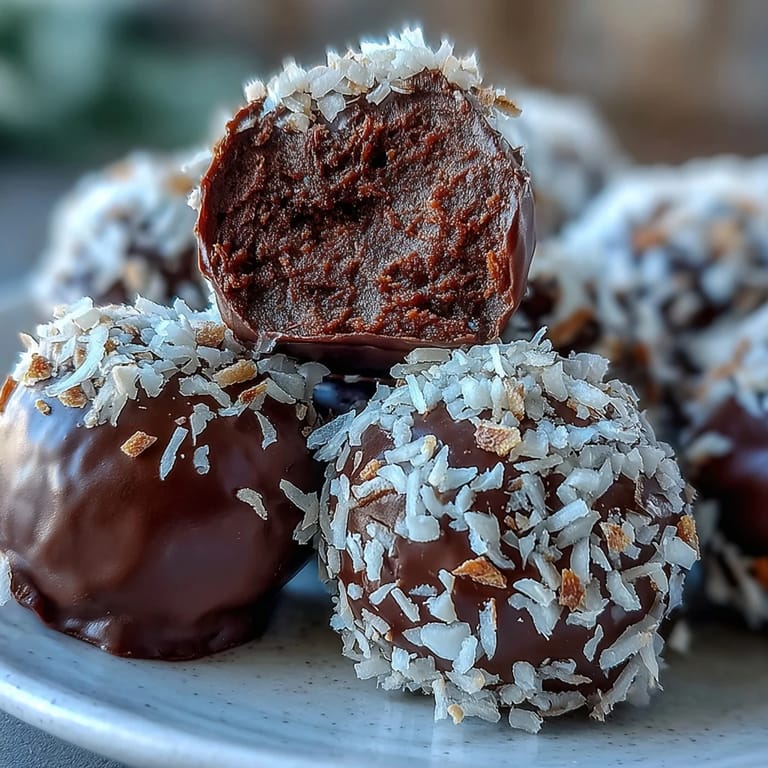
- Roll your still-slightly-warm truffles in whatever coating calls to you—cocoa powder, crushed pistachios, toasted hazelnuts, or shredded coconut. Some truffles might get two coatings for extra drama.
- Final chill for texture:
- Return the coated truffles to the refrigerator for thirty minutes so the coatings set and the chocolate firms up to that perfect snap-and-melt balance.
 Pin
Pin These truffles taught me that dessert doesn't have to be complicated to feel luxurious. Sometimes the simplest combinations—chocolate, cream, a moment of attention—create something people remember.
Flavor Infusions That Changed Everything
The cream is your secret ingredient for customization. Before you heat it, you can infuse it with almost anything—zest an orange directly into the cold cream and let it sit while you chop chocolate, or whisk in espresso powder for truffles that taste like a sophisticated coffee moment. I once steeped dried lavender in the cream and the result was unexpectedly lovely, floral without being perfumy. Even a tablespoon of liqueur (brandy, Grand Marnier, rum) transforms the entire experience, though you have to heat the cream slightly longer so the alcohol cooks off a bit.
Storage and the Art of Patience
Store these in an airtight container in the refrigerator where they'll keep for up to a week, though they rarely last that long around my house. The texture is actually better when you let them sit at room temperature for five minutes before eating—the ganache softens just slightly and the snap gives way to pure melt. I learned this by accident when I forgot about a batch and came back to them thirty minutes later, expecting them to be ruined, and instead discovering the ideal texture.
The Coating Strategy That Makes Them Look Professional
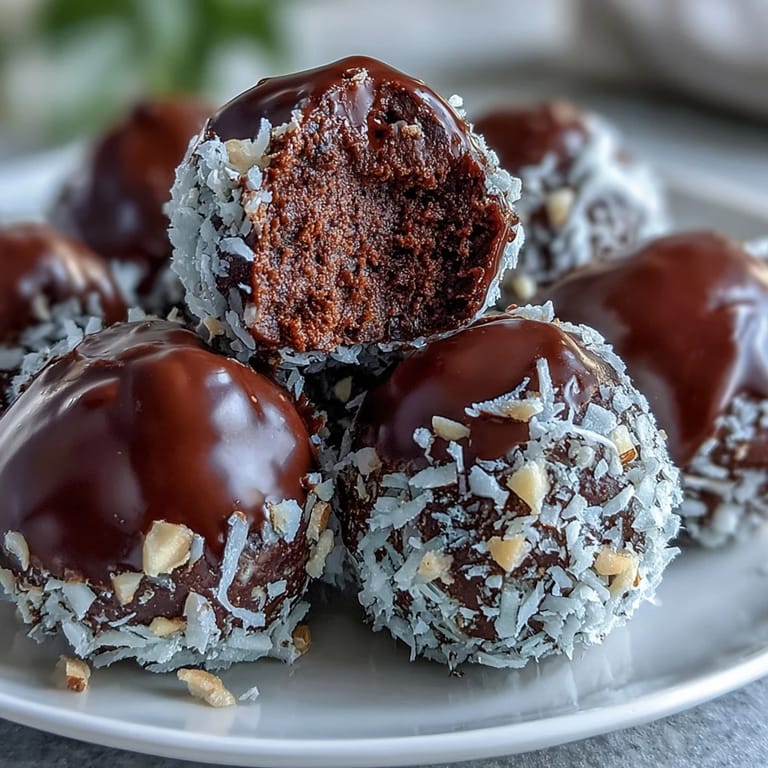
Your coating choices are where these truffles go from homemade to showstopper. Sift cocoa powder into a shallow bowl so you get even coverage without clumpy patches, toast your nuts lightly before chopping so the flavors brighten, and don't be shy about double-coating—a truffle rolled in cocoa then dipped in melted chocolate then rolled in crushed pistachios looks like you've been doing this your whole life. This is the stage where you can actually have fun and create variety without any real skill.
- Mix coatings in advance so you're not fumbling with containers while your hands are covered in melting chocolate.
- A shallow plate or small bowl works better than a deep dish for coating, giving you more control and less waste.
- If you're making these as gifts, different coatings become an easy way to mark flavors, like cocoa powder for plain, green-tinted sugar for mint-infused versions, and crushed raspberry freeze-dried pieces for a berry hint.
 Pin
Pin Making chocolate truffles is one of those rare cooking tasks where investing just a bit of attention and care creates something that tastes and feels genuinely special. Serve them with good coffee or a glass of wine, and watch people's faces light up.
Recipe Q&A
- → What type of chocolate works best for truffles?
Good-quality dark chocolate with 60-70% cocoa content produces the best results. Higher quality chocolate creates a smoother ganache with better flavor depth and melting properties.
- → How do I prevent the ganache from melting while rolling?
Work quickly with slightly chilled hands and handle small portions at a time. If the ganache becomes too soft, return it to the refrigerator for 15-20 minutes before continuing.
- → Can I make flavor variations of these truffles?
Yes, infuse the cream with orange zest, espresso powder, or add a splash of liqueur like Grand Marnier or rum before combining with the chocolate for different flavor profiles.
- → How long do homemade chocolate truffles last?
Store truffles in an airtight container in the refrigerator for up to 1 week. Bring them to room temperature 15-20 minutes before serving for optimal texture and flavor.
- → What are the best coating options for truffles?
Classic options include unsweetened cocoa powder, finely chopped toasted nuts like hazelnuts or pistachios, shredded coconut, or powdered sugar. Each coating adds a unique texture and complementary flavor.
- → Can these truffles be made dairy-free?
Substitute coconut cream for heavy cream and use dairy-free butter or coconut oil. Choose dairy-free dark chocolate to maintain the rich ganache texture while accommodating dietary restrictions.