 Pin
Pin My first encounter with this dish happened at a tiny omakase counter where the chef worked with such quiet precision that watching him felt like witnessing a small ceremony. Years later, I tried recreating it at home on a random Thursday evening, half-convinced I'd fail spectacularly, and somehow the searing pan sang just right—the sesame seeds crackling into this gorgeous golden shell while the tuna stayed blushing and rare inside. That night taught me that restaurant magic isn't as untouchable as it seems, especially when you respect the ingredients and don't overthink the technique. Now this is my go-to dish when I want to feel like I actually know what I'm doing in the kitchen.
I made this for someone who claimed they didn't really like fish, and watching their face when they tasted that first bite—the way their skepticism just melted—made me understand why cooks get so obsessed with nailing the fundamentals. That wasabi mayo hit with just enough heat to make them pause, then reach for another slice before they'd even finished chewing the first one. By the end of dinner, they were asking for the recipe, and I realized the power of a dish that respects both its ingredients and the person eating it.
Ingredients
- Sushi-grade tuna steaks (6 oz each, about 1 inch thick): The entire dish rests on this, so find a fishmonger you trust and ask them directly when the tuna arrived; freshness isn't negotiable here.
- Soy sauce (1 tablespoon): This seasons the tuna and adds umami depth that makes the wasabi mayo sing later.
- Sesame oil (1 teaspoon): A small amount adds nutty aromatics without overpowering the delicate fish.
- Salt and freshly ground black pepper: Use them sparingly because the sesame crust will do most of the seasoning work.
- Black sesame seeds, toasted (1/2 cup): Buy them already toasted if possible, but if you toast them yourself, that nutty aroma filling your kitchen is worth the extra step.
- White sesame seeds, toasted (1/4 cup, optional): The visual contrast is pure elegance, though the dish is stunning with black seeds alone.
- Mayonnaise (1/4 cup): Use good quality mayo because you'll taste every ingredient; the base matters.
- Wasabi paste (1 to 2 teaspoons): Start with less and adjust to your heat tolerance—wasabi builds heat that sneaks up on you.
- Rice vinegar (1 teaspoon): This brightens the mayo and prevents it from feeling heavy.
- Lemon juice (1 teaspoon): The final note that makes everything feel fresh.
- Scallions, pickled ginger, lemon wedges (for garnish): These aren't just decoration; they're flavor anchors that complete the eating experience.
Tired of Takeout? 🥡
Get 10 meals you can make faster than delivery arrives. Seriously.
One email. No spam. Unsubscribe anytime.
Instructions
- Prepare and season your tuna:
- Pat the tuna steaks completely dry with paper towels—this is crucial because moisture will steam the crust instead of letting it crisp. Brush all sides with soy sauce and sesame oil, then season gently with salt and pepper, remembering that restraint here means your other flavors won't get buried.
- Create the sesame crust:
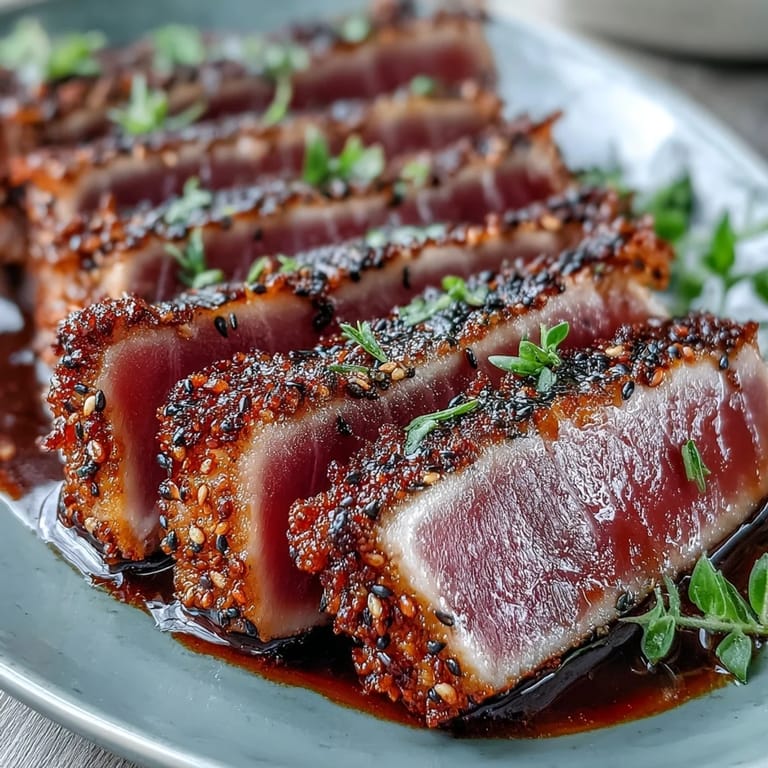
- Pour your sesame seeds onto a shallow plate and press each tuna steak into them firmly, rolling to coat every surface evenly. The seeds should grip the tuna like they're meant to be together, and you'll feel the difference between a light dusting and a proper crust.
- Get your pan screaming hot:
- Heat your skillet over high heat until it's almost smoking, then add just enough oil to coat the bottom. This matters more than you'd think—a too-cool pan defeats the entire purpose.
- Sear with confidence and speed:
- Place the tuna in the pan and resist the urge to touch it; let it sit for 30 to 45 seconds per side until the crust turns golden and the exterior firms slightly. The interior should still feel soft when you press it gently, almost like pressing the pad of your thumb.
- Make your wasabi mayo while the tuna rests:
- Whisk together mayo, wasabi paste, rice vinegar, and lemon juice until completely smooth, then taste and adjust the wasabi to match your heat preference. This sauce is where you can be bold because it's a condiment, not the star.
- Slice and serve:
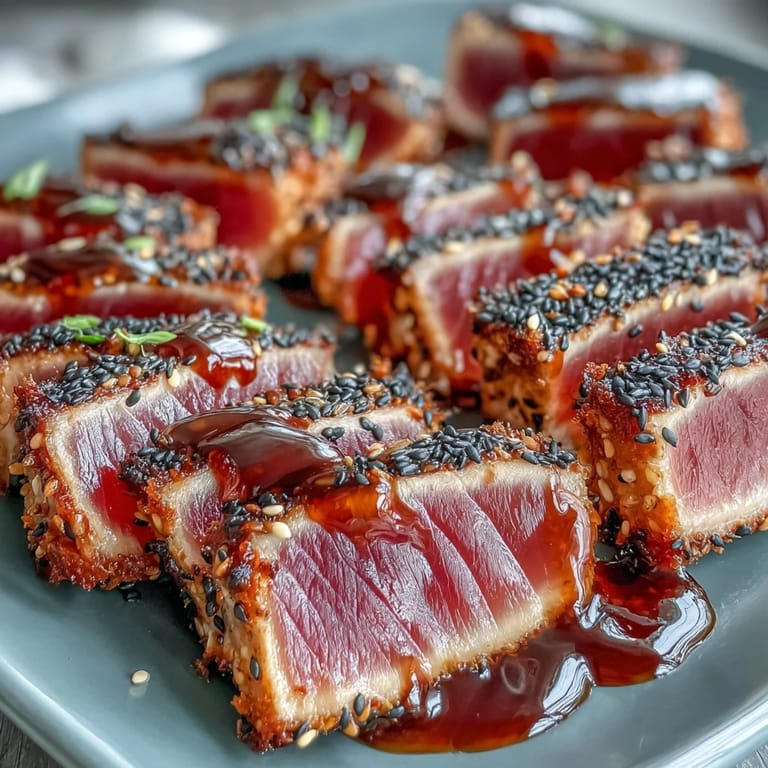
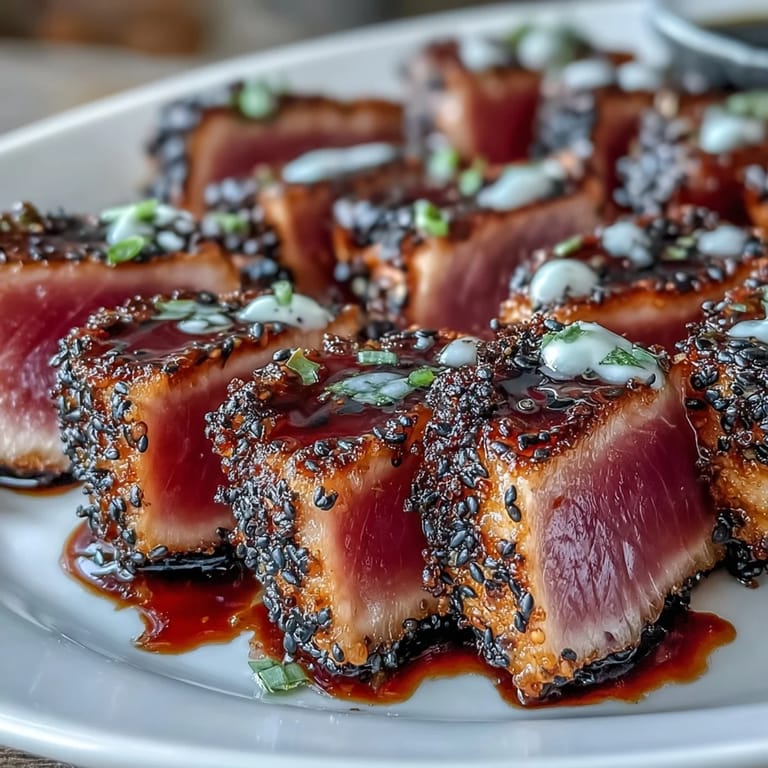
- Cut the tuna against the grain into half-inch slices so each piece shows off its perfect rare center and crispy seed crust. Arrange on your plate, drizzle with wasabi mayo, and garnish with scallions, pickled ginger, and lemon if you have them on hand.
 Pin
Pin There's something almost meditative about watching those black sesame seeds shift from matte to glossy as they hit the hot pan, and the sound they make tells you everything about whether your heat is right. That moment when you slide the tuna onto a plate and it releases from the pan with a soft sizzle—that's when cooking stops feeling like work and becomes play.
Why Sushi-Grade Matters
The difference between sushi-grade and regular tuna is the difference between a vibrant, buttery experience and something that feels off in ways you can't quite name. Sushi-grade tuna has been handled and frozen to kill parasites, which sounds technical but really just means you can eat it raw or nearly raw without worry. Ask your fishmonger directly—they'll appreciate the question and steer you right.
The Pan-Sear Dance
The entire technique hinges on three things: a hot enough pan, tuna that's bone dry, and the discipline to stop searing before your instinct tells you to. I learned this the hard way after watching the insides turn from rose to gray because I got nervous and gave each side too long, a mistake that taught me more than any successful version would have.
Building Your Wasabi Mayo Station
Make the mayo ahead if you like, but keep it separate from the tuna until the last moment so the wasabi flavor stays bright and punchy rather than fading into the background. The best part is you can customize the heat level for each person, which sounds simple but transforms a good meal into one where everyone feels like you were cooking just for them.
- Whisk the mayo mixture just before serving to keep the texture light and aerated rather than dense.
- A tiny pinch of salt in the mayo makes the other flavors pop without adding heat.
- If wasabi paste isn't available, powdered wasabi mixed with water works beautifully and sometimes tastes fresher.
 Pin
Pin This dish proves that simple doesn't mean easy, but it also means that respecting a few key elements—fresh tuna, high heat, proper seasoning—gives you something that feels far more refined than the time you spent making it. Serve it and watch people's faces as they understand why you were excited to cook.