 Pin
Pin My grandmother kept a jar of beef tallow in her kitchen that looked more like a relic than an ingredient, and I spent years walking past it without understanding its purpose. Then one Sunday, watching her pull a tray of potatoes from the oven that were so golden and crackling I could hear them from across the room, something clicked. She never said much about cooking—she just did it—but those potatoes taught me more about flavor than any recipe book ever could. Now I make them the same way, and every time the tallow hits that hot pan, I'm right back in her kitchen.
I made these for the first time at a dinner party where I was nervous about everything, and somehow these potatoes were the only thing that turned out exactly right. My friend reached for a third one before the roast even came out of the oven, and I watched her close her eyes while she chewed it. That's when I realized these weren't just potatoes—they were a conversation starter, a moment where everyone at the table agreed on something delicious.
Ingredients
- Yukon Gold or Russet potatoes (2 pounds): Yukon Golds stay creamy inside and crisp up beautifully; Russets get fluffier if that's your preference—either way, cut them into 2-inch chunks so they cook evenly and develop that golden crust.
- Beef tallow (1/3 cup): This is the heart of the recipe, and it's worth sourcing from a good butcher if you can; it holds its integrity at high heat and imparts a savory depth that vegetable oil simply cannot match.
- Kosher salt (1 1/2 teaspoons, plus more to taste): Salt draws moisture out and seasons throughout, making the potatoes taste like themselves, just better.
- Freshly ground black pepper (1/2 teaspoon): Fresh is essential—pre-ground loses its bite and subtlety.
- Fresh rosemary or thyme (2 tablespoons, optional): Finely chop it to release oils and infuse the tallow; dried herbs work too, but use half the amount since they're more concentrated.
- Garlic cloves (2, smashed, optional): Smashing releases more flavor than slicing, and you remove it before roasting so it doesn't burn or overpower.
Tired of Takeout? 🥡
Get 10 meals you can make faster than delivery arrives. Seriously.
One email. No spam. Unsubscribe anytime.
Instructions
- Set your oven and sheet to preheat:
- Turn the oven to 425°F and slide a large rimmed baking sheet inside—it needs to get screaming hot so the potatoes hit sizzle the moment they touch down.
- Parboil the potatoes until just tender:
- Cold salted water, bring to a boil, then simmer 8–10 minutes until the edges soften but the potato still holds its shape; you're not cooking them all the way through yet, just setting them up for the crisp. Drain thoroughly and return to the empty pot.
- Roughen the edges and make them ready:
- Shake the pot gently so the potatoes tumble and their cut edges become rough and uneven—those rough edges are where the crispiness lives. This step matters more than you'd think.
- Infuse your tallow with flavor if using herbs and garlic:
- Melt the tallow over low heat, add the smashed garlic and herbs if using them, and let them sit for 1–2 minutes to release their essence into the fat. Then fish them out—they've done their job.
- Coat the hot pan and potatoes with tallow:
- Carefully pull out the scorching baking sheet, pour half the tallow on it, tilt it around, then scatter the potatoes in a single layer and drizzle with the rest. The hiss you hear is the beginning of something good.
- Roast, flip, and finish until golden:
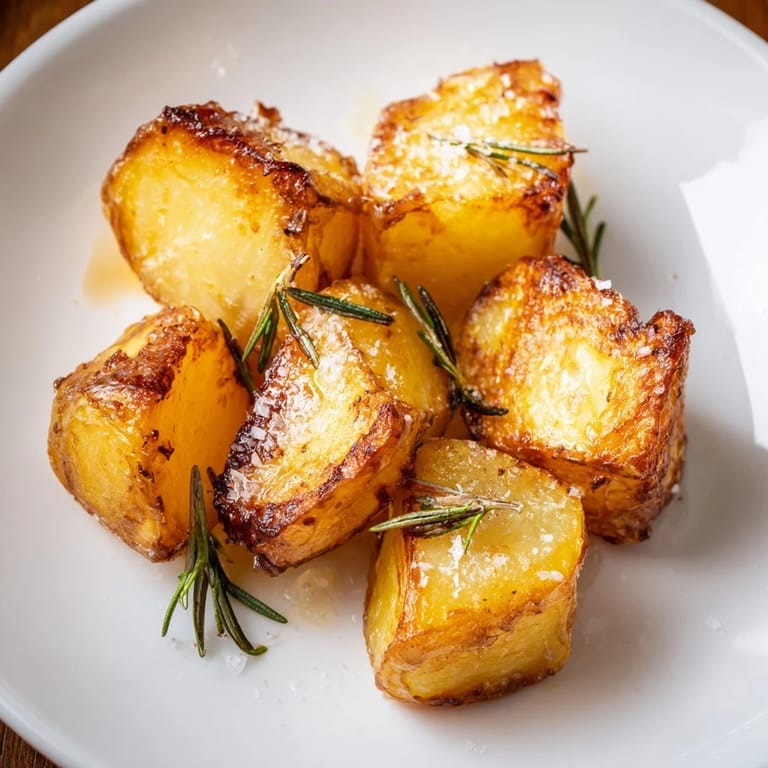
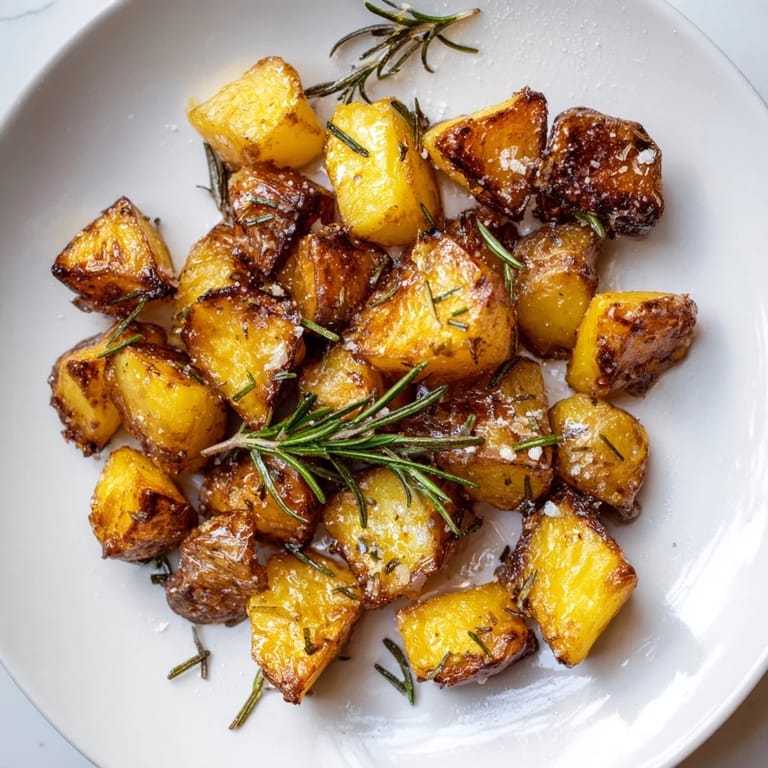
- Twenty minutes on the first side, then flip each potato with tongs and roast another 20–25 minutes until every edge is deep golden and crispy. Don't skip the flip—it ensures even browning and that all-around crackle.
- Finish and serve while they still sing:
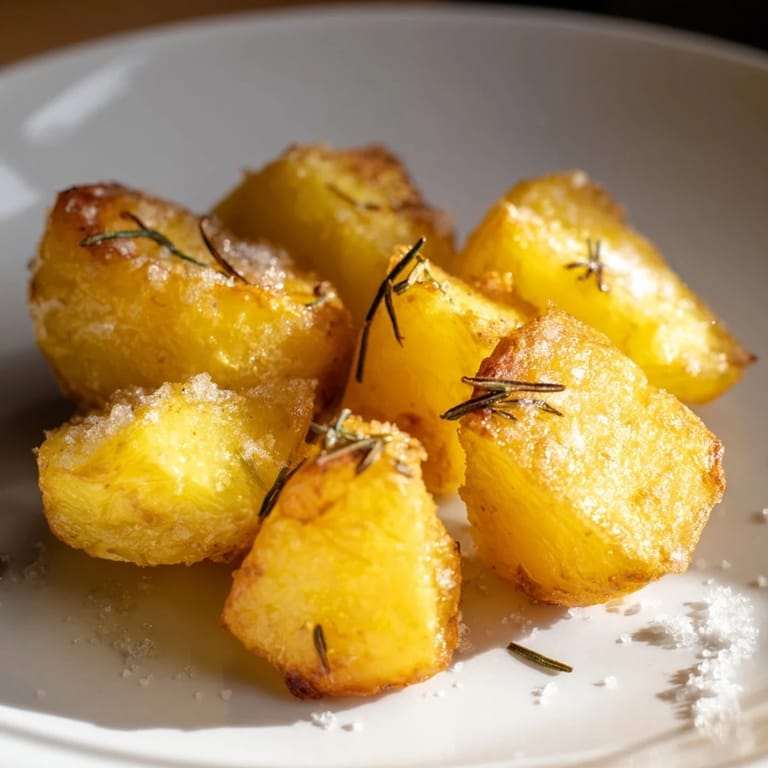
- Pull them out, toss with fresh herbs if you've got them, taste for salt, and eat them immediately while the outside is still crackling. They don't keep their best texture, so this is a now dish.
 Pin
Pin The first time my daughter actually reached for the vegetable course before I asked her to, it was these potatoes. She bit into one and stopped mid-conversation, and in that quiet moment, I realized I'd created something she'd remember the way I remember my grandmother's kitchen.
Why Beef Tallow Changes Everything
Vegetable oil will brown potatoes, but beef tallow transforms them. It carries flavor compounds that are fat-soluble—meaning they dissolve into the fat and stay there, coating every edge—whereas neutral oils just heat and evaporate. The result is a savory depth that tastes almost meaty, which is why these potatoes are so addictive alongside roast beef, roast chicken, or even grilled lamb. Once you taste tallow-roasted potatoes, roasted in vegetable oil never quite satisfies again.
The Science of Crispy Potatoes
Crispiness comes from two things: moisture removal and browning. The parboil softens the interior and begins moisture escape, but the real work happens when those potatoes hit the hot tallow. The Maillard reaction—the chemical browning that happens above 300°F—creates hundreds of new flavor compounds and a golden, crispy crust. The roughed-up edges offer more surface area for this magic to happen, which is why shaking the pot after draining makes such a difference.
Customizing Your Batch
These potatoes are a canvas if you want them to be. Smoked paprika or chili flakes add warmth and a little heat, while fresh thyme is more delicate and subtle than rosemary, which has a woodsy boldness. Some people add a pinch of garlic powder toward the end of roasting for extra savory depth. If you can't find beef tallow, duck fat or goose fat deliver similar results with slightly different flavor notes—duck fat is richer, goose fat is a touch lighter.
- Smoked paprika or chili flakes can go in during the last five minutes of roasting to keep their flavor intact.
- Finishing salt—fleur de sel or Maldon—sprinkled on right after roasting makes the texture and saltiness sing.
- Serve them hot and immediately; they lose their crackle as they cool, so timing is everything.
 Pin
Pin Make these once and you'll understand why they've stayed on tables for centuries. They're simple, honest, and absolutely craveable.
Recipe Q&A
- → What type of potatoes work best for roasting with beef tallow?
Yukon Gold or Russet potatoes are ideal due to their texture; they hold shape well while becoming fluffy inside.
- → How does beef tallow affect the flavor of roasted potatoes?
Beef tallow adds a rich, savory depth that enhances the natural earthiness of the potatoes and promotes crispiness.
- → Can herbs be infused into the beef tallow for added flavor?
Yes, gently heating rosemary, thyme, or smashed garlic in the tallow creates an aromatic infusion that flavors the potatoes delicately.
- → What is the best way to achieve extra crispy potatoes?
After parboiling and draining, letting the potatoes air-dry for 5–10 minutes and shaking them to roughen edges will enhance crispness when roasted.
- → Are there alternatives to beef tallow for roasting these potatoes?
Duck fat or goose fat can be substituted to provide similar richness and crisping properties with a slightly different flavor.