 Pin
Pin I was scrolling through photos at midnight when I stumbled across an image of the aurora borealis painted across an ice-dark sky, and something clicked—what if I could capture that shimmering magic on a platter? The next morning, I headed to the farmers market with a wild mission: to find fruits that would dance together in waves of green and purple, just like those northern lights. Standing there with an armful of kiwis, grapes, and blackberries, I realized I wasn't just making a fruit platter. I was about to create something that would make people pause mid-conversation and actually gasp.
My nephew's birthday party was the real test. I brought this aurora platter to the table and watched his eight-year-old face light up like he'd actually seen the northern sky. He called it "magic fruit" and spent the first five minutes just studying how the colors flowed before eating anything. That moment taught me that food isn't just about taste—sometimes it's about stopping time for a second and letting beauty matter.
Ingredients
- Seedless green grapes, halved (1 cup): The backbone of your green waves—they're sturdy enough to hold their shape but soft enough to feel indulgent when you bite into them.
- Kiwis, peeled and sliced (2): Their natural lime-green color is almost neon; I learned to slice them just thick enough that they don't fall apart but thin enough to look delicate.
- Green apple, thinly sliced (1, optional): Adds a sharper green note and keeps the texture interesting, though I skip it if I want the arrangement to feel softer.
- Blackberries (1 cup): These little dark jewels anchor the purple section and add a sophisticated depth that grapes alone can't quite achieve.
- Red or black grapes, halved (1 cup): They bridge the gap between blackberries and blueberries, creating smooth color transitions that make the whole platter feel cohesive.
- Blueberries, optional (1/2 cup): Extra blueberries deepen the purple impact and fill gaps with their round, jewel-like appearance.
- Fresh mint leaves, optional: Not just garnish—they add a whisper of freshness and break up the sweetness with their green, crisp texture.
- Edible glitter or gold leaf, optional: This is where you capture that aurora shimmer; I use it sparingly, just enough to catch the light.
Tired of Takeout? 🥡
Get 10 meals you can make faster than delivery arrives. Seriously.
One email. No spam. Unsubscribe anytime.
Instructions
- Wash and dry everything like you're preparing for a close-up photo shoot:
- Pat the fruits completely dry with paper towels—any moisture will make them slip around and destroy your carefully planned waves. This is the unglamorous part, but it's absolutely essential.
- Create your first green ribbon of light:
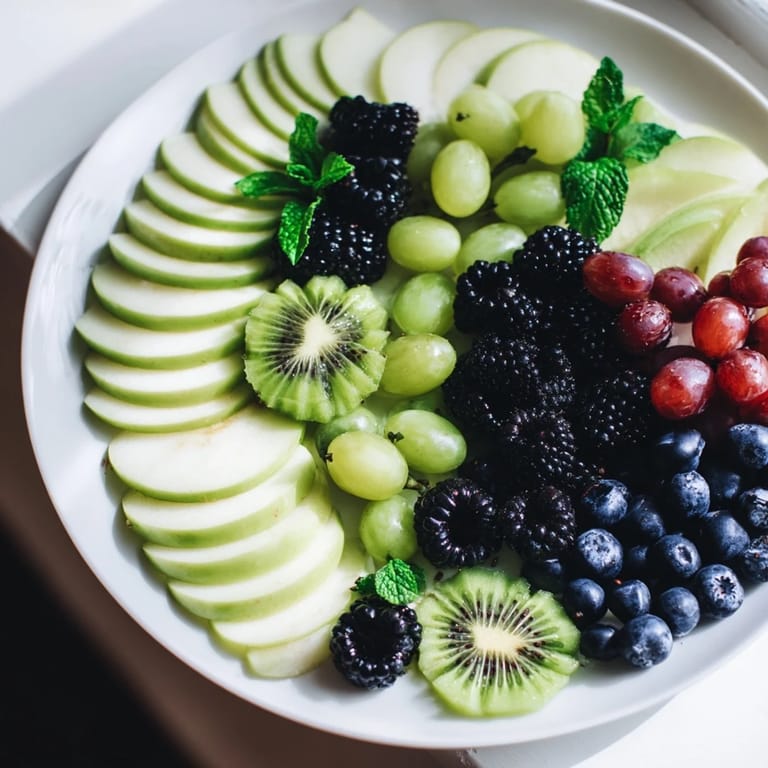
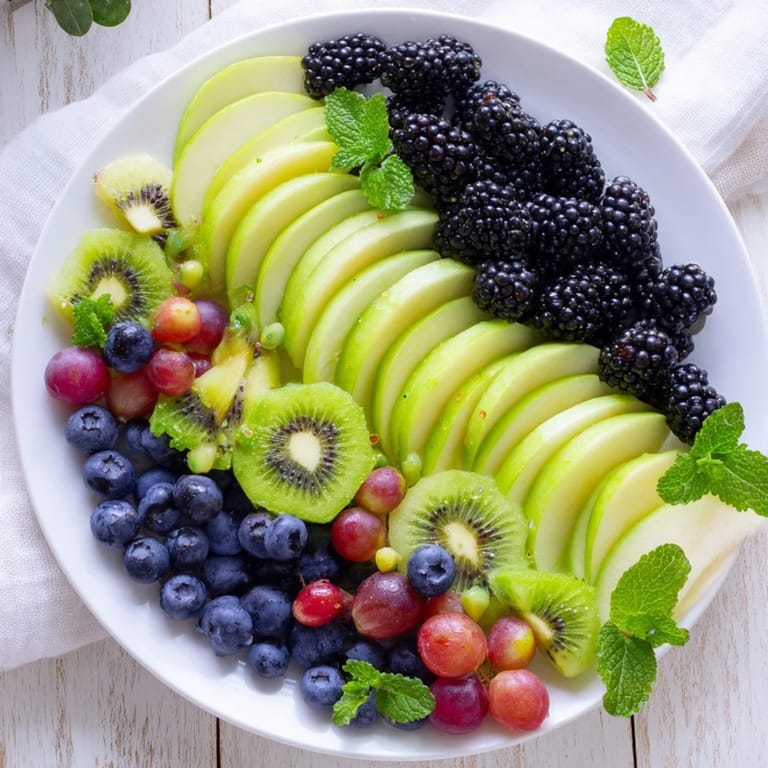
- Arrange the halved grapes, kiwi slices, and apple slices in flowing, gentle waves across your platter, starting from one edge and moving like you're painting with a curved brush. Think of it as creating a river that curves and flows naturally rather than sharp geometric lines.
- Layer the purple aurora to dance alongside the green:
- Take your blackberries, purple grapes, and blueberries and arrange them in undulating lines that weave between and alongside your green fruit, creating the illusion of movement and light. The key is letting the colors interact—they should touch and overlap in some places while creating defined ribbons in others.
- Fill the spaces with intention:
- Use any remaining fruit or mint leaves to fill small gaps, but resist the urge to make it look completely crowded; negative space is just as important as the fruit itself. A few bare patches of platter actually make the arrangement feel more intentional and sophisticated.
- Add the final shimmer if you're using it:
- Sprinkle edible glitter or arrange tiny flecks of gold leaf strategically across the highest points of your arrangement, where light naturally catches. Less is genuinely more here—you're not covering the fruit, just hinting at magic.
- Serve with presence:
- Bring it to the table immediately for maximum visual impact, or cover it loosely with plastic wrap and refrigerate until the moment arrives. Either way, give yourself a moment to admire it before anyone else does.
 Pin
Pin At a dinner party last spring, I set this platter down and someone actually pulled out their phone to photograph it before eating anything. I remember feeling a little shy about that, like I'd somehow accidentally made fruit feel fancy. But then I realized that's the whole point—when food looks this beautiful, it becomes a moment worth documenting, and honestly, that feeling of making people happy by what you've created is worth every careful arrangement.
The Art of Arrangement
I've learned through trial and error that the secret to making this look effortless is actually planning it loosely. I sketch the wave pattern with my finger on the empty platter first, imagining where the green will flow and where the purple will answer back. Then I work in sections, building the green foundation first because it's more sturdy, and layering the delicate berries last when I know exactly where they need to go. The best arrangements feel like they happened by accident, even though they took intention and focus.
Why This Works as a Centerpiece
Unlike heavy platters or dishes that need to be eaten quickly, this arrangement actually improves the energy of a table just by existing. People naturally gather around it, conversations start about how it was made, and there's this collective moment of noticing beauty together. It's vegan, gluten-free, and completely naturally so—there's no lecturing or apologizing about what's on the plate, just pure, uncomplicated food that happens to look like art.
Make It Your Own
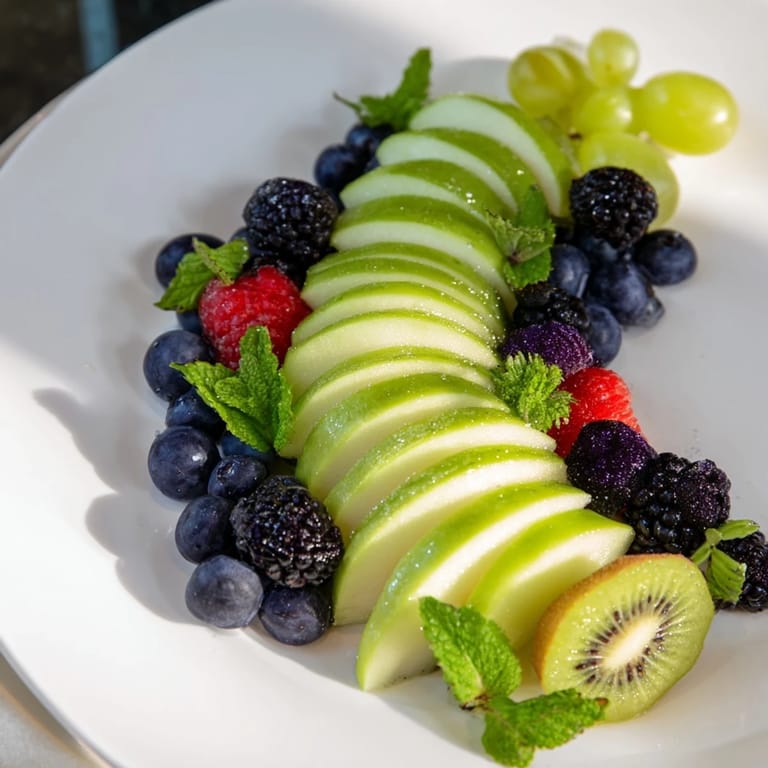
The genius of this platter is that it's endlessly flexible. Use whatever fruits you find at your market or what's in season, as long as you're thinking about color contrast and arrangement. I've made winter versions with pomegranate seeds and frozen grapes, summer versions with dragon fruit and starfruit, and spring versions with strawberries woven through the waves. The aurora principle stays the same—you're creating flowing lines of color that feel intentional and alive.
- Try adding sliced starfruit or dragon fruit for extra color and visual layers that catch the eye even more dramatically.
- Experiment with different platters—black, slate gray, or even a dark wood board transforms how the colors read and glow.
- Serve it alongside a honey-lime yogurt dip or simple coconut cream for people who want something to complement the fruit, but know that it stands beautifully alone.
 Pin
Pin This platter taught me that sometimes the most impressive thing you can offer people isn't complicated or time-consuming—it's just thoughtful arrangement and a willingness to make something beautiful. Every time I make it, I remember that nephew's face and feel that little spark of joy that comes from creating something meant purely for delight.
Recipe Q&A
- → What fruits are used in this arrangement?
Green grapes, kiwi, green apple, blackberries, red or black grapes, and blueberries form the vibrant layers.
- → How is the aurora effect achieved?
By arranging fruits in overlapping, wavy lines of green and purple shades to mimic the flowing ribbons of the Northern Lights.
- → Can I add garnish for extra visual appeal?
Yes, fresh mint leaves and edible glitter or gold leaf add shimmer and enhance the presentation.
- → Is this suitable for special diets?
Yes, it's vegan, gluten-free, and free from common allergens, though individual sensitivities should be checked.
- → What is the preparation time?
The platter takes about 20 minutes to prepare with no cooking involved.